

Such raw analysis does not consider things such as the state of the industry, and purchasing power parity. A rail network that has had investment for the last 40 years can run efficient and fast services on much less money, than one that has had a tight budget and a lot of "make do and mend". Similarly, a pound in the UK doesn't go very far once the TOC's ROSCOS and Permanent way contractors have and their pound of flesh, but goes much further for a state-owned operator in Eastern Europe.From 2017 - so a little old now, but pre-Covid, so a useful baseline
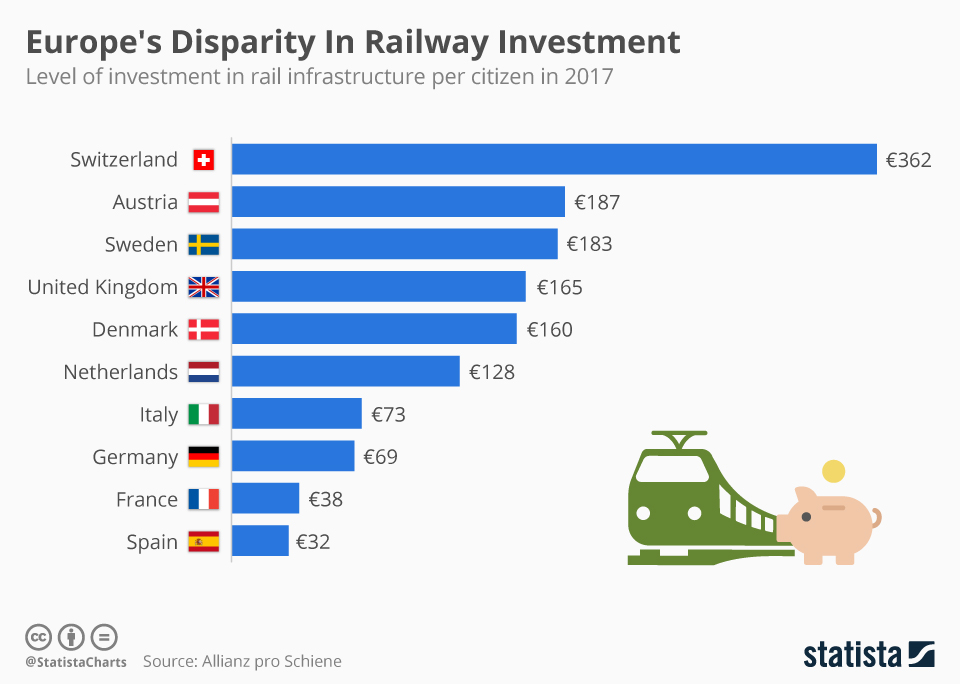
Infographic: Europe's Disparity In Railway Investment
This chart shows the level of investment in rail infrastructure per citizen in European countries in 2017.www.statista.com
Puts the UK in a fairly favourable position.
== Doublepost prevention - post automatically merged: ==
How about when we're awake, not at work, and in winter?It's mostly not dark (when we're awake) and it's mostly not raining.
Last edited:

