I was under the impression that remote PAs via GSM-R were already possible on many (most?) trains in GB. Is that not the case? If it
is the case, is this not quite literally just adding the ability to do text-to-speech instead of a manual PA, and potentially also to a group of services rather than just one?
I do think an actual person rather than, what some will consider automated, text-to-speech voice would be significantly more effective.
For example, the
Rail for London (Infrastructure) GSM-R handbook talks about remote PAs on page 19, so it's not like this is anything new or special in a general sense:
5 Radio communications
5.1 GSM-R call types
There are two types of GSM-R calls, point-to-point and group calls.
5.1.1 Point-to-point calls
[...]
Public address (PA) calls
These are calls made by the signaller or train operator’s control and are a one-way method of communication. The driver will also be able to hear the PA announcement over the train radio loudspeaker.
An
RDG document from Jan 2017 also refers to PA announcements via GSM-R too under a section
explicitly about improving passenger information:
The TOC Terminal allows a ‘contact FT’ operational text message to be sent to a registered train (note this requires software version NR3.1 or higher), normal point-to-point voice calls to be made and received, and for the operator to connect to the train’s Public Address (PA) system on Driver Only Operation (Passenger) (DOO (P)) trains. (Other non-DOO (P) trains may also have a connection to the PA).
So in the 9 years since then, Smarter Information Smarter Journeys (SISJ) have managed to put a text-to-speech engine (and not even that good of one) in front of this system to present it as some revolutionary feature? Fabulous.


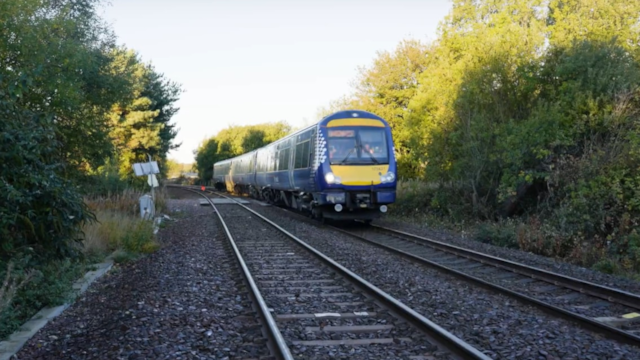
 www.networkrailmediacentre.co.uk
(Link to network rail article showing new system for disruption announcements)
www.networkrailmediacentre.co.uk
(Link to network rail article showing new system for disruption announcements)