• Our new ticketing site is now live! Using either this or the original site (both powered by TrainSplit) helps support the running of the forum with every ticket purchase! Find out more and ask any questions/give us feedback in this thread!

Could This Be A Meteorite?

Status
Not open for further replies.

BrandanM

Member
Joined
22 Jan 2022
Messages
131
Location
Cambridgeshire
Hi all.

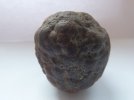
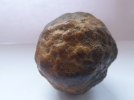
A while ago I discovered this small rock lying on the grass in the middle of a formal park where the turf is regularly mowed. It was the only one present and wasn't embedded in the ground. It seemed an unusual place for such a thing to be.

It is approximately the same size as a golf ball or a walnut and has a 'molten' and burnt appearence, more to one side than the other, as though it had been extremely hot at some point.

It feels unusually heavy for its size and weighs about 6 ounces/170 grammes.

I've held a magnet to it, but there is no reaction.

What do you think?.

Many thanks in anticipation:)
 

Attachments

  • P1130557.JPG
    P1130557.JPG
    50.1 KB · Views: 46
  • P1130558.JPG
    P1130558.JPG
    53.5 KB · Views: 44
  • P1130556.JPG
    P1130556.JPG
    46.2 KB · Views: 44
Sponsor Post - registered members do not see these adverts; click here to register, or click here to log in
R

RailUK Forums

Cowley

Forum Staff
Staff Member
Global Moderator
Joined
15 Apr 2016
Messages
18,890
Location
Devon
Hi all.

A while ago I discovered this small rock lying on the grass in the middle of a formal park where the turf is regularly mowed. It was the only one present and wasn't embedded in the ground. It seemed an unusual place for such a thing to be.

It is approximately the same size as a golf ball or a walnut and has a 'molten' and burnt appearence, more to one side than the other, as though it had been extremely hot at some point.

It feels unusually heavy for its size and weighs about 6 ounces/170 grammes.

I've held a magnet to it, but there is no reaction.

What do you think?.

Many thanks in anticipation:)

I think it’s quite possible that it is a piece of meteorite. Many years ago I had a shop in Winchester that sold fossils, minerals and crystals etc and we used to sell small pieces of meteorite occasionally - I can’t remember who used to supply them to us unfortunately, but as I remember it we had some that were rare (and quite expensive) that looked a bit like a kind of metallic slate with silver lines on them, but also a more common version that looked ever so much like the one you’ve got.

I also remember them being really heavy for their size.
 

Mcr Warrior

Veteran Member
Joined
8 Jan 2009
Messages
17,191
@BrandanM. A local university college in your area (Cambridgeshire?) should be able to test whether or not it's likely to be a bona-fide meteorite, and not some random piece of fly-tipped builders' rubble (or similar).
 

BrandanM

Member
Joined
22 Jan 2022
Messages
131
Location
Cambridgeshire
@BrandanM. A local university college in your area (Cambridgeshire?) should be able to test whether or not it's likely to be a bona-fide meteorite, and not some random piece of fly-tipped builders' rubble (or similar).


That's a good suggestion. Thanks.

Perhaps if I call in at the Sedgwick Museum of Earth Sciences in Cambridge they could confirm one way or the other.
 

randyrippley

Established Member
Joined
21 Feb 2016
Messages
5,383
Could be a iron pyrite nodule - see http://collections.readingmuseum.org.uk/index.asp?page=record&mwsquery= {collection}={nature}&filename=REDMG&hitsStart=32#:~:text=Pyrite nodules are quite common,cannon balls, or even meteorites.

I've seen them dug up on building sites.

One way of possibly telling is to bang it against a wall, if it smells of sulphur it's a nodule

If it is a nodule the insides are probably full of pyrite crystals, they can look quite impressive

The local Reading chalk and clay rocks contain cemented ‘lumps’ called nodules or concretions. These are concentrations of minerals, or bits of rock hardened by minerals like silica or iron oxides, formed over millions of years. They are often left behind on the ground surface when the softer surrounding rock weathers away.

Pyrite nodules are quite common in chalk. They are formed of the mineral iron pyrites, ‘fool’s gold’, with a surface oxidised into a rusty brown crust. They are very heavy, so roundish ones like this can be mistaken for musket or cannon balls, or even meteorites. If broken open though, the spheres are made up of shiny, pale yellowish radiating crystals
 

Mcr Warrior

Veteran Member
Joined
8 Jan 2009
Messages
17,191
I've held a magnet to it, but there is no reaction.

The item seemingly not exhibiting any magnetic properties is slightly unusual, but it's probably still worth having the possible "meteorite" tested.
 

Howardh

Established Member
Joined
17 May 2011
Messages
9,772
I've seen plenty of pictures of meteorites that have fallen to the ground, but what amazes me is for those the size of cricket balls leave no crater. They must fall at tremendous velocity, allowing for the atmosphere to break their fall. Does the atmosphere slow then down so much - aided by an oblique angle - that they virtually plop to the surface?
 

Mcr Warrior

Veteran Member
Joined
8 Jan 2009
Messages
17,191
They must fall at tremendous velocity, allowing for the atmosphere to break their fall. Does the atmosphere slow then down so much - aided by an oblique angle - that they virtually plop to the surface?
Not quite. Might be around 200 mph, but similar to a cannonball, you wouldn't want to be hit by one!
 

Howardh

Established Member
Joined
17 May 2011
Messages
9,772
Not quite. Might be around 200 mph, but similar to a cannonball, you wouldn't want to be hit by one!
200mph should make quite a dent in someone's driveway! With all the cameras around these days, I'm sure if it hasn't already happened, one will be caught landing on camera.
 

Ediswan

Established Member
Joined
15 Nov 2012
Messages
3,418
Location
Stevenage
Not quite. Might be around 200 mph, but similar to a cannonball, you wouldn't want to be hit by one!
I do wonder if I was once hit by a very small one. Late 1960s. Something tapped me on the wrist. I found a small piece of what looked like grey clinker embedded in my elasticated cuff. Size was about a grain of couscous (it would have been going considerably slower).
 

Trackman

Established Member
Joined
28 Feb 2013
Messages
4,259
Location
Lewisham
Not quite. Might be around 200 mph, but similar to a cannonball, you wouldn't want to be hit by one!
Not far out, just used a terminal velocity calculator based on the information the OP has given us. It would have hit the ground at around 166 mph.
 

randyrippley

Established Member
Joined
21 Feb 2016
Messages
5,383
I've held a magnet to it, but there is no reaction.
Many meteorites are rock, not ferrous so you wouldn't get a magnetic field

I still think yours is a pyrites nodule though (and that wouldn't be magnetic)
Cutting it in half would prove if I'm right
 
Status
Not open for further replies.

Top