• Our new ticketing site is now live! Using either this or the original site (both powered by TrainSplit) helps support the running of the forum with every ticket purchase! Find out more and ask any questions/give us feedback in this thread!

Has someone done a full cost and timescale assessment of implementing a fully-automated railway?

brad465

Veteran Member
Joined
11 Aug 2010
Messages
11,601
Location
Taunton or Kent
Thanks to the latest news from the Bedford crash, perhaps unsurprisingly, the voices for automated railways have perked up again claiming this would not have happened with automated trains.

A big issue I have in all this is, while you will always get ideologically-driven people who will dismiss evidence against their beliefs, hardly anyone appears to have done a cost assessment of this, and it will definitely not be cheap or quick. However, it's hard to debunk the argument when assessments are lacking, beyond some local-scale ones like TfL ones of the Underground.

A Google search produces only the TfL assessments, an AI overview that thinks it's £150-300 billion, but this is based on a random Twitter post, and a LinkedIn article that doesn't cite estimates, among an analysis leading to a conclusion that complete automation is improbable, but worth doing in certain ways/areas where most beneficial.


At first glance, the idea seems obvious. If driverless cars are being tested on public roads, why can’t trains – which run on fixed tracks – simply be automated across the UK? In theory, it sounds like a quick fix for staffing shortages, delays, and the need for improved efficiency. In practice, the reality is vastly more complicated.

Automating the UK’s railways involves not only technology but also deep-rooted human, economic, and political factors. While automation is already a reality on parts of London’s Underground and in metro systems around the world, extending it across the entirety of the UK mainline network raises daunting challenges.

This article explores the human factors, costs, and long-term implications of such a shift. Far from being a straightforward technological upgrade, rail automation would represent a cultural, financial, and strategic transformation of the industry – one that could shape the UK’s transport landscape for generations.


The Allure of Automation​

Rail automation isn’t new. Systems like the Docklands Light Railway (DLR) in London have operated without traditional drivers since the late 1980s. Elsewhere, Paris, Copenhagen, and Dubai all boast highly automated metro systems. These networks often promise:


  • Higher service frequency
  • Lower operating costs
  • Consistent safety performance
  • Resilience against industrial action and staff shortages


Given these benefits, it’s no surprise that commentators and politicians occasionally ask: why not automate the whole UK network? If a train can drive itself on a closed metro line, surely the same can be done between London, Manchester, or Edinburgh?

The problem is that the comparison between a metro and a mainline railway is misleading. While both carry passengers, the scale, environment, and complexity of their operations are completely different.


The Human Factor: More Than Just Drivers​

Automation is often framed as replacing train drivers, but this oversimplifies the human presence in rail. Staff across the network do far more than simply “press the throttle.”

1. Human Judgement in Complex Environments​

Mainline railways cross open landscapes, intersect with roads, and operate in variable weather conditions. Drivers must respond to unexpected hazards: livestock on the line, trespassers, sudden infrastructure failures, or emergencies. While automation can handle predictable scenarios, human judgment remains critical when the unexpected occurs.

2. Passenger Interaction​

Rail staff provide reassurance, assistance, and authority. Whether it’s guiding passengers during disruption, handling accessibility needs, or de-escalating conflict, humans play roles that machines cannot yet replicate effectively. Fully driverless trains risk alienating passengers who feel unsafe or unsupported in emergencies.

3. Industrial and Political Dimensions​

Railway unions are powerful stakeholders in the UK. Attempts to reduce staff numbers or automate roles often meet fierce resistance, leading to strikes and public disruption. Even if the technology exists, the politics of employment is a formidable barrier.

In short, automation isn’t just about moving trains. It’s about the wider ecosystem of people, roles, and responsibilities that underpin safe and reliable operations.


The Cost of Automation: Billions, Not Millions​

Upgrading the UK rail network for automation would require an astronomical investment. Unlike metro systems – designed with automation in mind – Britain’s railways are an evolving patchwork of Victorian infrastructure layered with decades of retrofits.

1. Infrastructure Upgrades​

To automate, lines would need:


  • Continuous signalling systems (e.g., ETCS/ERTMS) to track trains in real time.
  • Platform screen doors or advanced obstacle detection to prevent track incursions.
  • Comprehensive fencing across thousands of miles to exclude trespassers and animals.
  • Redundancy in power and control systems to ensure resilience.


Each of these is costly. Retrofitting the entire 20,000+ miles of track and 2,500+ stations would make HS2’s price tag look modest.

2. Rolling Stock Replacement​

Most UK trains were not designed for autonomous operation. Retrofitting them with automation systems would be expensive; replacing them wholesale would be ruinous.

3. Digital Backbone​

Automation depends on a reliable digital backbone: high-capacity data networks, cybersecurity protections, and centralised control centres. These systems require constant upgrades to remain secure and functional.

Put simply: automation isn’t a software patch. It’s a complete re-engineering of rail infrastructure – at a cost likely in the hundreds of billions.


Long-Term Implications​

Even if the UK found the money and overcame resistance, the long-term implications of automating the railway are far from straightforward.

1. Labour Market and Communities​

Tens of thousands of railway staff could face redundancy. While some would be retrained into new digital or customer service roles, many communities depend on railway employment. The social cost of large-scale redundancies could outweigh operational savings.

2. Resilience vs. Fragility​

Automation often increases efficiency but can reduce resilience. When everything depends on centralised digital systems, a cyberattack or software failure could paralyse the entire network. With humans removed from frontline operations, recovery from disruption may become slower, not faster.

3. Public Trust​

Passenger acceptance is not guaranteed. Many people still prefer human presence on trains for reassurance. A high-profile accident involving an automated train could severely damage trust and set back adoption for decades.

4. Technological Lock-In​

Once committed to a particular automation system, the UK would be locked into long-term vendor contracts and upgrade cycles. Choosing the wrong technology could saddle the railway with inflexible systems, limiting innovation.

5. Equity and Accessibility​

Automation risks prioritising efficiency over inclusivity. Without staff, passengers with disabilities may struggle to receive assistance. Automation could create a two-tier system: efficient but impersonal trains, and more traditional staffed services for those who need support.


Lessons from Elsewhere​

Looking abroad offers insight.


  • Paris Metro Line 1: Automated successfully, but only after years of investment and with a closed, urban environment.
  • Copenhagen Metro: Built automatically from the start, avoiding retrofit challenges.
  • New York Subway: Struggles with automation due to ageing infrastructure and strong union resistance – a situation resembling the UK.


The clear lesson is that automation works best when baked into the design of new systems. Retrofitting complex, national networks is slow, expensive, and politically fraught.


So, What’s Realistic?​

Total automation across the UK is improbable in the foreseeable future. But that doesn’t mean automation has no role.

Incremental Automation​

Rather than fully driverless trains, expect to see incremental changes:


  • Automated signalling and traffic management (ETCS rollout)
  • Driver assistance systems that reduce workload and improve safety
  • Remote monitoring of infrastructure using AI and sensors
  • Partial automation in freight yards or depot environments


Human + Machine Partnerships​

The future is likely a hybrid model, where automation handles routine tasks while humans remain responsible for oversight, emergencies, and customer interaction. This balances efficiency with flexibility.

New Lines, Not Old Ones​

Where automation has real potential is on new infrastructure – high-speed lines, urban transit expansions, and freight corridors. Here, automation can be designed in from the outset, avoiding costly retrofits.


Conclusion: More Than Technology​

The question “Why not automate the UK’s trains?” misunderstands what railways are. They are not just vehicles on tracks but complex socio-technical systems: human, political, economic, and cultural.

Automation is technically feasible, but the costs are enormous, the human factors unavoidable, and the long-term implications profound. Far from being a silver bullet, automation is one tool among many to modernise Britain’s railways.

If the UK is to pursue automation, it must do so carefully – not by dreaming of a driverless future across every mile of track, but by selectively applying automation where it adds value, while respecting the human roles and communities that keep the railway running.

In the end, the railway is not just about trains. It’s about people. And that’s something automation alone can never replace.
 
Sponsor Post - registered members do not see these adverts; click here to register, or click here to log in
R

RailUK Forums

ollyexe2808

Member
Joined
18 Jun 2023
Messages
140
Location
Exeter
Thanks to the latest news from the Bedford crash, perhaps unsurprisingly, the voices for automated railways have perked up again claiming this would not have happened with automated trains.

A big issue I have in all this is, while you will always get ideologically-driven people who will dismiss evidence against their beliefs, hardly anyone appears to have done a cost assessment of this, and it will definitely not be cheap or quick. However, it's hard to debunk the argument when assessments are lacking, beyond some local-scale ones like TfL ones of the Underground.

A Google search produces only the TfL assessments, an AI overview that thinks it's £150-300 billion, but this is based on a random Twitter post, and a LinkedIn article that doesn't cite estimates, among an analysis leading to a conclusion that complete automation is improbable, but worth doing in certain ways/areas where most beneficial.


I don't know the answer to the posed question but I did the read the article and it gives a good overview.

The human factors/passenger interaction and equity points are the biggest. A scenario I imagine is a points failure or mechanical breakdown between stations on a longer distance route (take the GWML or ECML as examples). You would need to ensure adequate staffing to ensure the safety of passengers as well as the humanity and empathy of a real person. So any cost/benefit analysis would have to take into account adequate staffing and contingency to offset concerns over lack of oversight. Just my two pence anyway!
 

Non Multi

Member
Joined
11 Dec 2017
Messages
1,192
AŽD Praha 'EDITA' Project - current cost €13M+

Video (September 2025): https://www.dw.com/en/czech-republi...ped-driverless-passenger-train/video-74174782
The Czech Republic has launched Europe's first passenger-carrying driverless train operating on an open railway line.

The autonomous train runs along a 24-kilometer route (15 miles) in the north of the country. Unlike most autonomous trains, which only run in closed systems such as metros or airport shuttles, this one is designed for tracks in real-world conditions.

The driverless train, developed by Czech technology firm AZD Praha, has been named "Edita" and is equipped with cameras, lidar, laser scanners, digital mapping and AI to control traction and braking and detect obstacles.

During testing, Edita slowed down for a hare on the tracks and came to a stop for a herd of sheep, showing its ability to adapt to unexpected situations.

Since the beginning of passenger trials, it has carried people over a total of around 1,700 kilometers (around 1,000 miles).

https://www.azd.cz/en/press-release...s-already-run-3000-kilometers-with-passengers
AŽD has successfully followed up on the spring premiere of the EDITA autonomous train, which is the first in Europe to be able to drive in open countryside. From April to early October 2025, EDITA (AŽD Experimental Railway Vehicle for Innovative Technologies) travelled more than 3,000 kilometers with passengers on this unique project on the Kopidlno - Dolní Bousov line and confirmed its reliability.

"During the entire period of operation, we have not recorded any technical malfunctions related to the software or control. The train stopped only in situations where real obstacles got in its way - for example, a herd of sheep, a hare or a doe that was running parallel to the train and then crossed the tracks. In one case, the train also responded correctly to a car that did not respect the stop signal at the level crossing. This is proof for us that the technology works and can reliably evaluate risky situations. However, we are still fine-tuning the software based on a number of test runs," says AŽD CEO Zdeněk Chrdle.

AŽD developers are currently testing new generation systems. For example, the ADEROS technology – Automatic Detection of Risk Situations – was put into trail operation, which uses an intelligent camera to evaluate the behaviour of cars and pedestrians at level crossings and transmits information to the train whether there is any obstacle at the level crossing. At the moment, tests of autonomous vehicle sensors are starting in Switzerland near the Gotthard Tunnel, where the influence of difficult climatic conditions on their functionality will be verified. Next year, a lidar with a wider viewing angle will be tested, which will significantly expand the ability to perceive the surroundings, especially when driving in a curve.
The autonomous driving system will be modified to comply with the latest specifications of the European project R2DATO, and within its framework, AŽD will test the interoperability of individual autonomous driving components together with our partners.

Passengers can also expect new features next year. For the first time, they will be able to see an intelligent train-stop on request in real operation, where information about the passenger's boarding is transferred to the vehicle, and a STOP button will also be installed in the coaches, by pressing which the passenger will request that the EDITA vehicle stops safely at the next stop.
"The project shows that the Czech railway industry can keep up with European trends, and can even set them. EDITA has so far been running at a maximum speed of 60 km/h, but it is technically ready for speeds of up to 80 km/h. We also plan to introduce remote control of the train, so that the driver will be able to drive the autonomous train manually from the Dětenice Competence Centre or also directly from the AŽD headquarters," adds Zdeněk Chrdle.

The unique project also attracted international attention. Representatives of Europe's Rail Joint Undertaking (ERJU), members of European research projects aimed at developing technologies for automatic train control, employees of Austrian and Polish railways, student for researchers at the Technical University of Dresden, and journalists from the world agency AFP or the German public television Deutsche Welle came to Dětenice and the Kopidlno - Dolní Bousov line to take a look.

"The goal of AŽD is quite clear. By 2030, we wish to transform our second line, the „Plum Railway“ (Čížkovice – Obrnice), into the first fully autonomous regional railway line in Europe with daily operation in open countryside,"
concludes Zdeněk Chrdle.
 

The exile

Established Member
Joined
31 Mar 2010
Messages
9,489
Location
Somerset
With no disrespect intended to the hare, the fact that the train “felt the need” to slow down for it shows there’s a long way to go - especially on a congested network rather than a bucolic branch line. Sheep are different!
 

quantinghome

Established Member
Joined
1 Jun 2013
Messages
2,922
It hasn't been done because such a system does not exist for trains on regular track shared with all traffic types .

To be clear we're talking about ATO GoA 4 (ref: https://en.wikipedia.org/wiki/Automatic_train_operation) i.e. completely unattended operation, no staff on board trained to handle emergencies etc. This has only been achieved in the very controlled environments of metro systems (other than in experimental settings such as the one quoted above. Experiments will tell you whether it works, but will not give you a very good idea how much it would cost to roll out).

ETCS is currently being deployed in the UK which is GoA 2. So take the costs of the current deployment, multiply by the ratio of Total UK railway size: Project size. Then multiply THAT by X to go from GoA 2 to GoA 4. We don't know what X is, but it will be significantly greater than 1.

So:

ETCS cost on ECML: £1.9 billion
Project Length - 100 miles London-Grantham
UK railway length - 10,000 miles.
Ratio: 100

That's £190bn times X. What do we think X will be - 2, 5, 10, 20? Could be any of them. Let's say 5 - lots of whatnots and doodahs needed to get to GoA 4.

You're looking at around £1tn, give or take factor of 2.

That's 10 HS2s.
 

Pete_uk

On Moderation
Joined
28 Jan 2017
Messages
1,556
Location
Stroud, Glos
To fully automate the whole passenger network would cost countless billions in 'back end' systems itself. Before you start on the rolling stock.

I expect those looking after said systems would cost just as much as a driver too
 

HSTEd

Veteran Member
Joined
14 Jul 2011
Messages
20,389
Such a project is highly likely possible in technical terms, but would be long and very expensive.

I very much doubt any such serious study has been undertaken, as simply commissioning such a study seems likely to provoke major strike action.

== Doublepost prevention - post automatically merged: ==

That's £190bn times X. What do we think X will be - 2, 5, 10, 20? Could be any of them. Let's say 5 - lots of whatnots and doodahs needed to get to GoA 4.

You're looking at around £1tn, give or take factor of 2.

That's 10 HS2s.
I don't think linear scaling is really appropriate here.

For example, some of the major issues in the East Coast ETCS programme have been associated with rolling stock capability/compatibility and the like.

But the railway only has 15,350 passenger vehicles in service, and some number of thousands of freight vehicles in regular service (no good statistics exist that can be found in the open literature or obtained by FOI, I know having tried a few years ago).
Replacing all of it with brand new stock would only cost ~£30bn-40bn and would make the process of adaption much much easier.

Beyond that, if such a uniform fleet could be ordered, theres probably a lot of infrastructure complexity that could be avoided, reducing the overall cost.

Large parts of the UK railway already approach the Copenhagen S-Tog in design, being little more than a succession of EMUs, after all.

GoA 3 is almost certainly more politically acceptable than GoA4 though.
 
Last edited:

brad465

Veteran Member
Joined
11 Aug 2010
Messages
11,601
Location
Taunton or Kent
Such a project is highly likely possible in technical terms, but would be long and very expensive.
This is my thinking, and one only needs to point to how HS2 has been handled to see that any automating railway's project is going to be an omnishambles if it's attempted in one big bang.
I very much doubt any such serious study has been undertaken, as simply commissioning such a study seems likely to provoke major strike action.
I wonder if unions would be better off if a study was conducted, revealed such a great expense and then they could just point to that as a reason not to do it. TfL already did a study for the Underground with a hefty price tag so it's a safe bet a national-scale one will follow suit in results:


The cost of upgrading the three of the London Underground lines to driverless trains would cost at least £20 billion, for just three of the oldest lines.

The figure was revealed in a recent Mayor of London answer, and more details about how the number was obtained are available in a report by Transport for London (TfL) on the costs and implications of driverless trains.

Although previous studies have examined how driverless trains could be introduced on the London Underground, the latest report was a condition of TfL’s funding settlement with the government to keep transport services running during the pandemic.

As it happens, much of the London Underground is already semi-automated — what’s known in the trade as “Grade of Automation 2” (GoA2), which is relatively automated driving but with a driver in the cab. The “driverless” Docklands Light Railway is GoA3, which is driverless except when it isn’t, and still has an attendant on board.
 

HighlandStorm

Member
Joined
27 Sep 2024
Messages
178
Location
Inverness
No idea about costs, but I do think current trend towards driver only operation may at some point flip to ‘guard only operation’.
 

Bletchleyite

Veteran Member
Joined
20 Oct 2014
Messages
113,923
Location
"Marston Vale mafia"
Thanks to the latest news from the Bedford crash, perhaps unsurprisingly, the voices for automated railways have perked up again claiming this would not have happened with automated trains.

It also wouldn't have happened with a full ETCS installation, nor indeed if we had TPWS on all signals rather than just some. You don't need the most expensive option to prevent shunts like that, just something that prevents the passing of a signal at danger (or its overlap) and is not easily overrideable.

== Doublepost prevention - post automatically merged: ==

No idea about costs, but I do think current trend towards driver only operation may at some point flip to ‘guard only operation’.

I think we will indeed see mainline DLR like operation within about 50 years, with a "guard" who is also trained to drive at low speed on sight (say max 20mph) in the event of a communications failure on regional and commuter routes being the only member of staff on board. I also think we may see something Lumo like with stewards, one of whom is mandatory and trained in the same way, on intercity routes.

Within 100 years, assuming something drastic doesn't render railways entirely unnecessary, I'd expect that to be universal across whatever network exists by then.

However I don't think any current driver nor any kid born today who wants to be one needs to be worried about it. Their kids, probably.

What it requires is AI to get good enough that it's as good as a person at identifying hazards ahead on a mixed use railway with level crossings and the likes. I have absolutely no doubt whatsoever that it will be, probably within far less than 50 years, but nothing on the railway happens fast. The part about just controlling train movement without an "ugly bag of mostly water" (Star Trek reference, not an insult to actual drivers :) ) being sat between the ETCS display and the controls can be done now, but the hazard perception part on non-segregated railways is still in the "a bit hard" bracket - but it won't be forever.
 
Last edited:

AngusH

Member
Joined
27 Oct 2012
Messages
599
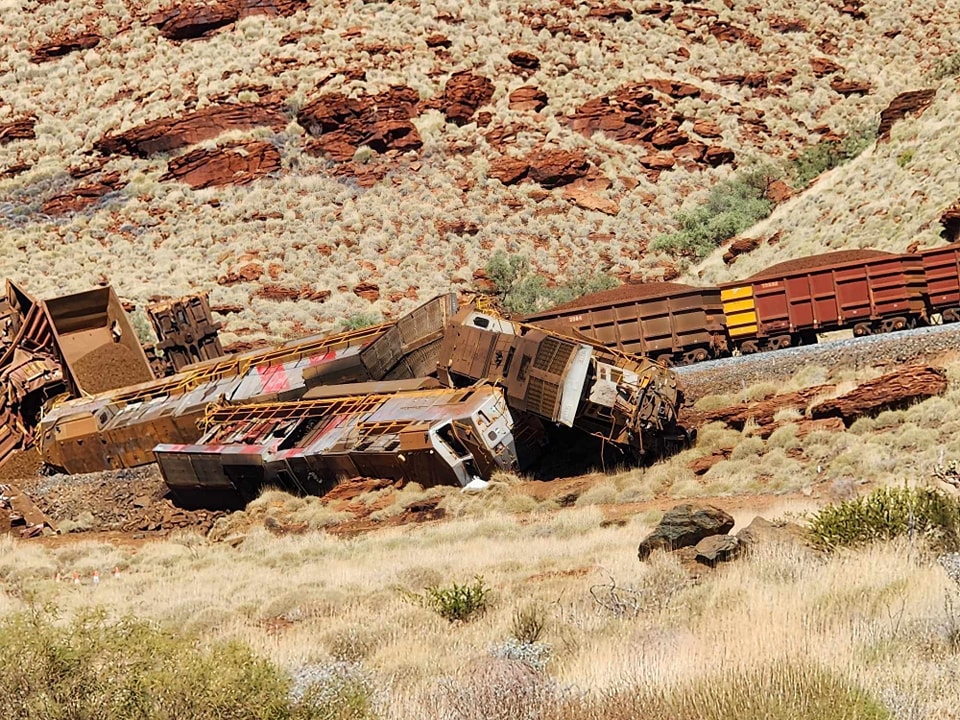
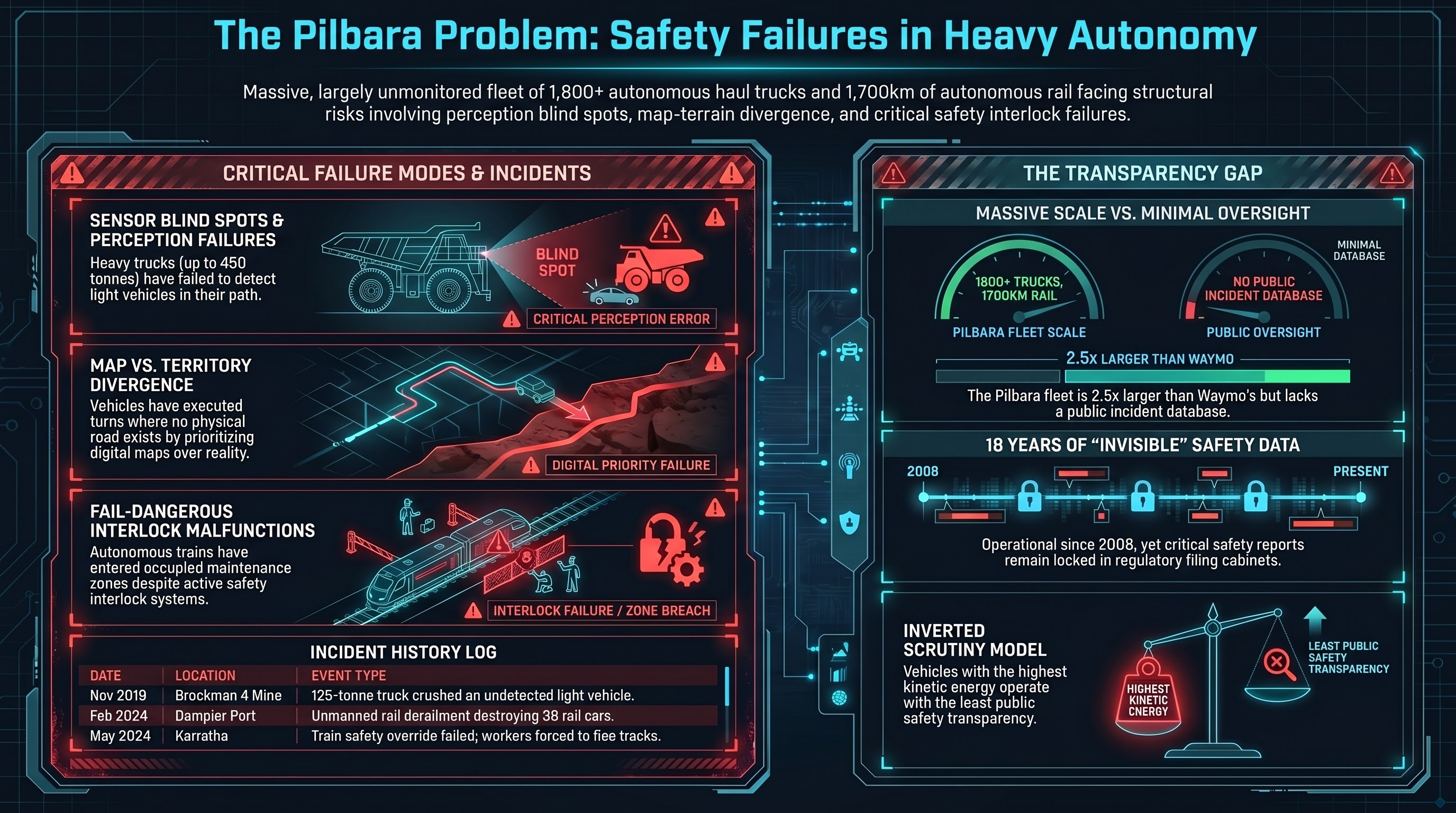
In terms of simple operation, Rio Tinto ore trains in Australia are pretty much there.
I've been following articles on its progress a while now.


They're doing route setting with autonomous operation.
It includes object detection both on train and at level crossings, of which there are 42 on the route.


Another key point is that is functionally similar to ETCS level 2 with balises.
It doesn't use GSM-R and there are a few other differences so it doesn't actually count as ETCS (AFAIU)


The train control and signalling systems are tied together,
so there is no need to read signals by camera.


Total cost was stated at about $AUS 1.7 and the main work was done by Hitachi Rail STS

On the other hand the route is in the Australian desert and it is freight only.
The network is entirely private, all track and trains are operated by a single company.
It has also been said that "last mile" activities at the end stations may have a driver
board the train.

There have also been some accidents.


irish_rail

On Moderation
Joined
30 Oct 2013
Messages
4,531
Location
Plymouth
Yet other than Bedford, all the previous fatal crashes of last 20 years where absolutely nothing to do with a driver (Talerdigg, Stonehaven, Lambrigg, Ufton). So not one passenger has died due to train drivers actions in the past 20 years. The idea that we are going to spend many many billions to rid ourselves of train drivers is frankly ridiculous.
 

HighlandStorm

Member
Joined
27 Sep 2024
Messages
178
Location
Inverness
The idea that we are going to spend many many billions to rid ourselves of train drivers is frankly ridiculous.
Having human staff on trains is expensive - arguably once the tech is proved, there is a case that said staff are better utilised onboard in passenger facing roles, than hidden away. Indeed if an emergency does arise it’s arguably better that the onboard safety critical staff member(s) are not located at the pointy end!

Billions are going to be spent on signalling renewal, so I agree that billions won’t be chucked at ‘getting rid of drivers’, but a change to onboard roles *might* be a future consequence of that.
 

SynthD

Established Member
Joined
4 Apr 2020
Messages
2,061
Location
UK
The [Australian mine] network is entirely private
That’s a major part of it. How many level and pedestrian crossings is this assessment proposing to close? That is key information to narrow down the very wide estimate in cost to something you’d still call a wide estimate.
 

Snow1964

Established Member
Joined
7 Oct 2019
Messages
11,292
Location
West Wiltshire
Such a project is highly likely possible in technical terms, but would be long and very expensive.
The recent Rolling stock and Infrastructure study does say that it might be appropriate in certain areas, and all new rolling stock should have provision for it to be be included later.

Although it also says standard couplers, standardised cabs, ECTS provision etc, so looks like not ruling out trains being able to go into ECTS areas, or even automatic drive mode areas (they start to become a thing in next 30 years)
 

JohnofWessex

Member
Joined
3 Jan 2026
Messages
159
Location
frome
I have seen it suggested some years ago that the area where there might be a major benefit from automation is train stops on metro services where you could get a worthwhile increase in capacity by automating station stops
 

Bald Rick

Veteran Member
Joined
28 Sep 2010
Messages
35,970
Yet other than Bedford, all the previous fatal crashes of last 20 years where absolutely nothing to do with a driver (Talerdigg, Stonehaven, Lambrigg, Ufton). So not one passenger has died due to train drivers actions in the past 20 years. The idea that we are going to spend many many billions to rid ourselves of train drivers is frankly ridiculous.

If and when it eventually happens (many, many years hence) it will not be for saety reasons (although that may be a by product), but for capacity and financial reasons. It costs over £3bn a year for the drivers we have, so a project that enabled their removal costing - say £30bn would have a reasonable pay back.

All fanciful though.
 

Hairyspotter

Member
Joined
14 Jun 2025
Messages
63
Location
Here & there
And once again, I make the point, when you automate jobs out of existence, what, exactly do you intend for the people formerly employed doing those jobs to do to buy food, clothe themselves and so on? Are you going to mandate that a train driver earning for example £65k per year is forced to clean toilets on minimum wage? There is a social and societal side to this as well.
 

JamesT

Established Member
Joined
25 Feb 2015
Messages
4,919
And once again, I make the point, when you automate jobs out of existence, what, exactly do you intend for the people formerly employed doing those jobs to do to buy food, clothe themselves and so on? Are you going to mandate that a train driver earning for example £65k per year is forced to clean toilets on minimum wage? There is a social and societal side to this as well.
The average age of a train driver is 48. By the time you implemented automation many of them would be retired.
Surely train drivers are capable of retraining to other jobs? It’s not a choice between their current one and something on minimum wage.
The world moves on, trying to battle against it is unlikely to win in the long run.
 

fishwomp

Established Member
Joined
5 Jan 2020
Messages
1,363
Location
milton keynes
When Mick Whelan said "People will be taking driverless car journeys to Barnard Castle before a driverless tube to Elephant and Castle.", I thought was a misjudged jibe. It made the union look dismissive and backwards - even if the statement appears true given how it's working out.

- The totally driverless turnaround at Paddington on the Elizabeth line on a very limited route.
- ATO on Thameslink core
- the DLR in late 1980s (as noted);
- remote control at Kellingley Colliery in 1980s - on a couple of 56s;
- 'ATO'-ish on the Victoria line in 1970s.

That's not much progress in 50 years! But driverless cars was nothing - but then the last ten years, whoosh.. Driverless cars is a harder problem - but with more $$$ to be made, it's happening sooner.

Since Dominic Cummings' unfortunate eyesight issue, driverless taxis are approved in London now.

For general railways - I still can't see an obvious next step - given the money and time going into ETCS, it'd be a huge distraction.

Except on an underground line.... which in parts are already effectively driverless: opening and closing doors can be a driver's duty, but it is not 'driving' trains - more like DLR, intervene and drive slow if the system stops..
 

Bald Rick

Veteran Member
Joined
28 Sep 2010
Messages
35,970
And once again, I make the point, when you automate jobs out of existence, what, exactly do you intend for the people formerly employed doing those jobs to do to buy food, clothe themselves and so on? Are you going to mandate that a train driver earning for example £65k per year is forced to clean toilets on minimum wage? There is a social and societal side to this as well.

The economy moves on. 50 years ago there were quarter of a million people in this country mining coal.
 

brad465

Veteran Member
Joined
11 Aug 2010
Messages
11,601
Location
Taunton or Kent
What infrastructure is required for completely driverless/staff-less running on the Underground? Apparently there would have to be evacuation walkways on every stretch of deep-level tunnel where such running is to be done. If that were true then retrofitting the old tunnels is a non-starter, but would obviously be fine for the Elizabeth line and any Underground extensions.
 

Bald Rick

Veteran Member
Joined
28 Sep 2010
Messages
35,970
Let's see how blasé you are when *your* job is automated out of existence

It has been, thanks. I got a new job.

However I wasn’t being blasé, just stating facts. There are millions of jobs in this country that have been automated over the years, not least on the railway - how many firemen do we employ these days? But, as ever, as the economy evolves new jobs are created.
 

Hairyspotter

Member
Joined
14 Jun 2025
Messages
63
Location
Here & there
And you miss the point I make. At some juncture there will be a tipping point where an amount of jobs are automated out of existence "because they can be", but there isn't a mechanism or any actual alternative work for the formerly employed people to do. It's all well and good automating Amazon warehouses, but if people aren't earning a reasonable wage, they can't afford to buy what Amazon sells.

This adage applies as much to railway staff as much as any other profession. But it's wrong to wish a profession out of existence to "own" obstinate trade unions, for example. As I say, there's a bigger picture at play here.
 

SynthD

Established Member
Joined
4 Apr 2020
Messages
2,061
Location
UK
As I say, there's a bigger picture at play here
The past few hundred years show the picture is bigger than you are looking at. How many office jobs today are on a computer? How many tons of crops can one farmer collect? There isn’t a formal mechanism for making new jobs, it just happens.
 

irish_rail

On Moderation
Joined
30 Oct 2013
Messages
4,531
Location
Plymouth
The average age of a train driver is 48. By the time you implemented automation many of them would be retired.
Surely train drivers are capable of retraining to other jobs? It’s not a choice between their current one and something on minimum wage.
The world moves on, trying to battle against it is unlikely to win in the long run.
I think probably well over half of the none railway jobs of posters on here will be automated by AI before train drivers roles on intercity , regional and branch lines are replaced. Intensive metro lines such as on LU, possibly these may go in next 10 years or so, but beyond the metros, no chance.
 

Backroom_boy

Member
Joined
28 Dec 2019
Messages
597
Location
London
I suspect the W&C line is the only bit of serious railway that could ever be able to be made to run with *no* members of staff on board.
 

HSTEd

Veteran Member
Joined
14 Jul 2011
Messages
20,389
The only way I can see that automation can permanently reduce demand for labour is if robots advance to the point that they require no human labour to build, operate and maintain. In such a scenario, the marginal cost of their productive output will rapidly trend to zero.

At which point we have arrived in the Star Trek post scarcity future... or at least a non faster than light travel approximation of it!
After that, jobs become something done to pass the time rather than obtain money to exchange for material goods or services.

Automation is part of the process through which labour productivity improves, which is the process that makes us all better off overall.
 

Top