• Our new ticketing site is now live! Using either this or the original site (both powered by TrainSplit) helps support the running of the forum with every ticket purchase! Find out more and ask any questions/give us feedback in this thread!

Greater Anglia fraud email investigation

logiadv

Member
Joined
21 Aug 2026
Messages
14
Location
shdl
Hi everyone,


I'm looking for advice on handling an ongoing investigation with a train operator's fraud/prosecutions team. I’ve received an initial investigation letter and am currently waiting for them to send through their official itemized list of flagged dates.


I want to be upfront about the situation so I can get accurate advice on how best to structure my formal settlement response.


Background & What Happened


Over the past year/18 months, I regularly engaged in short-faring using digital QR tickets bought on third-party apps. My main travel patterns involved cross-London commutes, as well as separate regional trips in the East of England.


To reduce costs, I frequently bought short-distance tickets to get through barriers rather than paying the full through-fare:


Buying short single-stop tickets (£2.45–£2.55) to enter/exit outer London barriers, but staying on the train into central London.


Buying local short-distance tickets (£1.90–£3.20) for separate regional legs.


Tapping in at entry barriers but not tapping out at the short-ticket destination, creating multiple unclosed journey records in the gate logs.


Claiming digital refunds on a small number of tickets after travel had occurred (around 11 approved refunds on record).


Applying a 16-25 Railcard discount on some tickets after my Railcard had expired (around late September).


Booking History Overview


Looking back at my purchasing records, the overall volume breaks down to:


~51 trips involving outer London / short-ticket routes


~14 trips involving local regional legs


~5 trips involving secondary regional routes


11 approved digital refunds


4 specific same-day cross-network sequence dates where two separate short tickets across different operators were purchased within 1–2 hours of each other.


Current Position & Questions


1. Scope of Charges: Knowing that train operators cross-reference data with other networks, will they include all ~51 short-ticket trips in their itemized breakdown, or will they only flag the specific dates where they have explicit cross-network card/scan matches?


2. Settlement Calculation: If every single short-fare trip is treated as a full peak single between my origin and final destination (£18.00–£25.00 full fare), I estimate the total unpaid fare gap plus investigation fees could land anywhere between £450 (if limited to clear match dates) and £1,350+ (if fully audited across all history). Is this realistic?


3. Student Payment Plans: I am a university student starting my course shortly, and I don't have the funds to pay a lump sum of £500–£1,300 upfront. How receptive are railway prosecution teams to agreeing to monthly installment plans (e.g., £30–£50/month) for an out-of-court settlement?


4. Drafting the Response: Once the itemized attachment arrives, what key elements should I include in my settlement request to maximize the chances of resolving this without court action?


Any guidance from members familiar with the revenue protection process would be greatly appreciated. Thanks!
 
Sponsor Post - registered members do not see these adverts; click here to register, or click here to log in
R

RailUK Forums

tatitiliti

Member
Joined
29 Mar 2025
Messages
217
Location
Newark
Hi everyone,


I'm looking for advice on handling an ongoing investigation with a train operator's fraud/prosecutions team. I’ve received an initial investigation letter and am currently waiting for them to send through their official itemized list of flagged dates.


I want to be upfront about the situation so I can get accurate advice on how best to structure my formal settlement response.


Background & What Happened


Over the past year/18 months, I regularly engaged in short-faring using digital QR tickets bought on third-party apps. My main travel patterns involved cross-London commutes, as well as separate regional trips in the East of England.


To reduce costs, I frequently bought short-distance tickets to get through barriers rather than paying the full through-fare:


Buying short single-stop tickets (£2.45–£2.55) to enter/exit outer London barriers, but staying on the train into central London.


Buying local short-distance tickets (£1.90–£3.20) for separate regional legs.


Tapping in at entry barriers but not tapping out at the short-ticket destination, creating multiple unclosed journey records in the gate logs.


Claiming digital refunds on a small number of tickets after travel had occurred (around 11 approved refunds on record).


Applying a 16-25 Railcard discount on some tickets after my Railcard had expired (around late September).


Booking History Overview


Looking back at my purchasing records, the overall volume breaks down to:


~51 trips involving outer London / short-ticket routes


~14 trips involving local regional legs


~5 trips involving secondary regional routes


11 approved digital refunds


4 specific same-day cross-network sequence dates where two separate short tickets across different operators were purchased within 1–2 hours of each other.


Current Position & Questions


1. Scope of Charges: Knowing that train operators cross-reference data with other networks, will they include all ~51 short-ticket trips in their itemized breakdown, or will they only flag the specific dates where they have explicit cross-network card/scan matches?


2. Settlement Calculation: If every single short-fare trip is treated as a full peak single between my origin and final destination (£18.00–£25.00 full fare), I estimate the total unpaid fare gap plus investigation fees could land anywhere between £450 (if limited to clear match dates) and £1,350+ (if fully audited across all history). Is this realistic?


3. Student Payment Plans: I am a university student starting my course shortly, and I don't have the funds to pay a lump sum of £500–£1,300 upfront. How receptive are railway prosecution teams to agreeing to monthly installment plans (e.g., £30–£50/month) for an out-of-court settlement?


4. Drafting the Response: Once the itemized attachment arrives, what key elements should I include in my settlement request to maximize the chances of resolving this without court action?


Any guidance from members familiar with the revenue protection process would be greatly appreciated. Thanks!
1. Were you actually stopped by a member of staff at any point during this?
2. Did you claim refunds on multiple tickets where the QR code had been scanned at a gateline or by a member of staff?
3. Please upload all redacted correspondence between you and Greater Anglia so far so we can see exactly what you’ve admitted to.
 

logiadv

Member
Joined
21 Aug 2026
Messages
14
Location
shdl
1. Were you actually stopped by a member of staff at any point during this?
2. Did you claim refunds on multiple tickets where the QR code had been scanned at a gateline or by a member of staff?
3. Please upload all redacted correspondence between you and Greater Anglia so far so we can see exactly what you’ve admitted to.
I don’t think I was stopped by anyone. Definitely not recently

I only refunded tickets that were printable. I didn’t print them so they were not valid tickets

All I’ve said tk greater is me asking if the can send me the journeys they are referring to
 

WesternLancer

Veteran Member
Joined
12 Apr 2019
Messages
14,944
I don’t think I was stopped by anyone. Definitely not recently

I only refunded tickets that were printable. I didn’t print them so they were not valid tickets

All I’ve said tk greater is me asking if the can send me the journeys they are referring to
If you’ve not been stopped (ie caught red handed) do not reply to any other messages with getting advice from here.

Replies are likely to incriminate yourself by giving or confirming the criminal acts you have almost certainly been doing.

It’s not in your interest to do that. At least not without understanding the consequences.
 

WesternLancer

Veteran Member
Joined
12 Apr 2019
Messages
14,944
Then what if they take it to court
Deal with that with advice from here if you receive any paperwork from the court to say this has actually happening.
Or engage a solicitor with specialist knowledge of rail fare evasion work to assist you.
 

WesternLancer

Veteran Member
Joined
12 Apr 2019
Messages
14,944
I just don’t want a criminal record
Well that was always a risk with every single fare you evaded.

They only needed to catch you red handed once to prosecute you in court and be gauranteed a guilty verdict by virtue of catching you without a ticket.
 

tatitiliti

Member
Joined
29 Mar 2025
Messages
217
Location
Newark
I don’t think I was stopped by anyone. Definitely not recently

I only refunded tickets that were printable. I didn’t print them so they were not valid tickets

All I’ve said tk greater is me asking if the can send me the journeys they are referring to
With those answers, it is safe to ignore. Fortunately, you’ve been smart and not incriminated yourself.

They won’t have evidence to take you to court without catching you in person - that’s why they’re trying to get you to incriminate yourself in writing!

I would ignore all further correspondence and, most importantly, buy correct tickets for your journey in future (as they may try to catch you in person) and not do any dodgy refunds. I would also start using a new account to buy tickets.
 

Fawkes Cat

Established Member
Joined
8 May 2017
Messages
5,246
I don'
Well that was always a risk with every single fare you evaded.

They only needed to catch you red handed once to prosecute you in court and be gauranteed a guilty verdict by virtue of catching you without a ticket.
I don't think it's been spelt out in this thread why this might be, so here goes:

There are actually two different sorts of courts in the UK: the criminal courts and the civil courts.

The criminal courts (magistrates and crown courts) deal with crimes. Their job is to decide if someone is guilty, and if so to punish them - which for the sort of offences we're talking about here means a fine on top of any compensation that has to be paid, but in other cases could mean sending people to prison. Because taking a fine off someone or sending them to prison is a very serious thing to do, it's important that the court gets it absolutely right. So that means the facts have to be proved: the traditional phrase is 'beyond reasonable doubt'.

The civil courts (county and high courts) deal with sorting out other sorts of disputes - such as who owes money to who. They can decide what the facts are, and order that the money be paid. This is less serious than fining someone or sending them to prison, so they work to a different level of proof - what is most likely to have happened on the evidence provided.

What this means in a case like the one we're talking about is that the railway think that someone is fare dodging - but what they know is that someone has been buying tickets. They may also know that the tickets have been used, but not be absolutely certain who used the tickets.

In reality, most train tickets are bought by the people who use them. So if the railway go to the civil court, and point out that they know that Jo Smith bought train tickets, and that these tickets were used for fare dodging, then the civil court will agree that it's most likely that Jo Smith was the person who was doing the fare dodging: the civil court will rule that Jo Smith will have to pay the costs of the fares that they dodged.

But if the railway goes to the criminal court and says that Jo Smith has been fare dodging, then the court will point out that they don't know 'beyond reasonable doubt' that it was Jo Smith who fare dodged - Jo Smith will walk away from the court with their reputation unstained. But if the railway asks Jo if they made the journeys, and Jo writes back accepting that they did, then that's evidence that Jo is guilty: if the railway also take that acceptance to the criminal court, Jo will be convicted and will have to pay a fine.

In law, you're not obliged to give evidence against yourself. So that's why we advise not giving evidence that the railway could use against you, even if they ask.
 

logiadv

Member
Joined
21 Aug 2026
Messages
14
Location
shdl
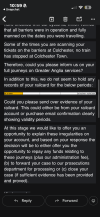
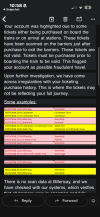
They responded. Are they only looking at these journeys or anymore
 

Attachments

  • IMG_1523.png
    IMG_1523.png
    360.2 KB · Views: 105
  • IMG_1522.png
    IMG_1522.png
    483.2 KB · Views: 104

tatitiliti

Member
Joined
29 Mar 2025
Messages
217
Location
Newark
They responded. Are they only looking at these journeys or anymore
Ignore. Don’t say another word to them.

== Doublepost prevention - post automatically merged: ==

I don'
I don't think it's been spelt out in this thread why this might be, so here goes:

There are actually two different sorts of courts in the UK: the criminal courts and the civil courts.

The criminal courts (magistrates and crown courts) deal with crimes. Their job is to decide if someone is guilty, and if so to punish them - which for the sort of offences we're talking about here means a fine on top of any compensation that has to be paid, but in other cases could mean sending people to prison. Because taking a fine off someone or sending them to prison is a very serious thing to do, it's important that the court gets it absolutely right. So that means the facts have to be proved: the traditional phrase is 'beyond reasonable doubt'.

The civil courts (county and high courts) deal with sorting out other sorts of disputes - such as who owes money to who. They can decide what the facts are, and order that the money be paid. This is less serious than fining someone or sending them to prison, so they work to a different level of proof - what is most likely to have happened on the evidence provided.

What this means in a case like the one we're talking about is that the railway think that someone is fare dodging - but what they know is that someone has been buying tickets. They may also know that the tickets have been used, but not be absolutely certain who used the tickets.

In reality, most train tickets are bought by the people who use them. So if the railway go to the civil court, and point out that they know that Jo Smith bought train tickets, and that these tickets were used for fare dodging, then the civil court will agree that it's most likely that Jo Smith was the person who was doing the fare dodging: the civil court will rule that Jo Smith will have to pay the costs of the fares that they dodged.

But if the railway goes to the criminal court and says that Jo Smith has been fare dodging, then the court will point out that they don't know 'beyond reasonable doubt' that it was Jo Smith who fare dodged - Jo Smith will walk away from the court with their reputation unstained. But if the railway asks Jo if they made the journeys, and Jo writes back accepting that they did, then that's evidence that Jo is guilty: if the railway also take that acceptance to the criminal court, Jo will be convicted and will have to pay a fine.

In law, you're not obliged to give evidence against yourself. So that's why we advise not giving evidence that the railway could use against you, even if they ask.
I wouldn’t say this would be a slam dunk if they tried to recover funds through civil proceedings either though. Also, from memory, GWR has tried to claim through civil proceedings, not sure we’ve seen many other TOCs do it including GA?

But to reassure OP, they won’t get a criminal record for this if they keep their mouth shut from now on.
 
Last edited:

323235

Established Member
Joined
8 Dec 2007
Messages
2,116
Location
North East Cheshire
Don’t say another word to them as they don’t have proof it was you without catching you in person (or a confession) and are highly unlikely to take you to court.

Start buying the correct tickets immediately.
 
Last edited:

tatitiliti

Member
Joined
29 Mar 2025
Messages
217
Location
Newark
I wouldn't be that generous with my wording. Leaving a massive trail of breadcrumbs to your continuous fraud isn't exactly smart.
I mean if you take half of a sentence I wrote out of context, then of course! The rest of that sentence says that OP was smart specifically for not admitting to anything in their response, not for committing obvious digital fraud but which GA can’t feasibly prosecute.

== Doublepost prevention - post automatically merged: ==

So if I decide to reply what should I say
You shouldn’t lol - you’ve got pretty much every experienced person on here in consensus with this. We’ve seen GA pulling this tactic about 1000 times before and the biggest aim of these data exercises is to scare people into buying the right ticket from now on, for which it looks like it’s worked in this case.
 
Last edited:

logiadv

Member
Joined
21 Aug 2026
Messages
14
Location
shdl
I mean if you take half of a sentence I wrote out of context, then of course! The rest of that sentence says that OP was smart specifically for not admitting to anything in their response, not for committing obvious digital fraud but which GA can’t feasibly prosecute.

== Doublepost prevention - post automatically merged: ==


You shouldn’t lol - you’ve got pretty much every experienced person on here in consensus with this.
But I wouldn’t know if they wre going to create a case tk send me to court. I don’t even know what evidence they have or how far back they wre going to look into my Trainline account. If it’s only those journeys I’m happy to pay the fine
 

speedy1

Member
Joined
1 Sep 2023
Messages
301
Location
Mossley
So if I decide to reply what should I say

Is your thinking that if you engage, you can just pay a fine and also reduce your chances of (or avoid) prosecution?

Or by replying you'll reduce some anxiety because you'll know their plans?

I believe both of those ideas are incorrect but the experienced members here can comment on that
 
Last edited:

tatitiliti

Member
Joined
29 Mar 2025
Messages
217
Location
Newark
But I wouldn’t know if they wre going to create a case tk send me to court. I don’t even know what evidence they have or how far back they wre going to look into my Trainline account. If it’s only those journeys I’m happy to pay the fine
I can tell you that they won’t create a case to send you to court because on the basis of all the other (~100+) data trawling exercises from GA we’ve seen where the individual was *not* stopped in person, everyone who admitted nothing and ignored all further correspondence resulted in GA giving up and the individual hearing nothing further. GA do NOT have evidence to bring a prosecution against you or they wouldn’t be asking to try to get evidence/an admission from you!

It is also far *safer* for you in fact to ignore all further correspondence. If you continue to engage with them, there is also the risk that:

- They find or allege other journeys that they add to the settlement, some of which you may have had a valid ticket/railcard for but you cannot prove.

- You inadvertently make/imply admissions and they start digging into your account further and decide to take you to court anyway on the basis of your admission.

As soon as you admit to the fraudulent journeys they suggest or agree to pay for the journeys they suggest, they’ve basically got an admission out of you.
 
Last edited:

tatitiliti

Member
Joined
29 Mar 2025
Messages
217
Location
Newark
I think i was stopped some time ago but it wasn’t on greater Anglia
Then that’s irrelevant to this email chain provided you weren’t sent any postal correspondence about that specific incident.

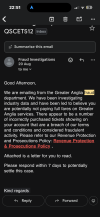
Can you share the very original email you got from GA before you responded? It will likely start with something like ‘From industry data, we are led to believe you have not been paying full fares on Greater Anglia’ or words to that effect.
 

logiadv

Member
Joined
21 Aug 2026
Messages
14
Location
shdl
Then that’s irrelevant to this email chain provided you weren’t sent any postal correspondence about that specific incident.

Can you share the very original email you got from GA before you responded? It will likely start with something like ‘From industry data, we are led to believe you have not been paying full fares on Greater Anglia’ or words to that effect.
 

Attachments

  • IMG_1531.jpeg
    IMG_1531.jpeg
    41.9 KB · Views: 60
  • IMG_1530.png
    IMG_1530.png
    295.5 KB · Views: 60

tatitiliti

Member
Joined
29 Mar 2025
Messages
217
Location
Newark
That’s the *exact* data fishing email format they send every time and has nothing to do with the time you say you were stopped by a different company.

Safe and strongly advised to ignore this and any further email correspondence they send you!


== Doublepost prevention - post automatically merged: ==

I think i was stopped some time ago but it wasn’t on greater Anglia
 

logiadv

Member
Joined
21 Aug 2026
Messages
14
Location
shdl
Is this true.
Under the National Rail Conditions of Travel, Greater Anglia's prosecution and revenue protection team can only recover lost revenue for their own network. They cannot calculate penalties or recover unpaid fares on behalf of Thameslink or TfL unless those operators join a joint prosecution (which rarely happens for minor ticketing audits).
 

John R

Established Member
Joined
1 Jul 2013
Messages
6,058
Is this true.
Under the National Rail Conditions of Travel, Greater Anglia's prosecution and revenue protection team can only recover lost revenue for their own network. They cannot calculate penalties or recover unpaid fares on behalf of Thameslink or TfL unless those operators join a joint prosecution (which rarely happens for minor ticketing audits).
Our experience is that when offering out of court settlement amounts, it’s very usual that the company threatening to prosecute includes suspicious journeys on other company’s services in determining the settlement amounts. (Where they bother to do a data trawl that is, which is not all the time.)
 

Fawkes Cat

Established Member
Joined
8 May 2017
Messages
5,246
Is this true.
Under the National Rail Conditions of Travel, Greater Anglia's prosecution and revenue protection team can only recover lost revenue for their own network. They cannot calculate penalties or recover unpaid fares on behalf of Thameslink or TfL unless those operators join a joint prosecution (which rarely happens for minor ticketing audits).
Our experience is that when offering out of court settlement amounts, it’s very usual that the company threatening to prosecute includes suspicious journeys on other company’s services in determining the settlement amounts. (Where they bother to do a data trawl that is, which is not all the time.)
I am pretty certain that the National Rail Conditions of Travel do not say any such thing, but you can check them at https://assets.nationalrail.co.uk/e...ional_Rail_Conditions_of_Travel_July_2026.pdf
 

Top