• Our new ticketing site is now live! Using either this or the original site (both powered by TrainSplit) helps support the running of the forum with every ticket purchase! Find out more and ask any questions/give us feedback in this thread!

Newcastle - Sunderland pre T&W Metro

Miles Bown

Member
Joined
11 Apr 2019
Messages
39
I've been reading up on the history of the Tyne and Wear Metro, but can't find any info on this.

What was the service like between Newcastle and Sunderland before the Wearside Metro extension took over the all-stops service and left just the 1tph up the Durham coast (assuming there were more trains that just that)?

Did all services call at Seaburn etc or did any run fast? Pre-1980 did services also call at Gateshead, Felling and Pelaw?

Thank you!
 
Sponsor Post - registered members do not see these adverts; click here to register, or click here to log in
R

RailUK Forums

melon68

Member
Joined
9 Sep 2020
Messages
59
Location
Wexford, Ireland
My housemate was a student in Sunderland around 1989-90 but we lived in Newcastle.

He used to catch the train to lectures occasionally, and the daytime service during the week was generally 4 trains per hour I recall, with a mixture of expresses that only called at Heworth, for the Metro interchange, and stoppers, which called at all stations between Heworth and Sunderland.

There were not as many stations as now and Brockley Whins was called Boldon Colliery, as there was or had recently been one near the station.

I think one of the fasts ran through to Middlesborough but before Newcastle station was remodelled for electrification around 1990, there were not so many trains that ran through to the Tyne Valley line, if any.

There were only 3 or 4 through platforms and the island platform furthest from the entrance was added around that time. It greatly improved the flexibility of the services. I think the platforms at Felling and Pelaw went after the metro opened and Gateshead East may have survived into the 80s. In 1989 the platforms were still there but the station was closed.

Trains were mostly Metro Cammell DMUs, with no loco hauled services except football specials to Seaburn.
 
Last edited by a moderator:

RT4038

Established Member
Joined
22 Feb 2014
Messages
5,449
My housemate was a student in Sunderland around 1989-90 but we lived in Newcastle. He used to catch the train to lectures occasionally and the daytime service during the week was generally 4 trains per hour I recall with a mixture of expresses that only called at Heworth, for the Metro interchange, and stoppers, which called at all stations between Heworth and Sunderland. There were not as many stations as now and Brockley Whins was called Boldon Colliery, as there was or had recently been one near the station. I think one of the fasts ran through to Middlesborough but before Newcastle station was remodelled for electrification around 1990 there were not so many trains that ran through to the Tyne Valley line, if any. There were only 3 or 4 through platforms and the island platform furthest from the entrance was added around that time. It greatly improved the flexibility of the services. I think the platforms at Felling and Pelaw went after the metro opened and Gateshead East may have survived into the 80s. In 1989 the platforms were still there but the station was closed. Trains were mostly Metro Cammell DMUs with no loco hauled services except football specials to Seaburn.

In the 85/86 timetable there were 3 trains per hour, leaving Newcastle at 20 minute intervals. '15 past was Heworth and fast to Sunderland then all stations (except Greatham) to Middlesbrough.

The '35 and '55 were all Stations to Sunderland. In the evening, the last trains beyond Sunderland were 19h15 then 21h45, with a 22h35 Sa. only to Seaham. Nothing went across Newcastle Central to the Tyne Valley line. Sundays was hourly, all stations, to Sunderland extended hourly or two hourly beyond Sunderland all stations (except Greatham) to M'boro.

On Mo.-Sa. there was a 05h35 Newcastle-Kings Cross '125' which only stopped at Sunderland, Hartlepool, Stockton, Middlesbrough, Northallerton, York and Stevenage.

The Winter 62/63 timetable was 2 trains per hour from Newcastle: '13 past was Gateshead and Seaburn to Sunderland then Seaham, Hartlepool, Billingham, Stockton, M'boro; the '45 past was all Stations incl. Felling, Pelaw and Monkwearmouth to Sunderland. There was a few extra trains in the peaks.

The stations at Easington, Horden and Blackhall Colliery were infrequently served by Sunderland starting trains with a couple of peak exceptions through from Newcastle. (including an 05h52 Newcastle to Guisborough arr 07h58 !)

 
Last edited:

Failed Unit

Established Member
Joined
26 Jan 2009
Messages
9,735
Location
Central Belt
In the early 1990s the timetable was generally.

Middlesbrough - Hexham. Heworth only between Sunderland and Newcastle (156)
Sunderland - Carlisle - Heworth only between Sunderland and Newcastle (156)
Sunderland - MetroCentre all stations (Pacer)

One thing I would also be interested in is why the pacers were changed. The 143s started on this route but they were changed for 142s. Both carrying T&W livery.

The Middlesbrough services were all stations. It is possible that Middlesbrough a more frequent service in the peak
 

xotGD

Established Member
Joined
4 Feb 2017
Messages
7,814
Trains were mostly Metro Cammell DMUs with no loco hauled services except football specials to Seaburn.
At times there were plenty of loco hauled services due to the chronic unreliability of the 143s. Happy days indeed.

Earlier, there used to be the 1N03 and 1N04 sleeper portions to/from Darlo via the coast, which carried on for a couple of years even after they stopped conveying sleepers.

Gateshead would chuck out anything and everything on these services.

You also had the Scarborough - Newcastle via the coast on summer Saturdays.
 
Joined
23 Nov 2023
Messages
743
Location
Grimsby
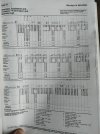
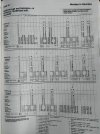
The September 1992 to May 1993 timetable has off-peak departures from both Newcastle and Sunderland every 15 minutes at 00, 15, 30 and 45.

Between around 1000 and 1630 most stoppers extended to/from Gateshead Metro Centre.

From Newcastle the 00 was to Middlesbrough with some starting back from Carlisle or the Metro Centre. The rest terminated at Sunderland. The 30 departure came through from Hexham and, like the 00 called only at Heworth.
The 15 and 45 were all stations to Sunderland and came from the Metro Centre.

In the other direction the 00 came from Middlesbrough until 1100, after which the Boro service was the 30 departure to Newcastle. Most went to Hexham with one or two to Carlisle. The 00 and 30 were the fast services calling at Heworth. The ones starting at Sunderland projected to Metro Centre, Hexham or Carlisle in a seemingly random order.

The 15 and 45 were stoppers and generally went to Metro Centre in the daytime.

During the evening a 20 minute frequency was run until 2300, mainly between Newcastle and Sunderland calling at all stations, with just the odd one to/from Middlesbrough.

Sundays were half-hourly all stations and all starting or terminating in Newcastle. Approximately one every two hours extended to/from Middlesbrough.

Notables were the 0700 from Sunderland which started at Seaham and on Monday to Friday continued to Morpeth, 0840 Sunderland to Newcastle all stations which started at Nunthorpe, the 1300 from Sunderland which continued via Carlisle and the Cumbrian coast to Preston and the 2200 Sunderland to Newcastle which had come from Liverpool Lime Street.

Two other morning peak journeys also started at Seaham.

In the opposite direction the 0655 (Saturday) or 0700 (Mon-Fri) from Newcastle went through to Liverpool and the 1030 to Heworth and Sunderland had begun its gruelling journey in Barrow-in-Furness at 0615!

When I first worked in Leeds circa 1996 the 0618 Leeds to Newcastle ran via Middlesbrough and the Durham coast and served all stops from Sunderland to Newcastle; it would have hit Sunderland at about 0845-0850.

My July 1990 Tyne and Wear guide to Sunderland has the Monday to Saturday daytime and evening frequencies the same, i.e. 15 and 20 minutes respectively, but Sundays are only hourly. Being a local TW guide it doesn't show where anything went before or after Newcastle and Sunderland.

I've attached photos of the Monday to Saturday pages for September 1992 to May 1993 below, hopefully they're readable;
 

Attachments

  • IMG20260828101955.jpg
    IMG20260828101955.jpg
    4.5 MB · Views: 32
  • IMG20260828101941.jpg
    IMG20260828101941.jpg
    4.9 MB · Views: 30

Big Jumby 74

Established Member
Joined
12 Feb 2022
Messages
2,219
Location
UK
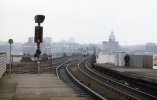
A gloomy Saturday 19th January 1980, a Leap year. After a visit to GD managed to miss two consecutive trains from Gateshead back to Newcastle Central*. The Sunderland and South Shields services were half hourly at that time (SO). The train nearest (class 105 on rear) is either the 13.45 or 14.15 Sunderland to Newcastle. The train just visible in the section ahead of this is either the 13.40 or 14.10 South Shields to Newcastle. The latter being booked off Gateshead four minutes ahead of the Sunderland services, so possibly this one was delayed getting in to Newcastle, hence the queue on the bridge?

At this time there was also an hourly service between Middlesborough and Newcastle which ran non stop between Sunderland and Newcastle.

* With hindsight (and a lack of accurate notes surviving) the order of trains in my image might be a late running Middlesborough to Newcastle (furthest) followed by a South Shields (105 on rear), thus I may have caught the Sunderland, but just can't remember this far down the line. May just as easily have walked across to Newcastle having missed both trains?
 

Attachments

  • BJ-Gateshead. January 1980.jpg
    BJ-Gateshead. January 1980.jpg
    304.9 KB · Views: 82
Last edited:

Miles Bown

Member
Joined
11 Apr 2019
Messages
39
Thank you all, some very interesting insights. Safe to say it seems like the Metro was a big improvement!
 

Failed Unit

Established Member
Joined
26 Jan 2009
Messages
9,735
Location
Central Belt
A gloomy Saturday 19th January 1980, a Leap year. After a visit to GD managed to miss two consecutive trains from Gateshead back to Newcastle Central*. The Sunderland and South Shields services were half hourly at that time (SO). The train nearest (class 105 on rear) is either the 13.45 or 14.15 Sunderland to Newcastle. The train just visible in the section ahead of this is either the 13.40 or 14.10 South Shields to Newcastle. The latter being booked off Gateshead four minutes ahead of the Sunderland services, so possibly this one was delayed getting in to Newcastle, hence the queue on the bridge?

At this time there was also an hourly service between Middlesborough and Newcastle which ran non stop between Sunderland and Newcastle.

* With hindsight (and a lack of accurate notes surviving) the order of trains in my image might be a late running Middlesborough to Newcastle (furthest) followed by a South Shields (105 on rear), thus I may have caught the Sunderland, but just can't remember this far down the line. May just as easily have walked across to Newcastle having missed both trains?
Very interesting, only lived in Gateshead in the early 1990s. Hard to believe the high level bridge had 3 tracks. No real evidence of the station anymore. I suspect it wasn’t well used like Manors going into Newcastle (too close) - Probably would have used it going south. That said I did use the Metro lots from Gateshead, but it is closer to the town centre and my destinations was either Monument or Haymarket most of the time
 

Bevan Price

Established Member
Joined
22 Apr 2010
Messages
8,319
In the early 1990s the timetable was generally.

Middlesbrough - Hexham. Heworth only between Sunderland and Newcastle (156)
Sunderland - Carlisle - Heworth only between Sunderland and Newcastle (156)
Sunderland - MetroCentre all stations (Pacer)

One thing I would also be interested in is why the pacers were changed. The 143s started on this route but they were changed for 142s. Both carrying T&W livery.

The Middlesbrough services were all stations. It is possible that Middlesbrough a more frequent service in the peak
The 143s were removed so they could replace older 1st generation units, mainly on Cardiff Valleys services, but a few also in the West Country.
 

xotGD

Established Member
Joined
4 Feb 2017
Messages
7,814
The 143s were removed so they could replace older 1st generation units, mainly on Cardiff Valleys services, but a few also in the West Country.
But why couldn't Heaton keep the 143s, with 142s sent to Cardiff?
 
Joined
23 Nov 2023
Messages
743
Location
Grimsby
But why couldn't Heaton keep the 143s, with 142s sent to Cardiff?
I think there were a number of factors. Heaton received 7 class 153s, 7 class 156s and 11 class 142s to replace its 25 class 143s. The 156s were intended to give a better standard of comfort on the Carlisle to Newcastle service.

Rather than split the class 143 fleet by keeping the 11 which hadn't been displaced by Sprinters and transferring the rest away, BR opted to keep them all together.

In the 1980s John Davies (the manager at Cardiff) had been dead set against Pacers, which is why none went there new. There was a general feeling amongst railway managers that Pacers were rubbish but that the 143s and 144s were the best of the bunch, so it's possible that the Cardiff management could only be persuaded to take Pacers by being offered the 143s. The 144s being fully occupied in West Yorkshire.
Cardiff would get some 142s, but only in privatisation days.

The intriguing point for me is that the last six 143s (143020-143025, later 143320-143325 and later still 143620-143625(!)) were owned by Tyne and Wear PTE. I never did find out if BR bought them from the PTE or if the six 142s that received TW livery were swapped for the 143s.
 

xotGD

Established Member
Joined
4 Feb 2017
Messages
7,814
I think there were a number of factors. Heaton received 7 class 153s, 7 class 156s and 11 class 142s to replace its 25 class 143s. The 156s were intended to give a better standard of comfort on the Carlisle to Newcastle service.

Rather than split the class 143 fleet by keeping the 11 which hadn't been displaced by Sprinters and transferring the rest away, BR opted to keep them all together.

In the 1980s John Davies (the manager at Cardiff) had been dead set against Pacers, which is why none went there new. There was a general feeling amongst railway managers that Pacers were rubbish but that the 143s and 144s were the best of the bunch, so it's possible that the Cardiff management could only be persuaded to take Pacers by being offered the 143s. The 144s being fully occupied in West Yorkshire.
Cardiff would get some 142s, but only in privatisation days.

The intriguing point for me is that the last six 143s (143020-143025, later 143320-143325 and later still 143620-143625(!)) were owned by Tyne and Wear PTE. I never did find out if BR bought them from the PTE or if the six 142s that received TW livery were swapped for the 143s.
Thanks. That makes a lot of sense, not wanting to split the 143s between two ends of the country.
 

swt_passenger

Veteran Member
Joined
7 Apr 2010
Messages
34,233
Very interesting, only lived in Gateshead in the early 1990s. Hard to believe the high level bridge had 3 tracks. No real evidence of the station anymore. I suspect it wasn’t well used like Manors going into Newcastle (too close) - Probably would have used it going south. That said I did use the Metro lots from Gateshead, but it is closer to the town centre and my destinations was either Monument or Haymarket most of the time
If I recall correctly, the vast majority of the platforms at Gateshead East were wooden construction. I passed through on the way to South Shields a few times in the late 60s.

The original station (on opening) was a very narrow island, but eventually it was rebuilt, and the up platform and the main station buildings were rebuilt outside the footprint of the original viaduct, on the inside of the South Shields bound curve.

So when it came to demolition back to the original viaducts width in the 80s everything on the up side disappeared. I think the down platform was within the original viaduct width though and signs of it remained for a while longer.

In the station‘s full extent, there were no facilities on the Newcastle bound platform, it was quite basic with just the wall at the rear supporting the main roof. The design of having the larger spaces and facilities on the up side definitely fits with most usage being southbound, which fits your ideas.

I suspect many people bound for Newcastle centre, rather than the Central Station, would have just walked over the High Level.
 
Last edited:

Jagdpanther

Member
Joined
31 Oct 2016
Messages
59
Location
County durham
I used the line in my late teens in the late '70s & early '80s, regularly legging it through Newcastle to catch the last train to Sunderland (about 11.30pm) after punk gigs in the city. I think two trains per hour & always busy.

The stations seemed very decrepit & unwelcoming, vandalism was rife, especially Gateshead (East) - West was still there but half derelict. Seaburn, Boldon Colliery & East Boldon were all very shabby. Ponlop Crossing was still in place although rarely used at this point - the Sunderland train rattled like hell going over it! Lots of coal infrastructure still around then.

Felling & Pelaw closed in the late '70s being replaced by Heworth which I seem to remember had yellow T&W branding years before it ever saw a Metro train.

The trains were mostly Met Cammell DMUS (I guess 101s) but I was still using the line when the Pacers started to arrive. I remember using the prototype pacer, Class 140 when it was on test there. A particularly ugly thing, no more comfortable than the aging DMUs its kind were set to replace!
 

Failed Unit

Established Member
Joined
26 Jan 2009
Messages
9,735
Location
Central Belt
I think there were a number of factors. Heaton received 7 class 153s, 7 class 156s and 11 class 142s to replace its 25 class 143s. The 156s were intended to give a better standard of comfort on the Carlisle to Newcastle service.

Rather than split the class 143 fleet by keeping the 11 which hadn't been displaced by Sprinters and transferring the rest away, BR opted to keep them all together.

In the 1980s John Davies (the manager at Cardiff) had been dead set against Pacers, which is why none went there new. There was a general feeling amongst railway managers that Pacers were rubbish but that the 143s and 144s were the best of the bunch, so it's possible that the Cardiff management could only be persuaded to take Pacers by being offered the 143s. The 144s being fully occupied in West Yorkshire.
Cardiff would get some 142s, but only in privatisation days.

The intriguing point for me is that the last six 143s (143020-143025, later 143320-143325 and later still 143620-143625(!)) were owned by Tyne and Wear PTE. I never did find out if BR bought them from the PTE or if the six 142s that received TW livery were swapped for the 143s.
I remember the 153s, They had a lot of disputes with Heaton Drivers to drive them. The started of on a Saltburn to Newcastle route via Durham. However although end to end they were well suited - Durham and Chester-Le-Street could result in over-crowding.

The 153s also did Newcastle - Carlisle (don’t remember them heading to Middlesbrough).

I did recall Middlesbrough - Whitby had a 3 car 144 at the time, not sure if that was anything to do 143 similarities.
 

Failed Unit

Established Member
Joined
26 Jan 2009
Messages
9,735
Location
Central Belt
If I recall in terms of seating they were not actually that much difference, 102 on a pacer or 75 on a 153. I think the 142 was a more comfortable unit. Not as cramped.

I recall the TPE service every day, in mid 1990s that an extension of the Newcastle - Liverpool run to Sunderland. I don’t recall if it was hourly or alternate hours. It was an extra and non-stop. Metro lost any chance to keep it.

I assume the 156s the arrived at Heaton to replace 143 came from the TPE route, after they were displaced by 158s.
 

Helvellyn

Established Member
Joined
28 Aug 2009
Messages
2,568
I assume the 156s the arrived at Heaton to replace 143 came from the TPE route, after they were displaced by 158s.
No, they were for the Tyne Valley route from new. This was at the time Corkerhill got its first batch of units for the G&SW/Stranraer routes, which included a new through Stranraer-Newcastle service that saw a ScotRail unit work through to Newcastle with a Heaton unit from Carlisle.

Once Corkerhill got its second batch of units, which included the fourteen Strathclyde PTE livened units (156501-514, although only twelve were owned by the PTE) these would appear at Newcastle as well.

Add in the Settle & Carlisle going over to 156s from Neville Hill then it meant at Carlisle you could see Heaton, Corkerhill and Neville Hill 156s. I think Newton Heath ones appeared at some point as well on Lancaster/Barrow-Carlisle services (along with Newton Heath 153s), whilst Heaton 153s could appear on Carlisle-Whitehaven services.
 
Joined
23 Nov 2023
Messages
743
Location
Grimsby
I remember the 153s, They had a lot of disputes with Heaton Drivers to drive them. The started of on a Saltburn to Newcastle route via Durham. However although end to end they were well suited - Durham and Chester-Le-Street could result in over-crowding. The 153s also did Newcastle - Carlisle (don’t remember them heading to Middlesbrough). I did recall Middlesbrough - Whitby had a 3 car 144 at the time, not sure if that was anything to do 143 similarities.
I spent some time in Middlesbrough in 1996 and there was at least one 153 on the Saltburn to Darlington/Bishop Auckland services every day.

The 144 was a temporary solution for the schoolkids on the Whitby line. There were too many for a single 142 but not enough to justify using two units.

However by the time of my visit to the area they had found a spare unit and were using 2x142 coupled together on the Whitby service.

Mechanically all the Pacers were similar in terms of engine (Leyland TL11 later replaced by Cummins) and gearbox (SCG later replaced with Voith), but the engine and gearbox were the opposite way round on 143s and 144s, i.e one had the engine at the inner end of each vehicle and one at the outer, although I can't remember which was which.
If I recall in terms of seating they were not actually that much difference, 102 on a pacer or 75 on a 153. I think the 142 was a more comfortable unit. Not as cramped.
The difference was even less when Northern Spirit/Arriva refurbished their 142s with 2+2 seating.
Once Corkerhill got its second batch of units, which included the fourteen Strathclyde PTE livened units (156501-514, although only twelve were owned by the PTE) these would appear at Newcastle as well.
Yes, I remember being very excited when an orange one turned up in Carlisle to take me back to Newcastle c.1990, if a little disappointed to find they were the same inside as the Provincial liveried ones!

The arrival of Heaton's 156s wouldn't have created a surplus for a couple of years because various 143s were out of traffic awaiting repairs to their gearboxes, then later units were out of service having Voith gearboxes fitted.
The 156s would have enabled the end of the class 31 substitutes mentioned above, plus the "heritage" DMUs that were drafted in to cover for the 143s... I remember a 116 spluttering around Newcastle!
 
Last edited:

Failed Unit

Established Member
Joined
26 Jan 2009
Messages
9,735
Location
Central Belt
I do remember the ”Scotrail services”. They never went beyond Newcastle during my time there. I think one of them even overnighted at Heaton. It was amazing they Survived so long after privatisation, although I understand that there were a reasonable amount of people that would do The direct route from Kilmarnock - Newcastle.

I also recall they kept the Ashbourne seating longer than the Heaton based units. Although seating is subjective I never found the Richmond seating comfortable so would try and get the Scotrail service for the better seats. They kept the original seats a lot longer, however I can only remember the Strathclyde units with green covers.
 

sprinterguy

Veteran Member
Joined
4 Mar 2010
Messages
11,565
Location
Macclesfield
I recall the TPE service every day, in mid 1990s that an extension of the Newcastle - Liverpool run to Sunderland. I don’t recall if it was hourly or alternate hours. It was an extra and non-stop. Metro lost any chance to keep it.
They were bi-hourly, 08:45ish, 10:45ish, etc from Sunderland. Commenced in 1996 and continued running for a year or so after the Metro extension opened.
 
Last edited:

lakeland844

Member
Joined
4 Dec 2020
Messages
38
Location
Cumbria
Thank you all, some very interesting insights. Safe to say it seems like the Metro was a big improvement!
Metro was a massive improvement.

I was a regular user of the line during the 1970s and it all seemed run down with scruffy vandalised stations - not very appealing to customers at all.

Metro Cammell units were the usual fare with South Gosforth, occasionally providing a Derby 108 set. About 1976, the Derby units and some Metro Cammell units were sent away for refurbishment never to return to NE England and replaced by a motley collection of cast offs Class 105 Craven's and Birmingham Class 104. The Craven's were displacements from the Kings Cross GN electrification and were awful to ride.

The late Adrian Shooter, of Chiltern Railways fame was depot manager at Heaton depot during this period and did his best to improve things, but these units were knackered.

Perhaps BR saw Metro coming down the line in a few years and decided to run things down with life expired stock. In winter, a cold morning would see the units stabled overnight in bleak sidings at West Hartlepool leading to a non starter in the dawn - often a failure would run the service with a Class 37 commandeered from a coal train on the front dragging the DMU - great for enthusiasts, but not a great experience for commuters with no heating and very cold carriages.

My favourite choice in a morning was the 08.38 service Sunderland to Newcastle non stop - the residue of the London Sleeper service - Gateshead had a couple of ETH Class 31s allocated to work this service but in practice anything went - Class 40, 45,46 even a Deltic on one memorable occasion.

Great memories
 
Last edited by a moderator:

Big Jumby 74

Established Member
Joined
12 Feb 2022
Messages
2,219
Location
UK
The late Adrian Shooter, of Chiltern Railways fame
Slightly OT, so apologies, just to say a well respected gentleman by those of us involved in Chiltern diagramming both to a lessor extend extent, and more long term, in the early privatisation years. It was a period when the new order gave rise to diagramming (amongst other aspects no doubt) being out sourced to other TOC's.
 
Last edited:

xotGD

Established Member
Joined
4 Feb 2017
Messages
7,814
My favourite choice in a morning was the 08.38 service Sunderland to Newcastle non stop - the residue of the London Sleeper service
I used to cat the bus to Gateshead Intrrchange, Metro to the Central Station and the 08:02 Middlesbrough as far as Sunderland to connect with it. 1N04, or "The Coast" as we used to call it. All for a 5p child Transfare ticket.
 

marsker

Member
Joined
14 May 2020
Messages
159
Location
Marske-by-the-Sea
I haven't seen it mentioned that before changes associated with the Metro, passenger trains used the southern pair of tracks between Gateshead and Pelaw, while the northern pair were for freight. Felling and Pelaw stations were, if I recall correctly both island platforms with no provision on the northern pair of tracks.

My memories of the line are mainly from the early-mid 60s.

Passenger services included a Newcastle -Liverpool (I think about 09:30) that ran via the Durham Coast and Ripon, there was a lunchtime Newcastle - Colchester (later cut back to Lincoln) and both early morning and overnight services to London that used the coast route.

As a small child, I remember coming home with the family from Rugby (Central) on what I now think was a Swansea - Newcastle service. My abiding memory some 70 years later is of looking down onto black beaches with conveyor belts dropping waste on them.
 

Top