
• Our new ticketing site is now live! Using either this or the original site (both powered by TrainSplit) helps support the running of the forum with every ticket purchase! Find out more and ask any questions/give us feedback in this thread!

Electric wheelchair tie-downs. Should the UK adopt them?

moley

Member
Joined
12 Jun 2011
Messages
408
The derailment near Lewes today got me thinking, a person being thrown across a carriage is terrible enough, however an adult in an electric wheelchair could be lethal to those around them.

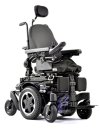
Typical powered wheelchairs weigh about 16 stone plus their user (proper powered wheelchair rather than mobility scooter or lightweight chair)

In some other countries, on trains and buses, electric (and manual) wheelchairs are usually strapped down to anchor points to retain them in position in an incident.

Does the UK have any similar provisions? My experience is not, but that’s only on commuter services in the South East.
 
Last edited:
Sponsor Post - registered members do not see these adverts; click here to register, or click here to log in
R

RailUK Forums

coppercapped

Established Member
Joined
13 Sep 2015
Messages
3,313
Location
Reading
The derailment near Lewes today got me thinking, a person being thrown across a carriage is terrible enough, however an adult in an electric wheelchair could be lethal to those around them.

Typical powered wheelchairs weigh about 16 stone plus their user (proper powered wheelchair rather than mobility scooter or lightweight chair)

In some other countries, on trains and buses, electric (and manual) wheelchairs are usually strapped down to anchor points to retain them in position in an incident.

Does the UK have any similar provisions? My experience is not, but that’s only on commuter services in the South East.
Are you sure about the mass of a powered wheelchair?

16 stone is 224lbs or about 102kg. My wife uses a powered wheelchair which can raise, lower and tilt the seat and it weighs half of what you are suggesting, 51.5kg including its battery.

And, no, I have not seen anybody tying down a wheelchair in buses or trains in France, Belgium or Germany.
 

moley

Member
Joined
12 Jun 2011
Messages
408
This is my daughter’s chair, weighing in at 103kg before accessories and user.

I’m not arguing that there are some lighter alternatives depending upon the user’s requirements.

When I’ve been in the US restraining them is really common.
 

Attachments

  • IMG_1338.jpeg
    IMG_1338.jpeg
    113.4 KB · Views: 37

TheWierdOne

Member
Joined
30 Oct 2020
Messages
386
Location
Yorkshire
My sister uses a powered wheelchair and the only place she gets tied down is in accessible taxis, which is more to keep her in the chair rather than the chair from moving.

I can see your logic however you would risk immobilising a wheelchair user and preventing them from moving to safety in an emergency, as they might be unable to undo the straps themselves.
 

SynthD

Established Member
Joined
4 Apr 2020
Messages
2,014
Location
UK
No, the UK often uses a special seat that the wheelchair is backed into. In minivans and personal adapted vehicles this system of straps is more common, where the driver has an obligation. It’s hard to convert that to rail, does the driver, guard or platform boarding assistant do the task? The latter may make most sense, but it will increase dwell time. But where are they when the passenger needs to do something other than leave at their planned station?

Most crashes and derailments don’t turn a train. Luggage will also fly about in these most violent of incidents.
 

moley

Member
Joined
12 Jun 2011
Messages
408
Usually, a simple three/four hook system applied to anchor points or axels on the base of wheelchair/scooter.

Most in the US are ratchet to tighten, quick release to remove.

More modern system is the Q-straint Quantum where user backs in position and arm engages each side of device to hold device at appropriate pressure.

Both systems take about 30 seconds and the later can be done by the user.
 

Top