• Our new ticketing site is now live! Using either this or the original site (both powered by TrainSplit) helps support the running of the forum with every ticket purchase! Find out more and ask any questions/give us feedback in this thread!

Companies That You Expect to Disappear Soon

jon81uk

Member
Joined
17 Aug 2022
Messages
1,099
Location
Harlow, Essex
Is the ultimate outcome for the high street that there is only one choice for every type of product?

Down the line the independent bookseller retires, or Rymans itself has a restructure and closes down, not that everywhere has a Rymans, and then you end up with nowhere in a particular town.

I still sometimes struggle when I need household goods now there is now Wilkos, without having to put it on the list for the next ‘big shop’ at the major supermarket. Often your only choice is some sort of pound shop where you might be buying cheep rubbish.
Amazon has become the default choice for too many people, why buy in person when Amazon will deliver next day for £95 a year.

Therefore fewer people shopping for many items in person means those stores don't exist any longer.

Some places like The Range or B&M have picked up the Wilko gap, but I'm not sure I'd trust them for hardware.
 
Sponsor Post - registered members do not see these adverts; click here to register, or click here to log in
R

RailUK Forums

Peter Sarf

Established Member
Joined
12 Oct 2010
Messages
9,594
Location
Croydon
Amazon has become the default choice for too many people, why buy in person when Amazon will deliver next day for £95 a year.

Therefore fewer people shopping for many items in person means those stores don't exist any longer.

Some places like The Range or B&M have picked up the Wilko gap, but I'm not sure I'd trust them for hardware.
This is the thing. The internet is the competition and so really just have one type of each shop on the high street is as much as we can hope for.
 

35B

Established Member
Joined
19 Dec 2011
Messages
5,372
This is the thing. The internet is the competition and so really just have one type of each shop on the high street is as much as we can hope for.
The point is surely that Smugs were a jack of all trades store, but have lacked compelling reasons to visit - there are adequate high street equivalents for any individual product they sell. That's what did for Woolies back in the day, and will do for others.
 

Peter Sarf

Established Member
Joined
12 Oct 2010
Messages
9,594
Location
Croydon
The point is surely that Smugs were a jack of all trades store, but have lacked compelling reasons to visit - there are adequate high street equivalents for any individual product they sell. That's what did for Woolies back in the day, and will do for others.
Well. There was always going to be some competition back in the day BUT the new kid on the block is the internet.
 

styles

Established Member
Joined
7 Dec 2014
Messages
4,688
Location
Gwynedd
This is the thing. The internet is the competition and so really just have one type of each shop on the high street is as much as we can hope for.
In my mind this actually makes the high street the perfect place for independents. I'm not going to get a handcrafted table from a storm-fallen tree on Amazon, but I might get one from a carpenter or indy furniture maker on the high street, who may even do me the favour of getting it into the dining room.

Sites like Etsy serve a certain place for this, but some things you do want to see in-person, and some others are just not economical to post (like a custom large oak dining table!)

We have a DIY shop near us which sells pretty much anything I've needed since buying our house, except power tools. And if he doesn't have it in, I can ask him and he'll usually have it for me same or next day. I much prefer this than driving half an hour or whatever to B&Q for something more expensive. The shop is a bit of a trick to walk around though as there's a lot crammed into a small space! Similarly I've used local cobblers, alterations place, bakers, butchers, etc.

I suspect part of the reason some of these high street shops are failing is precisely because they don't offer products you can't get on Amazon next day. Of course you sometimes want something same day, but I think for an awful lot of products people are happy to order from their mobile phone and wait until the next morning to have it delivered.
 

Sonic1234

Member
Joined
25 Apr 2021
Messages
792
Location
Croydon
The benefit to TGJ from the rents paid by Post Office Counters (or whoever)
Post Offices are a franchise model. The Post Office counter will be run by TG Jones (or Co-op, Morrisons Daily, the corner shop etc.) who receive a payment for each transaction.

Some Post Offices really don't like accepting online-purchased postage (their agreement says they must accept any Royal Mail package) because the commission they receive is less than if they sell the postage in store. Royal Mail have been trying to cut out paying the PO (who then pays the operator) with lockers and "smart postboxes" (not such a smart idea when few people have printers now).

POs are pushing banking transactions now, I assume this pays a higher commission per transaction than postage.
 

35B

Established Member
Joined
19 Dec 2011
Messages
5,372
Well. There was always going to be some competition back in the day BUT the new kid on the block is the internet.
For anything I can do in my local branch of Smugs, I have the choice of Rymans, The Works, Boyes, Morrisons, B&M, Card Factory, an independent bookshop and newsagents. And that's within 5 minutes' walk. Other options are available if I'm willing to walk a little further - and then I can look online.

None of that competition is new - yet it's Smugs that are struggling. That suggests that the issue is much deeper than internet competition.
 

GusB

Established Member
Joined
9 Jul 2016
Messages
8,114
Location
Elginshire
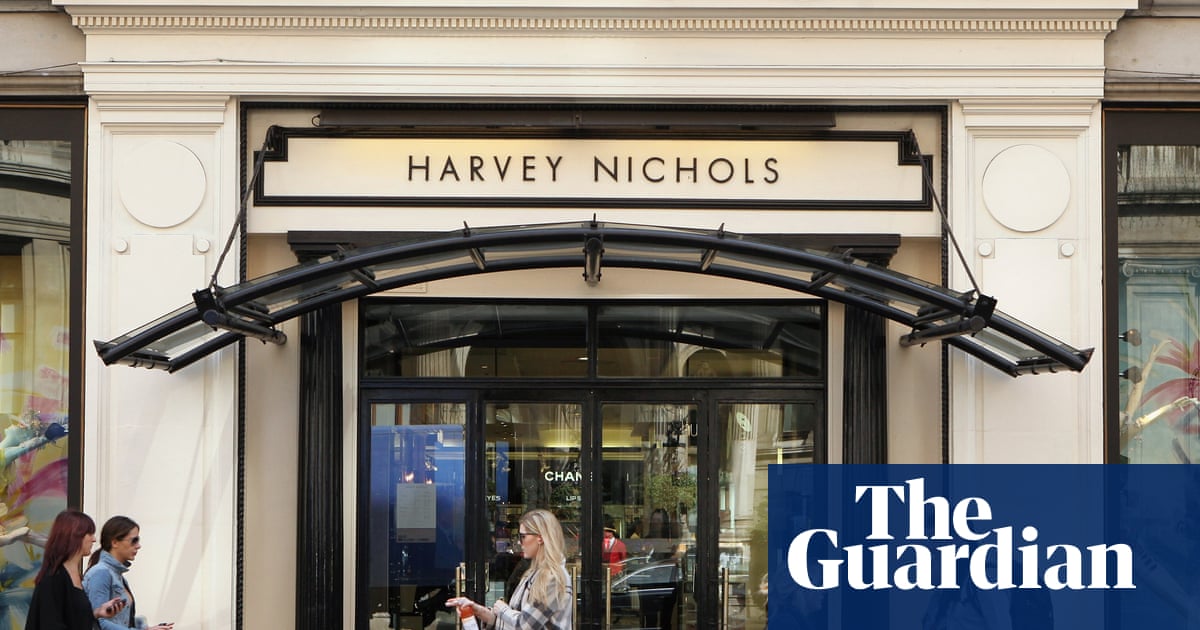
Oh no, sweetie, Harvey Nichols is in trouble!

Harvey Nichols has warned that it will not be able to survive another year without new investment, as bidders for the Knightsbridge-headquartered department store chain circle.

The retailer’s Hong Kong-based owner, Dickson Poon, put it up for sale in June, with Mike Ashley’s Frasers Group aiming to buy it for about £40m.

Harvey Nichols used to attract a high-profile clientele, including the late Diana, Princess of Wales, and its place in popular culture was confirmed in its 1990s heyday by the TV sitcom Absolutely Fabulous, which used the store as a symbol for luxury retail. Yet “Harvey Nicks” has struggled to adjust to increased competition from other shopping destinations, as well as the rise of online retail.

The company has not made a profit since the coronavirus pandemic locked out big-spending foreign tourists, and it reported a loss after tax of £105m after writing off inter-company loans for the year to 29 March 2025, according to accounts published over the weekend.

The directors warned that the company was not a going concern, because it would run out of money within the next year and that it had no agreements for new funding.

The accounts said that the company had received “a number of bids” to buy it, and that it was hoping to complete a deal within the next year.

FTSE 100 retailer Next had been interested in taking over the business, although it has withdrawn its interest, according to more recent reports.

That has left Ashley, the founder of the Sports Direct retail empire, as one of the frontrunners. Ashley, the controlling shareholder in Frasers, on Friday told the Financial Times that Harvey Nichols was in a “death spiral” and that it would be a “huge challenge” to turn it around.

Ashley has bought a series of struggling premium brands in recent years after starting out with a single sports shop. He said he would keep the Knightsbridge and Edinburgh stores, but rebrand other stores as House of Fraser or Flannels under his Frasers Group.

 

Peter Sarf

Established Member
Joined
12 Oct 2010
Messages
9,594
Location
Croydon
In my mind this actually makes the high street the perfect place for independents. I'm not going to get a handcrafted table from a storm-fallen tree on Amazon, but I might get one from a carpenter or indy furniture maker on the high street, who may even do me the favour of getting it into the dining room.

Sites like Etsy serve a certain place for this, but some things you do want to see in-person, and some others are just not economical to post (like a custom large oak dining table!)

We have a DIY shop near us which sells pretty much anything I've needed since buying our house, except power tools. And if he doesn't have it in, I can ask him and he'll usually have it for me same or next day. I much prefer this than driving half an hour or whatever to B&Q for something more expensive. The shop is a bit of a trick to walk around though as there's a lot crammed into a small space! Similarly I've used local cobblers, alterations place, bakers, butchers, etc.

I suspect part of the reason some of these high street shops are failing is precisely because they don't offer products you can't get on Amazon next day. Of course you sometimes want something same day, but I think for an awful lot of products people are happy to order from their mobile phone and wait until the next morning to have it delivered.
This is very much what I pray survives on the high street.

We had a wonderful Hardware Store called Turtles it was like the one you describe. But that went when the St Georges Walk shopping centre was under the curse of re-development roughly twenty years ago. The re-development has stalled with only half the site demolished. That shop could order more than I could think of !. Furthermore the staff knew the products unlike the likes of B&Q. Ironically they were often cheaper than B&Q. I really miss the inspiration they provided.

I do believe it is products that are really necessary to see and touch that need to be sold face to face. As you say, that extends to things like bespoke furniture.

Yes I think that hopefully the last man standing so to speak of each type of store will be able to compete with (survive against) the internet.
 

Dai Corner

Established Member
Joined
20 Jul 2015
Messages
6,990
I do believe it is products that are really necessary to see and touch that need to be sold face to face. As you say, that extends to things like bespoke furniture.
What could be better than seeing and touching a product in your own home for up to 30 days? Even if you decide not to keep it and have to pay to send it back it's likely to cost less than town centre parking or bus/train fare. As a by-product there are many online 'outlet' retailers where you can buy returned products at significant discounts.

Bespoke furniture is surely a 'once in a lifetime' purchase and I imagine people would be prepared to travel much further than their local high street for the right item/supplier.
 

The exile

Established Member
Joined
31 Mar 2010
Messages
9,322
Location
Somerset
Is the ultimate outcome for the high street that there is only one choice for every type of product?

Down the line the independent bookseller retires, or Rymans itself has a restructure and closes down, not that everywhere has a Rymans, and then you end up with nowhere in a particular town.

I still sometimes struggle when I need household goods now there is now Wilkos, without having to put it on the list for the next ‘big shop’ at the major supermarket. Often your only choice is some sort of pound shop where you might be buying cheep rubbish.
No independent hardware stores? One of the few types of independents to survive round here (though not in the quantities there once were).
 

35B

Established Member
Joined
19 Dec 2011
Messages
5,372
Post Offices are a franchise model. The Post Office counter will be run by TG Jones (or Co-op, Morrisons Daily, the corner shop etc.) who receive a payment for each transaction.

Some Post Offices really don't like accepting online-purchased postage (their agreement says they must accept any Royal Mail package) because the commission they receive is less than if they sell the postage in store. Royal Mail have been trying to cut out paying the PO (who then pays the operator) with lockers and "smart postboxes" (not such a smart idea when few people have printers now).

POs are pushing banking transactions now, I assume this pays a higher commission per transaction than postage.
My local sub-PO is very keen that letters and parcels paid for online are posted through them, so they get the commission, rather than going direct into the postbox. As for lockers and smart postboxes, Royal Mail (at least) are making them easier and easier to use.
 

Peter Sarf

Established Member
Joined
12 Oct 2010
Messages
9,594
Location
Croydon
No independent hardware stores? One of the few types of independents to survive round here (though not in the quantities there once were).
That is the case in Croydon since we lost Turtles. We naver had a Wilko and Robert Dyas came and went. The only stores that some would call hardware stores that we have are selling plastic things and a basic set of what are hardware (screws etc) but at inflated prices.
 

sor

Member
Joined
15 Nov 2013
Messages
780
Post Offices are a franchise model. The Post Office counter will be run by TG Jones (or Co-op, Morrisons Daily, the corner shop etc.) who receive a payment for each transaction.

Some Post Offices really don't like accepting online-purchased postage (their agreement says they must accept any Royal Mail package) because the commission they receive is less than if they sell the postage in store. Royal Mail have been trying to cut out paying the PO (who then pays the operator) with lockers and "smart postboxes" (not such a smart idea when few people have printers now).

POs are pushing banking transactions now, I assume this pays a higher commission per transaction than postage.
I've never seen a "smart postbox" but RM lockers have label printers (at least the ones here do), and you can optionally ask them to bring a label if you pay for a collection

Royal Mail have been trying to cut the Post Office out of the chain and the Post Office has responded by signing up to offer alternative courier services from Royal Mail's competitors. A bigger gripe was arguably when RM went to barcoded stamps yet Post Offices could not provide an exchange service, you had to freepost them to an RM address instead
 

Peter Sarf

Established Member
Joined
12 Oct 2010
Messages
9,594
Location
Croydon
I've never seen a "smart postbox" but RM lockers have label printers (at least the ones here do), and you can optionally ask them to bring a label if you pay for a collection

Royal Mail have been trying to cut the Post Office out of the chain and the Post Office has responded by signing up to offer alternative courier services from Royal Mail's competitors. A bigger gripe was arguably when RM went to barcoded stamps yet Post Offices could not provide an exchange service, you had to freepost them to an RM address instead
Furthermore Royal Mail seem to favour parcels business over the letter post service they have a monopoly on. So I am moved to boycot Royal Mail parcels service !.

It does make me wonder how close to collapse the Royal Mail letter service is ?.
 

styles

Established Member
Joined
7 Dec 2014
Messages
4,688
Location
Gwynedd
Furthermore Royal Mail seem to favour parcels business over the letter post service they have a monopoly on. So I am moved to boycot Royal Mail parcels service !.

It does make me wonder how close to collapse the Royal Mail letter service is ?.
Realistically, I can't see much option for Royal Mail other than one of two:
  1. Massively reduce their service under a renegotiation of the universal service obligation. And I'm talking a drastic reduction here, e.g. delivering 1-2 days per week for standard mail.
  2. Renationalisation or increased government subsidies. The government deems letter delivery to be 'critical national infrastructure'. Critical national infrastructure often requires state subsidy. We wouldn't expect the fire service, the rail network, or the UK Space Agency to stand on their own two feet as a profitable business, so if we deem the letter postal service to be the same then it too should either be operated and/or subsidised by the government.
It is simply not possible to operate a letter postal service at a profit in 2026, certainly not without making it prohibitively expensive to the vast majority of the population.
 

The exile

Established Member
Joined
31 Mar 2010
Messages
9,322
Location
Somerset
Realistically, I can't see much option for Royal Mail other than one of two:
  1. Massively reduce their service under a renegotiation of the universal service obligation. And I'm talking a drastic reduction here, e.g. delivering 1-2 days per week for standard mail.
  2. Renationalisation or increased government subsidies. The government deems letter delivery to be 'critical national infrastructure'. Critical national infrastructure often requires state subsidy. We wouldn't expect the fire service, the rail network, or the UK Space Agency to stand on their own two feet as a profitable business, so if we deem the letter postal service to be the same then it too should either be operated and/or subsidised by the government.
It is simply not possible to operate a letter postal service at a profit in 2026, certainly not without making it prohibitively expensive to the vast majority of the population.
What would help would be for the end-to-end universal service obligation to be applied to anyone offering a year-round letter processing service. No more cherry-picking!
 

styles

Established Member
Joined
7 Dec 2014
Messages
4,688
Location
Gwynedd
What would help would be for the end-to-end universal service obligation to be applied to anyone offering a year-round letter processing service. No more cherry-picking!
Would anyone actually want to join this game though? If I were to try and start a letter processing service in the UK today, it would cost a fortune and to make my money back I'd have to charge many times higher than what Royal Mail do with their existing infrastructure, and even they're making a loss and trying to prioritise parcels. Constrained by the current USO, the cost of posting a letter with a new company would be exceptionally high.

The only way it could potentially be worthwhile would be them being treated similar to 'packets' in the Evri world, but everybody loses out here - the drivers hate packets because the pay rate is so low, the posters would be paying more than sending a letter via Royal Mail, and the recipient would lose out because Evri are awful.
 

35B

Established Member
Joined
19 Dec 2011
Messages
5,372
What would help would be for the end-to-end universal service obligation to be applied to anyone offering a year-round letter processing service. No more cherry-picking!
No one does provide that, while Royal Mail's wholesale business is deliberately designed to allow them to cover the costs of the final delivery.

The question that needs to be answered is whether a daily to the door letter delivery service is genuinely critical national infrastructure, and why. Not because I want to follow the path of some other countries, but because without that answer it's impossible to answer the questions that @styles is rightly asking.
 

sprunt

Established Member
Joined
22 Jul 2017
Messages
1,625
We had a wonderful Hardware Store called Turtles it was like the one you describe. But that went when the St Georges Walk shopping centre was under the curse of re-development roughly twenty years ago. The re-development has stalled with only half the site demolished. That shop could order more than I could think of !. Furthermore the staff knew the products unlike the likes of B&Q. Ironically they were often cheaper than B&Q. I really miss the inspiration they provided.
You might want to give Addiscombe DIY just down from the tram stop a try, I've heard that they're a good old fashioned hardware store.
 

Harpo

Established Member
Joined
21 Aug 2024
Messages
3,771
Location
Newport
Realistically, I can't see much option for Royal Mail other than one of two:
  1. Massively reduce their service under a renegotiation of the universal service obligation. And I'm talking a drastic reduction here, e.g. delivering 1-2 days per week for standard mail.
Eliminating next day delivery could offer substantial savings. The Royal Mail transport network operates an internal timetable of connecting services to make it work and often runs cross-empty moves if a back working is at risk of getting late.

That assumes Royal Mail management are as capable as ground staff in identifying their internal efficiencies.
 
Last edited:

35B

Established Member
Joined
19 Dec 2011
Messages
5,372
Eliminating next day delivery could offer substantial savings. The post office transport network operates an internal timetable of connecting services to make it work and often runs cross-empty moves if a back working is at risk of getting late.

That assumes PO management are as capable as ground staff in identifying their internal efficiencies.
To make a pedantic note, Post Office have no involvement in the delivery service, which is entirely provided by Royal Mail.
 

Broucek

Member
Joined
13 Aug 2020
Messages
927
Location
UK
Realistically, I can't see much option for Royal Mail other than one of two:
  1. Massively reduce their service under a renegotiation of the universal service obligation. And I'm talking a drastic reduction here, e.g. delivering 1-2 days per week for standard mail.
  2. Renationalisation or increased government subsidies. The government deems letter delivery to be 'critical national infrastructure'. Critical national infrastructure often requires state subsidy. We wouldn't expect the fire service, the rail network, or the UK Space Agency to stand on their own two feet as a profitable business, so if we deem the letter postal service to be the same then it too should either be operated and/or subsidised by the government.
It is simply not possible to operate a letter postal service at a profit in 2026, certainly not without making it prohibitively expensive to the vast majority of the population.
There is an option "3", possibly in combination with 1 and/or 2 which involves a very different approach to pay, contracts, working patters and benefits in order to reduce employment costs. (I deliberately offer no opinion on whether this is "fair" to Royal Mail staff.)
 

TheSmiths82

Member
Joined
29 Jun 2023
Messages
602
Location
Manchester
There are a few hardware shops near me. Screwfix is the main one and I spend a lot of money there but it can be expensive and very often they sell things of a pack of 1000 when you only need a few. I needed some drywall screws to repair a damaged ceiling and I couldn't find any the right size, Screwfix only had packets of 1000 and there is simply no way I would never need that many in a life time (at my age that is getting shorter everyday).

I ended up buying them from another local DIY store, this one is more of a home where stores that sells mops, buckets, pencils etc but has a lot of hardware items. Some of it is a bit dubious quality but if you just need a few screws it is great. They sold them in a pack of 200 for £4.

The other DIY store has been there for over 50 years, but the same family have owned it for the past 30. It is a proper old fashioned store with everything behind the counter, I do go there at times but I find I prefer to be able to see what I am buying via a website (e.g Screwfix) or see it in person. I really hope both shops manage to survive though and do I feel quilty about how much I spent in Screwfix but at least the quality is usually consistent
 

Peter Sarf

Established Member
Joined
12 Oct 2010
Messages
9,594
Location
Croydon
Realistically, I can't see much option for Royal Mail other than one of two:
  1. Massively reduce their service under a renegotiation of the universal service obligation. And I'm talking a drastic reduction here, e.g. delivering 1-2 days per week for standard mail.
  2. Renationalisation or increased government subsidies. The government deems letter delivery to be 'critical national infrastructure'. Critical national infrastructure often requires state subsidy. We wouldn't expect the fire service, the rail network, or the UK Space Agency to stand on their own two feet as a profitable business, so if we deem the letter postal service to be the same then it too should either be operated and/or subsidised by the government.
It is simply not possible to operate a letter postal service at a profit in 2026, certainly not without making it prohibitively expensive to the vast majority of the population.
I agree. Something needs to be decided. I fear, however, that the UK carries on with an ignore the issue and it will go away approach.

Certainly reducing the frequency of deliveries is innevitable. Something that is reliable would be better than my current sporadic deliveries - feels like less than once a week sometimes (I can only guess but when I get a large number of letters after a long pause I am suspicious).

If the government could be persuaded that Royal Mail is important, especially for older people who are not tech savvy, that would perhaps make the situation easier to define and decide about.
What would help would be for the end-to-end universal service obligation to be applied to anyone offering a year-round letter processing service. No more cherry-picking!
That is the fear. However I don't think much competition has appeared and I think it is too expensive to start up.

This does remind me of how post war legislation required the state railways to publish their standardised charges for parcels delivery (and freight) BUT the competition did not have to be so open. That wiped out the local goods trains thus halving (very very roughly) the viability of rural branch lines. The flood of ex army lorries and de-mobbed soldiers of course provided a ready formular for competition.
You might want to give Addiscombe DIY just down from the tram stop a try, I've heard that they're a good old fashioned hardware store.
I really must. It is not in my sphere of travels BUT its all free on an old wrinkly's Oyster.
 

Djgr

Established Member
Joined
30 Jul 2018
Messages
3,269
If the government could be persuaded that Royal Mail is important, especially for older people who are not tech savvy, that would perhaps make the situation easier to define and decide about.
The reality is that we have had the internet as a mainstream activity for 30 years.

So those who are now 70 would then have been 40, meaning it would have been pretty hard to avoid.
 

jon81uk

Member
Joined
17 Aug 2022
Messages
1,099
Location
Harlow, Essex
The reality is that we have had the internet as a mainstream activity for 30 years.

So those who are now 70 would then have been 40, meaning it would have been pretty hard to avoid.
Exactly, I think it would be hard to find someone who has never used some form of computer now and almost everyone will have used the internet.
The days of posting letters are largely over.
 

jfollows

Established Member
Joined
26 Feb 2011
Messages
10,083
Location
Wilmslow
However there is legislation which enshrines a presumption of delivery of First Class letters within two business days, which would presumably have to be amended if something like a delivery service only a couple of times a week were to be allowed - for First Class anyway, Second Class letters would not affect this. I think the legislation is pretty widespread, that’s to say it’s not just in a single Act, but dotted around the place.
 

Ashley Hill

Established Member
Joined
8 Dec 2019
Messages
5,575
Location
The West Country
Exactly, I think it would be hard to find someone who has never used some form of computer now and almost everyone will have used the internet.
The days of posting letters are largely over.
My 88 year old father has never used a computer or smartphone, neither does he have email. He also refuses to use self service check outs.
 

Top