I work in the industry and can definitely say a
new barrow crossing would be extremely unlikely to be approved - it's not really worth spending energy on this. It's just not something that is supported in the current railway risk hierarchy. It would also need to be gated and linked to the signalling system.
The only saving grace is the adjacent existing crossing - this looks like an 'accommodation crossing', thus would be one which is normally closed and only available to 'authorised users', who would be issued a key and would be given training on how to use the crossing safely, which would include phoning the signaller to request permission to cross each time (I can see a phone on google streetview).
As there is an existing crossing, there is an existing crossing order (legal permission for the crossing to exist), and thus getting this crossing upgraded to allow for your proposed usage may be a possibility, although I'll be honest - It will still be quite the challenge. It looks from streetview that the crossing does not currently have any interlocking with the signalling system and relies on being a padlocked gate and the phone calls being made. To allow the public to use this you would at least need to get it upgraded to an MSL - "Miniature Stop Lights" crossing.
This is a signalling modification so is likely to be expensive but is about the only thing that may be feasible.
Honestly, you are better off spending your time seeking to get a bridge based solution provided - it has a much higher chance of success.
I can see two options for this:
1) Continue pushing for 'an Access for all' upgrade to provide lifts, either to the existing footbridge or, more likely, to a new one. Submit an FOI request to Network Rail and also one to GWR, asking for copies of any DIAs or EquIAs they have available for the station.
Inclusive design delivers spaces and places for everyone, it means that everyone benefits from the full range of services and that we offer.

www.networkrail.co.uk
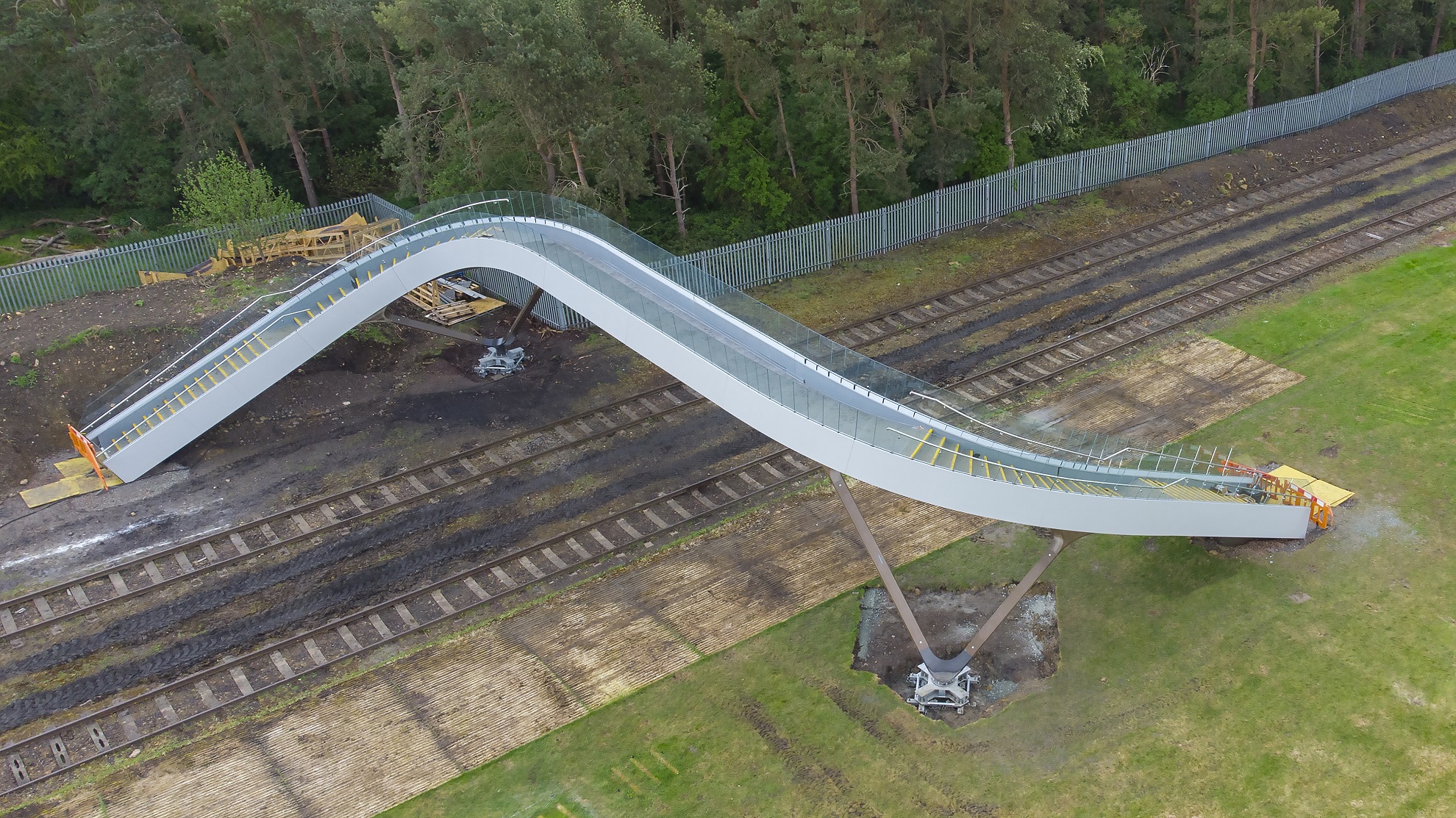
2) Whilst I have no idea who owns the surrounding land, google maps suggests that you have space available for the using, and thus it may be worth suggesting that a ramped bridge may provide a better solution instead of lifts that need maintenance and break down.
Network Rail was looking into low cost bridges a few years ago and launched the 'flow' bridge, which was stepped but had development plans to make a ramped version too. It's all gone very quiet though so I assume development has stopped sadly. Worth asking some questions of NR though to see if there is anything still in development.
Network Rail has developed a striking and innovative footbridge that has the potential to improve safety and transform rail crossings.
www.networkrail.co.uk
Failing that, pushing for a standard ramped bridge and/or lifts is probably your best bet.