• Our new ticketing site is now live! Using either this or the original site (both powered by TrainSplit) helps support the running of the forum with every ticket purchase! Find out more and ask any questions/give us feedback in this thread!

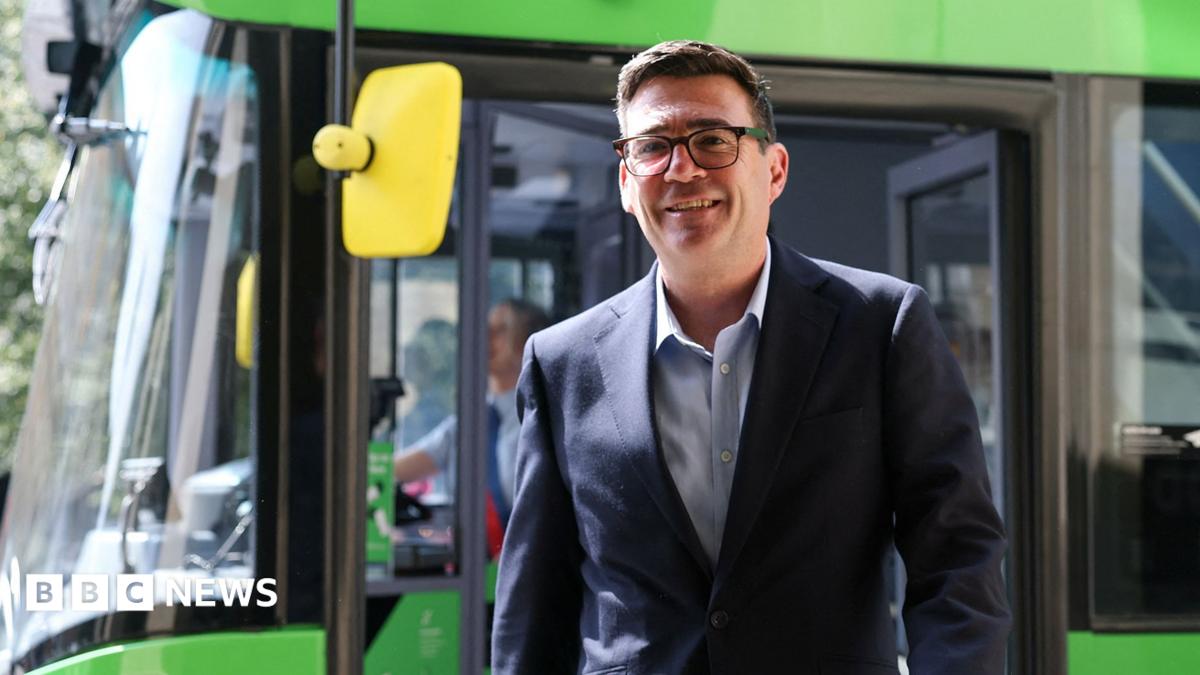
Bus Fare Cap will be £2 from January

YorkRailFan

Established Member
Joined
6 Sep 2023
Messages
3,261
Location
York
I would say many children who are travelling on their own to / from school will still have a phone, I know my kids do even though it's banned in school and use their phone for boarding the bus.
Quite a few schools issue bus passes for children to travel to/from school, especially in rural areas. The issue arises more when children are travelling outside of school, say for leisure, when a school pass isn't valid and they have to buy a child fare.
What I do have to say though, regarding the quoted section, is that on the average rural bus route, minor journey time increases don't really make a difference - having the bus turn up in the first place is the main hurdle. On urban bus routes, traffic congestion contributes far, far more to the slowness of a particular bus service than the 1-2 minutes it takes for everyone to board at a busy stop. With the limited (compared to other high-GDP European countries) amount funding that bus transport gets in this country, I'd suggest that in most non-London/Manchester towns and cities, every pound spend for bus priority measures would bring far more returns than a move to cashless payment.
Definitely agree here.
I repeat this - the objective of the fare cap is to help the poorest people and those struggling most with the cost living crisis. It isn't to try and influence customer behaviour about removing cash sales and that isn't what this thread should be about.
I'd argue that removing cash fares actually does the opposite of the objective of the fare cap. It places barriers to access for those who need the fare cap the most.
 
Sponsor Post - registered members do not see these adverts; click here to register, or click here to log in
R

RailUK Forums

mangad

Member
Joined
20 Jun 2014
Messages
707
Location
Stockport
I would say many children who are travelling on their own to / from school will still have a phone, I know my kids do even though it's banned in school and use their phone for boarding the bus.
Probably. But you can't guarantee it. And you cannot guarantee a child that has a phone at the start of the school day will have one at the end of it. Our high school already had a strict policy on phones. If you are caught with one on the school grounds, it's confiscated. No ifs, no buts. And that child cannot get that phone back. An adult has to go to the school and get it for them. During school hours. Well you can imagine that it may not be the same day. It may be days. or even over a week.

And you certainly can't guarantee a 13 year old will have a phone. More and more parents are seeing the challenges phones bring to children and are opting out. Neither of my children have phones. They are not the only ones.

For children phone based solutions are definitely not the answer.
 

BuhSnarf

Member
Joined
22 May 2010
Messages
713
Location
Leicester
The cash v no cash debate is an interesting one where I think any solution that's short of a full national oyster/Rejsekort/OVPay-style system (and all the associated subsidy), valid on all buses, will have many people who lose out. Discussion to explore scenarios where the least amount of people on the lowest income levels lose out are welcomed, however I don't have much to add to that.

What I do have to say though, regarding the quoted section, is that on the average rural bus route, minor journey time increases don't really make a difference - having the bus turn up in the first place is the main hurdle. On urban bus routes, traffic congestion contributes far, far more to the slowness of a particular bus service than the 1-2 minutes it takes for everyone to board at a busy stop. With the limited (compared to other high-GDP European countries) amount funding that bus transport gets in this country, I'd suggest that in most non-London/Manchester towns and cities, every pound spend for bus priority measures would bring far more returns than a move to cashless payment.
I agree, whilst cashless is obviously the ultimate goal (better for drivers, better for customers long term) it's not something that is immediately the issue.

Probably. But you can't guarantee it. And you cannot guarantee a child that has a phone at the start of the school day will have one at the end of it. Our high school already had a strict policy on phones. If you are caught with one on the school grounds, it's confiscated. No ifs, no buts. And that child cannot get that phone back. An adult has to go to the school and get it for them. During school hours. Well you can imagine that it may not be the same day. It may be days. or even over a week.

And you certainly can't guarantee a 13 year old will have a phone. More and more parents are seeing the challenges phones bring to children and are opting out. Neither of my children have phones. They are not the only ones.

For children phone based solutions are definitely not the answer.
I would agree, which is why I send my kids with their debit cards as well (both have had them them from 11 onwards) as this allows me to see what they're spending and also teach good budgeting at a young age. This also eradicates what used to happen a lot with my eldest who was before there was cards for teens that she'd regularly "lose" her money and then not be able to afford school dinner or bus fare home. Now, I can just transfer them some money to ensure they get home should they happen to have "accidentally" spent too much at the shop on the way.

Probably does help that I work for a bank, though.

Incidentally their school allows them to take phones and they get stored whilst in class and they get them back at the end of the day which seems to work well.
 

johncrossley

Established Member
Joined
30 Mar 2021
Messages
4,374
Location
London
Stagecoach in Daventry and Brighton & Hove have already gone cashless on some routes, although drivers still sell paper tickets using contactless.

== Doublepost prevention - post automatically merged: ==

The cash v no cash debate is an interesting one where I think any solution that's short of a full national oyster/Rejsekort/OVPay-style system (and all the associated subsidy)

That's a massive hammer to crack a nut. I could understand that 20 years but now that so few people don't have either a phone or contactless bank card it would be overkill to have a new smartcard system just for a tiny proportion of the population. It would be easier to get them bank cards.
 

YorkRailFan

Established Member
Joined
6 Sep 2023
Messages
3,261
Location
York
Probably. But you can't guarantee it. And you cannot guarantee a child that has a phone at the start of the school day will have one at the end of it. Our high school already had a strict policy on phones. If you are caught with one on the school grounds, it's confiscated. No ifs, no buts. And that child cannot get that phone back. An adult has to go to the school and get it for them. During school hours. Well you can imagine that it may not be the same day. It may be days. or even over a week.

And you certainly can't guarantee a 13 year old will have a phone. More and more parents are seeing the challenges phones bring to children and are opting out. Neither of my children have phones. They are not the only ones.

For children phone based solutions are definitely not the answer.
Something like the Oyster ZipCard in London would be the best approach.
Stagecoach in Daventry and Brighton & Hove have already gone cashless on some routes, although drivers still sell paper tickets using contactless.
OK, so it works in that region. Doesn't mean it will work nationally. You continue to misunderstand the point.
 

YorkRailFan

Established Member
Joined
6 Sep 2023
Messages
3,261
Location
York
That's three regions, including London.
OK, three. Out of how many in the UK? I've told you many times, it will work in some regions and it won't work in other regions. It all comes down to the economical circumstances of said region. It's not that difficult to understand!
 

Wolfie

Established Member
Joined
17 Aug 2010
Messages
7,393
Breaking on BBC that most bus fares are going capped at £2 from January, they're currently £3, but some areas it's still £2


Presumably participation is still at company discretion? I know that some operators opted out of the current £3 fare cap as not operationally viable.

== Doublepost prevention - post automatically merged: ==

What about trams? They keep being left out and I hoped an ex Manchester Mayor would remember about them.

The problem with buses is not (just?) the price but the existence of them in rural areas. I do think if there is money for buses it could be better targeted.
If trams are included, something which benefits mainly the north, then why not undergrounds/subways too?

== Doublepost prevention - post automatically merged: ==

Which is why the fare cap needs to be made compulsory, there’s really no excuse not to now
How exactly do you do that to a commercial company, which may actually suffer a loss as a result, without guaranteed litigation? Or, of course, service withdrawal.
 

em81

Member
Joined
26 May 2026
Messages
70
Location
Manchester
I wonder how many operators will opt out of this because of reimbursement rates. Preston Bus has already opted out of the £3 fare cap.

£3.50 Preston Bus single or £5 return.

Except on the 23 route where it's £2 single to Bamber Bridge, £4.20 for a hospital return from the city centre, but £3.50 for a single to the hospital from ASDA.

In short Preston Bus fares are lower where they directly compete with Stagecoach.

There's also exceptions for contracted services operated by Preston Bus. That meant until recently £3.50 for commercial singles during the day, and £1 subsided singles in the evening - for the same journey!
 

stevieinselby

Established Member
Joined
6 Jan 2013
Messages
1,659
Location
Selby
It is also macroeconomically poor (discourages people from needing to better themselves, learning, night school, studying, skills courses, setting up own business etc), in blunt terms allows people to be stay on little money, and not improve their pay by ambition and growth. Not helping to grow the economy is bad overall long term.
What a load of economically illiterate neoliberal garbage!
The idea that people who are poor are responsible for their own poverty – rather than exploitative employers who don't pay a living wage and predatory landlords who jack up the price of housing – is pure victim blaming. People are not deterred from seeking better jobs because the meagre benefits that allow them to eke out an existence are too generous, and they are not going to suddenly become high flyers just because we try to drive them to destitution otherwise. And the idea that a £2 bus fare cap would encourage people to a life of indolence is just outright offensive.
 

johncrossley

Established Member
Joined
30 Mar 2021
Messages
4,374
Location
London
OK, three. Out of how many in the UK? I've told you many times, it will work in some regions and it won't work in other regions. It all comes down to the economical circumstances of said region. It's not that difficult to understand!

At some point someone will have to bite the bullet. London going cashless was very controversial but they did it anyway. You could easily have made the argument that it was too soon. It turned out to be a non-event in the end.
 

Wolfie

Established Member
Joined
17 Aug 2010
Messages
7,393
All this talk of cashless buses, and not once have I seen the elephant in the room mentioned.

Children.

Under 16s are not guaranteed to have any debit card (and certainly don't have credit cards). There are teenage current accounts that still come with the option of a cashcard, not a debit card. Children going to high school at the age of 11 will likely be travelling independently and whilst they can get bank accounts at 11, they may not be responsible enough to give them a debit card. Yes there are prepaid debit cards for children but these are not free. We've only recently got our son a debit card at the age of 13.

London solves this easily by making public transport free for children and teenagers. But unless you have free travel for children, you have one absolute guaranteed use case for cash on buses. And that's children. And everyone can argue and debate the pros and cons of cash free but it's irrelevant whilst you have a significant group of bus users who may only be able to pay by cash.

Oh and to pre-empt someone suggesting a phone based solution - cos I know someone is thinking it - remember phones are going to be banned from schools in September by law.
Travel for teenagers in London is only free or discounted if they have a 11-15 or 16+ Zip Oyster card.
 

YorkRailFan

Established Member
Joined
6 Sep 2023
Messages
3,261
Location
York
What a load of economically illiterate neoliberal garbage!
The idea that people who are poor are responsible for their own poverty – rather than exploitative employers who don't pay a living wage and predatory landlords who jack up the price of housing – is pure victim blaming. People are not deterred from seeking better jobs because the meagre benefits that allow them to eke out an existence are too generous, and they are not going to suddenly become high flyers just because we try to drive them to destitution otherwise. And the idea that a £2 bus fare cap would encourage people to a life of indolence is just outright offensive.
Completely agree, people are not poor because they wish to be. Victim blaming is the easy way out instead of questioning the system that fails to support those in poverty. The £2 fare cap is a start but is only the tip of the iceberg.
At some point someone will have to bite the bullet. London going cashless was very controversial but they did it anyway. You could easily have made the argument that it was too soon. It turned out to be a non-event in the end.
Because London is economically different to the rest of the UK! How many times do I have to tell you?
 

BuhSnarf

Member
Joined
22 May 2010
Messages
713
Location
Leicester
Parts of London are economically different that the rest of the UK, but there are plenty of very poor areas within London that rival some of the worst parts of the UK.

Again, this is not relevant to the bus capping. But you *could* make all buses cashless in the same way that they've made it compulsory to have a bank account if you want benefits paid and whilst it would annoy people they would eventually get on board. Plenty of places now are cashless, including places that those who are in impoverished situations go to. It, however, isn't the burning issue that saves buses so I'm not sure why we're debating it so much on this thread.

Research also shows that it's the elderly and vulnerable it disproportionately affects rather than those on limited income.
 

Tetchytyke

Veteran Member
Joined
12 Sep 2013
Messages
17,443
Location
Isle of Man
It is also macroeconomically poor (discourages people from needing to better themselves, learning, night school, studying, skills courses, setting up own business etc), in blunt terms allows people to be stay on little money, and not improve their pay by ambition and growth.
"Pull yourself up by your bootstraps" is not, has never been, and never will be a valid or sustainable socioeconomic strategy.

Although, for what it's worth, high transport costs actually act as a hindrance to people "bettering themselves" anyway. It's not much use getting a job, or getting a better job further away, if the cost of getting to that job is higher than the additional income you receive. For people coming off unemployment benefit this is often a reality: earning an extra £15 a week isn't much use if it costs you £20 a week to get to the job.

You also mention additional learning: not much use if you can't afford the bus fare to get there, is it?

A short term fare cap is more of a political stunt, than a serious way to growth the economy and make people less poor. Appeases those who don't see the whole picture, but just think of themselves.
Reducing the costs to the end user of transportation is a serious way of growing the economy. Lower fares encourage mobility. For work, this is obvious.

But for leisure, too, lower or low fares encourage people out to leisure activities. This stimulates the economy, especially in the hospitality sector which has been struggling more than most for quite some time.

There is a sound economic reason why all public transport in Luxembourg- hardly a country which one would describe as communist or socialist- is free of charge.

What a load of economically illiterate neoliberal garbage!
You're far more polite than I would be.
London going cashless was very controversial but they did it anyway.
What sped things up in London is that they stopped issuing tickets on buses. You had a flat fare and you paid it using a card. No tickets were issued.

The time cost is where, on boarding, you need to tell the driver what ticket you want and where you want to go, and the driver has to print out the ticket. It doesn't matter if you're using a bankcard or cash, the time penalty is the same (in fact, paying the exact amount in cash is probably quicker). Removing this interaction is where you get the time savings.
London did it initially by moving ticketing off-bus to ticket machines on the street, it was only later they made the buses a flat fare and made everyone use some sort of card to pay the fare. Belfast's Glider buses use off-bus ticketing too. Hong Kong's trams used to do it by having an exact fare and a turnstile on exit- you put a coin in the hopper as you got off.

In London, they have the Hopper ticket and that's now becoming a huge financial burden.
I'm not so sure it is, at least when you consider things holistically.

The Hopper fare removes the financial penalty for having to take more than one bus to complete your journey. On face value this costs money- instead of getting two lots of £1.75, you only get one. Someone doing a simple return trip using four buses would previously have hit the bus-only cap at £5.25 but now they only pay £3.50.

But the Hopper fare, and the removal of that financial penalty, has given TfL the political headroom to make some pretty swingeing cuts to bus provision, especially within zone one. The Hopper fare means that it doesn't matter if your bus now terminates on the edge of zone one because it's free to complete your journey on a second bus. TfL have been able to really thin out the bus provision in zone one and gone are the days when Oxford Street would be gridlocked with hundreds of buses all with only a handful of people on them.

 

mangad

Member
Joined
20 Jun 2014
Messages
707
Location
Stockport
Travel for teenagers in London is only free or discounted if they have a 11-15 or 16+ Zip Oyster card.
True, but the vast majority are covered. And those that are not can be set up with Oyster. There are solutions. And that's the lesson from London. You need to cover as many eventualities as possible.
 

TheGrandWazoo

Veteran Member
Joined
18 Feb 2013
Messages
22,843
Location
Somerset with international travel (e.g. across th
But the Hopper fare, and the removal of that financial penalty, has given TfL the political headroom to make some pretty swingeing cuts to bus provision, especially within zone one. The Hopper fare means that it doesn't matter if your bus now terminates on the edge of zone one because it's free to complete your journey on a second bus. TfL have been able to really thin out the bus provision in zone one and gone are the days when Oxford Street would be gridlocked with hundreds of buses all with only a handful of people on them.
I'd be arguing that the Hopper fare is one of the financial constraints that had ensured the TfL had to make massive efficiencies. Also, those cuts extend much further than just truncating services in central London.

The upshot is it costs £x to provide a service and you either fund it properly or you don't. If you don't, operators will a) cut services to be viable or b) look to manipulate a system that has been stacked against them.
 

Wolfie

Established Member
Joined
17 Aug 2010
Messages
7,393
I'd be arguing that the Hopper fare is one of the financial constraints that had ensured the TfL had to make massive efficiencies. Also, those cuts extend much further than just truncating services in central London.

The upshot is it costs £x to provide a service and you either fund it properly or you don't. If you don't, operators will a) cut services to be viable or b) look to manipulate a system that has been stacked against them.
One of the driving factors for introducing the Hopper fare was a desire to shorten many routes in order to improve their reliability. Doubling people's fares would have made consultation on such proposals 'interesting' to put it politely.
 

Tetchytyke

Veteran Member
Joined
12 Sep 2013
Messages
17,443
Location
Isle of Man
I'd be arguing that the Hopper fare is one of the financial constraints that had ensured the TfL had to make massive efficiencies. Also, those cuts extend much further than just truncating services in central London.
From an FOI request the revenue reduction to TfL from the Hopper fare is somewhere between £40m and £50m a year. Not to be sniffed at, but in the context of a bus network which costs £3bn a year to run and receives a subsidy of about £1.2bn a year it's little more than a rounding error.

What's leading the cuts is that bus passenger numbers are, even now, 20% down on 2019. The Hopper fare is, at least in my opinion, allowing TfL to make some pretty severe cuts on the main bus corridors because the Hopper fare removes the financial penalty for having to change buses. Service cuts are controversial enough but at least TfL can use the Hopper as mitigation- the cuts won't cost people money.

I know the consultations are always more PR than substance but it's interesting just how often the Hopper fare is cited as the primary mitigation for service cuts (the 19 and 38 consultation illustrates this very well).

FWIW I think zone one was long overdue a cull of bus routes. It isn't just zone one, as you rightly point out, but the focus seems to be there. I'd say a Hopper fare and bus provision that aligns with demand is better than what we had before, hundreds of buses clogging up Oxford Street and Regent Street and all of them with single-digit numbers of passengers on them.

But telling people they're losing their direct bus and it'll cost them double? That's a tough sell for anyone.

he upshot is it costs £x to provide a service and you either fund it properly or you don't. If you don't, operators will a) cut services to be viable or b) look to manipulate a system that has been stacked against them.
I suppose this is where the increasing move towards franchising in urban areas makes these costs a lot more transparent, as they are in London.

The operators are paid for operating the bus. The fares revenue goes to the franchising authority. It's for the franchising authority to decide what it can afford to buy with the revenue it gets, either from the farebox or the taxpayer or both.

I'd agree though that trying to stiff commercial operators on the reimbursement rate won't end well. We've seen that already with the various concessionary bus pass schemes.
 

embers25

Established Member
Joined
16 Jul 2009
Messages
2,158
At some point someone will have to bite the bullet. London going cashless was very controversial but they did it anyway. You could easily have made the argument that it was too soon. It turned out to be a non-event in the end.
Exactly. Every country has differing levels of deprivation and children across it, yet whole countries have gone cashless. Equally many cities have gone cashless despite having very deprived areas and children. The UK is NOT some sort of unique case in the world as some on here claim, its just we are far more averse to change and to a degree technology sadly, and it very much holds us back as a country.

Simple economics is that banning cash speeds up boarding and therefore speeds up journeys, making them more competitive with car. Also, over a day that time saving can equate to less driver and vehicle resource being needed and less cost to the operator of processing and banking the cash, making services more financially viable to operate. There's also the reduced emissions from less sitting at bus stops.

The fare cap goes some way to speeding up journeys by removing the complexity. Try buying any normal ticket or pass on a bus and see how much longer it takes (3 minutes to buy a Discovery on Metrobus for example a couple of weeks ago). Buying any ticket, because it needs issuing, takes ages on Stagecoach and even Ticketeer machines are still painfully slow compared to London.

Tap-on with the £2 fare cap also largely means tap-off isn't necessary, speeding up journeys further. Look how much faster More are at boarding as most just tap.

A proper £2 cap and full cashless fares would position bus services to be as competitive as possible on cost and journey time, which would hopefully boost patronage and undo the damage the increase to £3 has done. It would also increase driver safety as they wouldn't be carrying change around.

On a similar note, if you banned cash rail fares, ticket machines would be less likely to be vandalised as they'd have no money in them.
 

1D54

Established Member
Joined
1 Jun 2019
Messages
1,463
Bye bye XC, this will save me £30 a month on current rail fares.
 

tomoufc

Member
Joined
12 Dec 2014
Messages
358
You can't say that for definite.

Well yes, but punishing poor people is not the way to do this.

Charging a full fare for cash payments will take longer than a £2 fare cap paid by cash. Many operators already offer discounts for using Tap On Tap Off on short journeys over cash. There is no reason to punish people for using cash (again disproportionately low income households) accept for your ideological dreams.

If someone has the exact fare (£2 or right now £3) in cash, it can be quicker than people trying to use their phone or watch to pay by card. It's not consistently quicker to use card than cash, it depends on circumstances. Sometimes, I've waited on a bus for a pensioner to find their ENCTS pass, or for someone to find their card. What do you plan to do then?
In addition, a low fare cap effectively means a flat fare in most places. Boarding times are quicker because the passenger just says “single” and the driver issues a ticket to the end of the route. That’s what I’ve observed, anyway.

In response to some other comments, I don’t think anyone’s claiming that a fare cap fixes all fare-related issues. It just ensures that nobody has to pay more than a fairly modest sum to use a bus. That’s a good idea, but there’s lots more you can do on top of that, as Greater Manchester has shown.

== Doublepost prevention - post automatically merged: ==

Bye bye XC, this will save me £30 a month on current rail fares.
What are they going to do with all their surplus rolling stock?

== Doublepost prevention - post automatically merged: ==

Absolutely this. For people to blithely suggest that people can "just use cards" really isn't addressing the issue of disproportionately impacting the poorest in society.


I repeat this - the objective of the fare cap is to help the poorest people and those struggling most with the cost living crisis. It isn't to try and influence customer behaviour about removing cash sales and that isn't what this thread should be about.
Agree - method of payment is a distinct discussion , because it pertains whatever the level of fare regulation
 

JKP

Member
Joined
3 Jan 2023
Messages
720
Location
SE Scotland
tbh it doesn't sound like you even know any poor people.

It's still very common to be paid in cash (likely the real reason the government wanted to introduce a database of all those legally allowed to work).

People use cash to stick to a budget, and in extremis, you (or more likely the partner) ensure the bank card only leaves the house for a very good reason.

This is all irrelevant anyway - the thing almost everyone has, even poor people, is a phone. And so if you have a bank account, you can pay using your phone. And of course, you can have a phone on PAYG even if you don't have a bank account.

But once we get to a place where having a phone is manadatory to be part of UK society, and we're nearly there, the government will be very very happy.
I don’t have a phone but thankfully have a National concessionary card. From what I have observed out here in a very rural area, those transactions being paid by phone are very slow and a driver friend tells me that Ticketer machines are slow to record. Cash is seldom used on rural buses from observation.
 

The exile

Established Member
Joined
31 Mar 2010
Messages
9,307
Location
Somerset
And I disagree with that policy most strongly. There should be one price for a journey on public transport in an urban area, or a few prices dependent on distance. The modes used should be complementary - a bus to the station, then a train, then a bus to the destination, for instance. There shouldn't be "bus fares", "tram fares" and "train fares".

The demographic issues are dealt with by offering discount or free travel cards to appropriate groups, e.g. those who are unemployed or medically unfit to work. Not by having rich peoples' modes and poor peoples' modes (this is VERY pronounced in London and I frankly consider it disgraceful that it is).

Germany does it properly, concentrating on the competitor being the car, not other modes.
Hear, hear!
 

tomoufc

Member
Joined
12 Dec 2014
Messages
358
And I disagree with that policy most strongly. There should be one price for a journey on public transport in an urban area, or a few prices dependent on distance. The modes used should be complementary - a bus to the station, then a train, then a bus to the destination, for instance. There shouldn't be "bus fares", "tram fares" and "train fares".

The demographic issues are dealt with by offering discount or free travel cards to appropriate groups, e.g. those who are unemployed or medically unfit to work. Not by having rich peoples' modes and poor peoples' modes (this is VERY pronounced in London and I frankly consider it disgraceful that it is).

Germany does it properly, concentrating on the competitor being the car, not other modes.
I agree with this, but it’s not possible with current institutional arrangements. The question then becomes whether the £2 fare cap is a good policy within such constraints?
 

Tetchytyke

Veteran Member
Joined
12 Sep 2013
Messages
17,443
Location
Isle of Man
Simple economics is that banning cash speeds up boarding and therefore speeds up journeys
Paying cash for a ticket is no slower than paying by contactless for a ticket. If I hand over a £2 coin for my capped single and the driver slides it into the cash box then that is just as quick as any contactless payment you could make (and probably quicker on some machines).

As you point out further down in your post, the time is taken in telling the driver what you want and the driver finding the ticket on his machine and issuing it. The method of paying for that ticket doesn't matter.

Every country has differing levels of deprivation and children across it, yet whole countries have gone cashless.
They've not gone cashless. What they have done is moved the cash transaction off the bus. That's not the same thing at all.

It's also something that won't be easily achievable except in areas where there is an over-arching transport authority.

On a similar note, if you banned cash rail fares, ticket machines would be less likely to be vandalised as they'd have no money in them.
Very few ticket machines on the railway still accept cash. They still get vandalised, though.
 

Bletchleyite

Veteran Member
Joined
20 Oct 2014
Messages
112,941
Location
"Marston Vale mafia"
I agree with this, but it’s not possible with current institutional arrangements. The question then becomes whether the £2 fare cap is a good policy within such constraints?

I would say that funding the industry to do more would be preferable than giving people making relatively long, likely primarily leisure journeys a whacking discount.
 

tomoufc

Member
Joined
12 Dec 2014
Messages
358
I would say that funding the industry to do more would be preferable than giving people making relatively long, likely primarily leisure journeys a whacking discount.
Do more what? There’s already been a huge amount of public money spent on new busses and bus stations. More services would be good, but they’ll only be used if they are affordable. Also, the vast majority of bus journeys are short, so the problem you describe (if you can call it a problem) is rather marginal.
 

Bletchleyite

Veteran Member
Joined
20 Oct 2014
Messages
112,941
Location
"Marston Vale mafia"
Do more what?

Reinstate lost services, primarily, but also increase frequencies where they have reduced. A £2 fare is all very well if there is no useful service or none at all.

It (as per passes) is also unfair to those for whom rail provides their local service.

There’s already been a huge amount of public money spent on new busses and bus stations. More services would be good, but they’ll only be used if they are affordable. Also, the vast majority of bus journeys are short, so the problem you describe (if you can call it a problem) is rather marginal.

Urban bus journeys are very affordable - season tickets are extremely cheap (under the cost of two £2 singles per day in most cases). There is little gained by subsidising longer journeys which are primarily for leisure.
 

Top