
-
Our new ticketing site is now live! Using either this or the original site (both powered by TrainSplit) helps support the running of the forum with every ticket purchase! Find out more and ask any questions/give us feedback in this thread!
You are using an out of date browser. It may not display this or other websites correctly.
You should upgrade or use an alternative browser.
You should upgrade or use an alternative browser.
40 years since the privatisation of the National Bus Company (NBC)
- Thread starter Simon75
- Start date
Sponsor Post - registered members do not see these adverts; click here to register, or click here to log in
R
RailUK Forums
Always like a bus in NBC livery especially south of England identities.
I believe it was set up by the government in the aim of nationalisation in 1969 to put under its wing lots of subsidiary bus companies to help them improve profits and reliability, though didn't own any buses itself.
Alot of bus companies were expanded into other areas and some were successful and some not so much.
In 1986 things turned full circle and bus companies were sold out off into the biggest companies we know today.
Off course bus operators today seem to swallow up the well know companies of the past and have become deregulated which l personally am not a fan off.
There used to be a saying about an operator 1p profit carry on as usual,1p loss taken over by Stagecoach! This is just a personal take on what happened and hope to spark some controversy on if it's been good or not as the thread had no replies!
I believe it was set up by the government in the aim of nationalisation in 1969 to put under its wing lots of subsidiary bus companies to help them improve profits and reliability, though didn't own any buses itself.
Alot of bus companies were expanded into other areas and some were successful and some not so much.
In 1986 things turned full circle and bus companies were sold out off into the biggest companies we know today.
Off course bus operators today seem to swallow up the well know companies of the past and have become deregulated which l personally am not a fan off.
There used to be a saying about an operator 1p profit carry on as usual,1p loss taken over by Stagecoach! This is just a personal take on what happened and hope to spark some controversy on if it's been good or not as the thread had no replies!
While the exact way that deregulation was implemented was very much less than ideal, and based upon Nicholas Ridley's romantic delusions about free marketeers to an unhealthy degree I can't say that I miss the NBC one bit.
By the mid-1980s It (or at least the two subsidiaries that operated near where I lived at the time, although I've no reason to believe that they were untypical or particularly bad) was the very incarnation of the stereotypical nationalised company where the customer is always wrong, if considered at all
Dull, uniform, and often dirty buses - clattering Leyland Nationals (I repeat my comment about nationalised companies) with hideous vinyl seats, or a bit better roaring Bristol VRs, poor information or advertising, surprisingly high fares, an absence of innovation or anything that was intended to attract new customers. Hence non-stop decline.
The shake-up they got was long overdue and thoroughly deserved.
By the mid-1980s It (or at least the two subsidiaries that operated near where I lived at the time, although I've no reason to believe that they were untypical or particularly bad) was the very incarnation of the stereotypical nationalised company where the customer is always wrong, if considered at all
Dull, uniform, and often dirty buses - clattering Leyland Nationals (I repeat my comment about nationalised companies) with hideous vinyl seats, or a bit better roaring Bristol VRs, poor information or advertising, surprisingly high fares, an absence of innovation or anything that was intended to attract new customers. Hence non-stop decline.
The shake-up they got was long overdue and thoroughly deserved.

TheGrandWazoo
Veteran Member
Ok here goes...Its 40 years since the National Bus Company (NBC) was privatised. Was it a good idea? Were many divisions making much money/losing money, and are still poor/good today ?
The National Bus Company paid for my childhood. My late father was a driver and so I owe the NBC a lot... it sustained me and then in later years, my father's pension sustained my mum. So I have a great fondness for the NBC.
However, in terms of it being a financial basket case, it was pretty bad and service wise... it was no bed of roses either. This was covered extensively in this thread
After formation in 1969, the NBC quickly became a loss making entity. They had to endure a massive service reduction programme in 1971 where they cut a lot of rural services (though urban routes weren't immune) and closed a lot of depots. These included Southdown, Midland Red and, most notably, Western Welsh and Western National who exited significant swathes of territory in Pembrokeshire and North Cornwall respectively. This helped the financial position for a while but by 1975/6, the losses were beginning to accumulate despite increasing amounts of revenue support and the new bus grant (which was a BOGOF deal where bus purchases were subsidised). All the while, passenger numbers were collapsing - the graph shows the decline from 1970 though two important caveats... it was all buses (not just NBC) and the figures had been declining since the mid 1950s. The slight uptick in the early 1980s but that was more with PTEs.
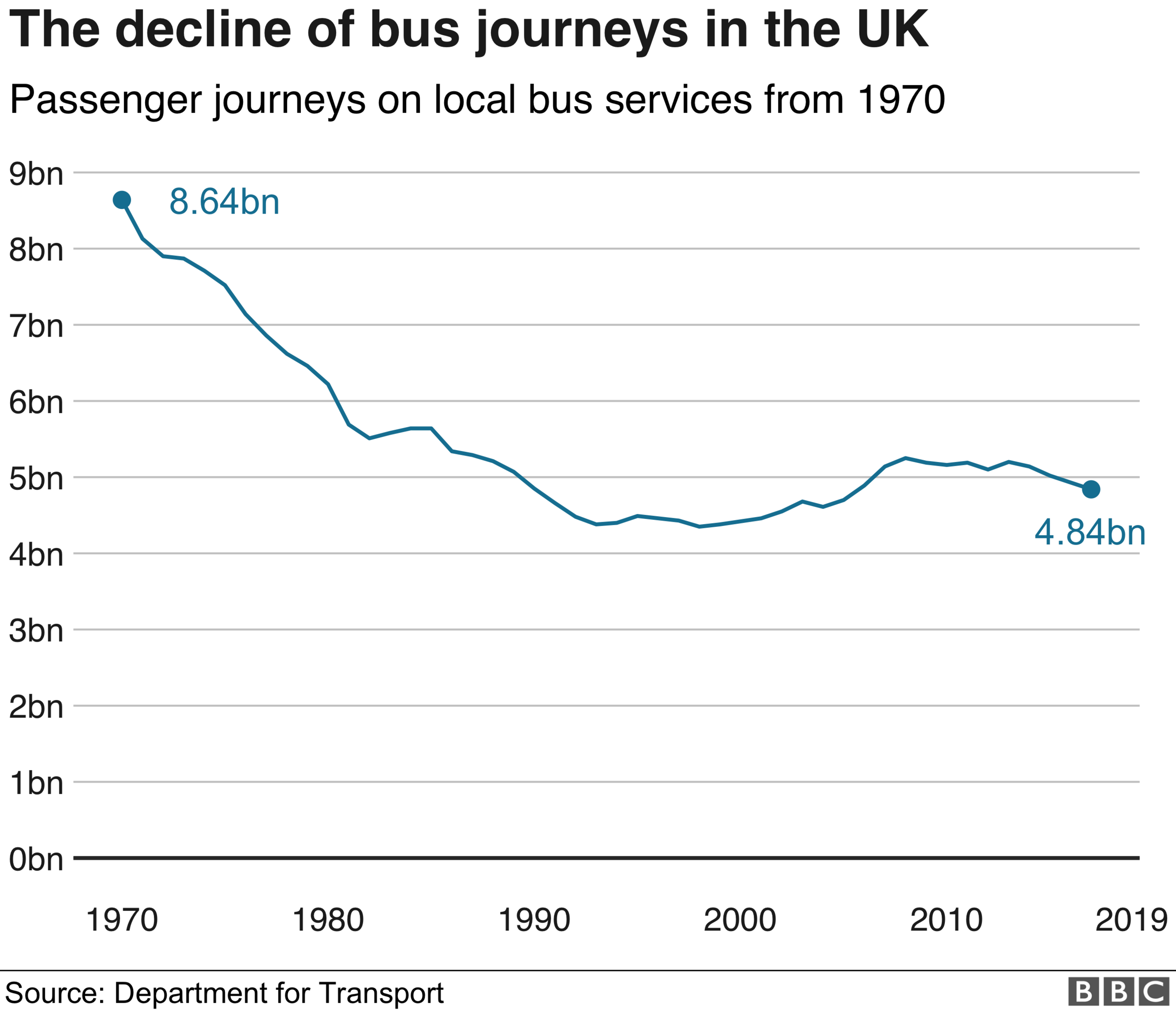
By the time the 1979 Conservative Government came in, it was losing millions each year (£18m in 1980 - that's the equivalent of £80m in today's money. And still the passenger numbers were falling and depots and services were being cut. Midland Red initiated the Viable Network Project in 1978 (basically an exercise in cutting the big loss making services) and this then became the Market Analysis Projects (MAP). These were typically in Southern England and Wales because those were the biggest loss makers - Hants & Dorset lost £2m in 1980 so little wonder they would engage in MAP schemes that typically saw 15% of the fleet cut. Alder Valley, London Country and National Welsh were also NBC firms who swung the MAP axe. Now in the interests of fairness, we should also point out that the 1970s were a time of industrial unrest (pushing up wages) and other cost pressures like the oil shocks so some of that is wider than just the NBC. However, it's fair to say that the NBC often didn't act until too late.
So which firms were profitable and which weren't? Well, it was a real north south split and the evidence is really in who could afford new buses and who couldn't. Western National/Devon General couldn't so they got a number of mid life cascades from firms like Northern, United and Midland Red; Lincolnshire got theirs from East Midland and Ribble. Bristol Omnibus could but not in large enough numbers so they also got cascades from up north e.g. West Riding. Other firms like Crosville wielded the MAP axe and needed more deckers for schools work so they gained elderly ones from East Midland and Eastern National. Meanwhile, firms like Hants and Dorset and Alder Valley... they didn't need new vehicles as their PVRs fell by so much. Even in profitable firms, like the one my dad worked for, the axe fell. In 1981, his depot's allocation dropped by 15% as the council reduced the level of revenue support markedly. That said, a network of Sunday services that hadn't changed in years and carried next to no one were ripe for pruning back. Oh, and let's not forget the buses themselves... Leyland Nationals, Bristol VRs, or Bristol LHs with brown vinyl seats with little concession to comfort...or heat, in winter.
The concept of the NBC had some merit initially and there was some long overdue rationalisation - United losing their operations in Carlisle to Ribble, East Kent and Maidstone and District swapping stuff in places like Faversham and Ashford and Rye. The creation of National Express under a single brand was a modest success though it took the 1980 Transport Act to really shake up NX in the face of competition.
It would be a struggle to argue that a national operator that incurs massive financial losses despite large subsidies whilst passenger figures go through the floor was a success. Something really had to change.
Cesarcollie
Member
- Joined
- 5 Jun 2016
- Messages
- 822
Ok here goes...
The National Bus Company paid for my childhood. My late father was a driver and so I owe the NBC a lot... it sustained me and then in later years, my father's pension sustained my mum. So I have a great fondness for the NBC.
However, in terms of it being a financial basket case, it was pretty bad and service wise... it was no bed of roses either. This was covered extensively in this thread
After formation in 1969, the NBC quickly became a loss making entity. They had to endure a massive service reduction programme in 1971 where they cut a lot of rural services (though urban routes weren't immune) and closed a lot of depots. These included Southdown, Midland Red and, most notably, Western Welsh and Western National who exited significant swathes of territory in Pembrokeshire and North Cornwall respectively. This helped the financial position for a while but by 1975/6, the losses were beginning to accumulate despite increasing amounts of revenue support and the new bus grant (which was a BOGOF deal where bus purchases were subsidised). All the while, passenger numbers were collapsing - the graph shows the decline from 1970 though two important caveats... it was all buses (not just NBC) and the figures had been declining since the mid 1950s. The slight uptick in the early 1980s but that was more with PTEs.
By the time the 1979 Conservative Government came in, it was losing millions each year (£18m in 1980 - that's the equivalent of £80m in today's money. And still the passenger numbers were falling and depots and services were being cut. Midland Red initiated the Viable Network Project in 1978 (basically an exercise in cutting the big loss making services) and this then became the Market Analysis Projects (MAP). These were typically in Southern England and Wales because those were the biggest loss makers - Hants & Dorset lost £2m in 1980 so little wonder they would engage in MAP schemes that typically saw 15% of the fleet cut. Alder Valley, London Country and National Welsh were also NBC firms who swung the MAP axe. Now in the interests of fairness, we should also point out that the 1970s were a time of industrial unrest (pushing up wages) and other cost pressures like the oil shocks so some of that is wider than just the NBC. However, it's fair to say that the NBC often didn't act until too late.
So which firms were profitable and which weren't? Well, it was a real north south split and the evidence is really in who could afford new buses and who couldn't. Western National/Devon General couldn't so they got a number of mid life cascades from firms like Northern, United and Midland Red; Lincolnshire got theirs from East Midland and Ribble. Bristol Omnibus could but not in large enough numbers so they also got cascades from up north e.g. West Riding. Other firms like Crosville wielded the MAP axe and needed more deckers for schools work so they gained elderly ones from East Midland and Eastern National. Meanwhile, firms like Hants and Dorset and Alder Valley... they didn't need new vehicles as their PVRs fell by so much. Even in profitable firms, like the one my dad worked for, the axe fell. In 1981, his depot's allocation dropped by 15% as the council reduced the level of revenue support markedly. That said, a network of Sunday services that hadn't changed in years and carried next to no one were ripe for pruning back. Oh, and let's not forget the buses themselves... Leyland Nationals, Bristol VRs, or Bristol LHs with brown vinyl seats with little concession to comfort...or heat, in winter.
The concept of the NBC had some merit initially and there was some long overdue rationalisation - United losing their operations in Carlisle to Ribble, East Kent and Maidstone and District swapping stuff in places like Faversham and Ashford and Rye. The creation of National Express under a single brand was a modest success though it took the 1980 Transport Act to really shake up NX in the face of competition.
It would be a struggle to argue that a national operator that incurs massive financial losses despite large subsidies whilst passenger figures go through the floor was a success. Something really had to change.
All very true. In fairness to NBC it did some stuff very well, and there was some innovation/experimental stuff that could never have been afforded by smaller companies. In particular their graduate training scheme was widely acclaimed, and many managers who had been a product of it went on to either buy their own company, or run very successfully in the ‘deregulated’ era companies that had been bought by Stagecoach etc.

Tetchytyke
Veteran Member
I'll start by saying I'm not old enough to remember the NBC- I was two when it was privatised.
I always get the impression that the "failure" of the NBC and the "success" of the deregulated industry were both more about the economy at the time rather than anything good or bad that either the nationalised or privatised operators did.
People talk of the Leyland Nationals with their grim vinyl seats but those same Leyland Nationals, with their same grim vinyl seats, were still operating in the shiny privatised world when I went to university in the north east in 2001. Sure, Go-Ahead had painted jaunty yellow and blue stripes down the side of them, but otherwise they were the same buses operating the same routes as they had twenty years previously. It was the same in West Yorkshire, the vinyl-seated Leyland Atlanteans and Daimler Fleetlines which were operated by the PTE in 1975 were still taking me to sixth form in 2000, the only real changes were that Badgerline had stuck a badger logo in the window and then, a year or two later, First had come along and plastered theireffin F-in-roundel all over the side.
Of course, the National was also really not so very different to the types of cars that were being pumped out at the same time. The Leyland National was utilitarian with brown vinyl but, then again, so was the Morris Ital.
Privatisation gave the operators the political headroom to scrap the unprofitable services. Even if the NBC management had tried to scrap the unprofitable bits they wouldn't have been able to because of the political repercussions. But the private operators meant the politicians could shrug their shoulders: it's a free market, not our problem.
But in profitable areas, did much really change? Look at the core network TWPTE were running in Newcastle in 1986 and compare it with the core network Stagecoach are running in 2026. It has barely changed. That's to be expected, really: the obvious core routes in a big city are going to remain as obvious core routes. But Brian Souter always seems to be feted as this brilliant entrepreneur who totally transformed the bus industry, and I simply do not see where. Orange stripes and a race to the bottom on driver wages does not make someone a visionary. And not just to pick on Souter either (although "objectionable things about Brian Souter" would be my specialist subject on Mastermind), the bosses at First and Go-Ahead were the same. And best not talk about British Bus.
My opinion, for what it is worth, is that if we'd had a privatised industry in the 70s it would have looked very similar to the NBC. And if we'd had a nationalised industry in the late 80s/early 90s it would have looked very similar to the privatised industry. All that really changed is that a small number of men who, through sheer luck, were in the right place at the right time made a lot of money off the back ofasset-stripping rationalising the "bloated" NBC.
If it wasn't for privatisation, the likes of Moir Lockhead would have stayed as they were: moderately competent middle managers in a local council, living in a nice 3-bed detached house in the suburbs with a Ford Cortina on the drive.
I always get the impression that the "failure" of the NBC and the "success" of the deregulated industry were both more about the economy at the time rather than anything good or bad that either the nationalised or privatised operators did.
People talk of the Leyland Nationals with their grim vinyl seats but those same Leyland Nationals, with their same grim vinyl seats, were still operating in the shiny privatised world when I went to university in the north east in 2001. Sure, Go-Ahead had painted jaunty yellow and blue stripes down the side of them, but otherwise they were the same buses operating the same routes as they had twenty years previously. It was the same in West Yorkshire, the vinyl-seated Leyland Atlanteans and Daimler Fleetlines which were operated by the PTE in 1975 were still taking me to sixth form in 2000, the only real changes were that Badgerline had stuck a badger logo in the window and then, a year or two later, First had come along and plastered their
Of course, the National was also really not so very different to the types of cars that were being pumped out at the same time. The Leyland National was utilitarian with brown vinyl but, then again, so was the Morris Ital.
Privatisation gave the operators the political headroom to scrap the unprofitable services. Even if the NBC management had tried to scrap the unprofitable bits they wouldn't have been able to because of the political repercussions. But the private operators meant the politicians could shrug their shoulders: it's a free market, not our problem.
But in profitable areas, did much really change? Look at the core network TWPTE were running in Newcastle in 1986 and compare it with the core network Stagecoach are running in 2026. It has barely changed. That's to be expected, really: the obvious core routes in a big city are going to remain as obvious core routes. But Brian Souter always seems to be feted as this brilliant entrepreneur who totally transformed the bus industry, and I simply do not see where. Orange stripes and a race to the bottom on driver wages does not make someone a visionary. And not just to pick on Souter either (although "objectionable things about Brian Souter" would be my specialist subject on Mastermind), the bosses at First and Go-Ahead were the same. And best not talk about British Bus.
My opinion, for what it is worth, is that if we'd had a privatised industry in the 70s it would have looked very similar to the NBC. And if we'd had a nationalised industry in the late 80s/early 90s it would have looked very similar to the privatised industry. All that really changed is that a small number of men who, through sheer luck, were in the right place at the right time made a lot of money off the back of
If it wasn't for privatisation, the likes of Moir Lockhead would have stayed as they were: moderately competent middle managers in a local council, living in a nice 3-bed detached house in the suburbs with a Ford Cortina on the drive.
TheGrandWazoo
Veteran Member
An impression that is fundamentally wrong. I've mentioned that there were some macro-economic issues like the 1973 oil shock but a) passenger figures had been tumbling for years before that and b) the NBC was already losing money before the oil shocks and the other major inflationary issues/industrial unrest.I always get the impression that the "failure" of the NBC and the "success" of the deregulated industry were both more about the economy at the time rather than anything good or bad that either the nationalised or privatised operators did.
Except they weren't. The ones that you experienced didn't have vinyl seats (they'd have been Mk2s so they had NBC autumn gold when new) and by 2001, they'd been heavily refurbished with new moquette and the heating systems which is why they lost their heating pods. So to say they were in original condition just isn't true.People talk of the Leyland Nationals with their grim vinyl seats but those same Leyland Nationals, with their same grim vinyl seats, were still operating in the shiny privatised world when I went to university in the north east in 2001. Sure, Go-Ahead had painted jaunty yellow and blue stripes down the side of them, but otherwise they were the same buses operating the same routes as they had twenty years previously. It was the same in West Yorkshire, the vinyl-seated Leyland Atlanteans and Daimler Fleetlines which were operated by the PTE in 1975 were still taking me to sixth form in 2000, the only real changes were that Badgerline had stuck a badger logo in the window and then, a year or two later, First had come along and plastered theireffinF-in-roundel all over the side.
Regarding the age of fleets... well in the 1970s, the new bus grant did mean that vehicles could be withdrawn earlier (and in Tyne and Wear, the metro introduction and subsequent fleet reduction) so it skewed it things. The NBC have much smaller orders; between 1976 and 1980, United Auto had 356 new vehicles (excl. NX/NH coaches) and between 1981 and 1985, it had 166. Add to the uncertainty of deregulation and yes, there was a demonstrable drop in new vehicle registrations. That will naturally feed through to fleet ages in the end.
I might add there were still plenty of elderly vehicles in the NBC; Northern General were still running 17/18 year Atlanteans into 1980/1, hanging on until metro led reductions could see them off. Western National withdrew their last Bristol LSs at 22 years of age. The MAP reductions also meant that deckers were much more in vogue so some elderly VR and Lodekkas soldiered on to some age (often whilst younger REs got scrapped).
There was an inherent problem. The NBC was increasingly losing money and passenger figures were tanking. This is indisputable fact.Privatisation gave the operators the political headroom to scrap the unprofitable services. Even if the NBC management had tried to scrap the unprofitable bits they wouldn't have been able to because of the political repercussions. But the private operators meant the politicians could shrug their shoulders: it's a free market, not our problem.
The government and it's Ridley-led zeal for the free market was undoubtedly the driver but clearly the status quo wasn't working. There was a level of protectionism from the TC to operators (licenses in lucrative areas would be refused if some loss makers were maintained) but even that had it's limit. Hence the swingeing cuts in 1971, the introduction of Market Analysis Projects.
So yes, they were trying to offload a problem from the public purse; the (non statutory) obligation on councils to fund socially necessary services was a late measure but don't suggest that there weren't cuts under the NBC because there were. Big ones.
There were assets to be stripped but here's a thought... perhaps the National Bus Company could've got rid of some of those assets themselves? The NBC did close quite a few depots... just not nearly enough. Did they really need six depots on the Isle of Wight? When you look at Tyne and Wear, did they need two depots in Sunderland plus one at Philly? Did they need depots in Ilkley, Otley, Skipton and Grassington? All ripe for rationalisation (though Shanklin did get closed eventually in 1984, and Skipton c.1983).My opinion, for what it is worth, is that if we'd had a privatised industry in the 70s it would have looked very similar to the NBC. And if we'd had a nationalised industry in the late 80s/early 90s it would have looked very similar to the privatised industry. All that really changed is that a small number of men who, through sheer luck, were in the right place at the right time made a lot of money off the back ofasset-strippingrationalising the "bloated" NBC.
Literally, my dad's depot (in a small town) had twelve ancillary staff for a PVR of 18... and that wasn't uncommon. Wooler had a full depot for 8 vehicles (7 and a spare) and travel office, I kid you not.
The reality is that the NBC wasn't that commercially minded, and couldn't/wouldn't make the decisions that were often needed until much too late.
That would be a reasonable comparison were it not that I knew where United Auto's General Manager lived... and it wasn't a 3 bed detached!If it wasn't for privatisation, the likes of Moir Lockhead would have stayed as they were: moderately competent middle managers in a local council, living in a nice 3-bed detached house in the suburbs with a Ford Cortina on the drive.
And of course, there were a lot more middle managers in the NBC. And yeah, when you've remortgaged that 3 bed detached house, you're much more engaged in the financial performance of the business.
overthewater
Established Member
- Joined
- 16 Apr 2012
- Messages
- 9,087
I once watched a programmes, I think on the BBC.
It explained how NBC was created. It seems Barbara Castle went to America to see how they step up it's bus operations instead of heading to Germany etc. Would it have made much different if NBC was step up more like the Europeans ?
It explained how NBC was created. It seems Barbara Castle went to America to see how they step up it's bus operations instead of heading to Germany etc. Would it have made much different if NBC was step up more like the Europeans ?
TheGrandWazoo
Veteran Member
I think it was more that Fred Wood, the first NBC chairman, was influenced by Greyhound and that led to National Express and a single identity being set up.I once watched a programmes, I think on the BBC.
It explained how NBC was created. It seems Barbara Castle went to America to see how they step up it's bus operations instead of heading to Germany etc. Would it have made much different if NBC was step up more like the Europeans ?
Barbara Castle's plan was to create regional transport undertakings (so a PTE in every region almost).
We should also remember that quite a bit of the NBC was already nationalised. The BTC/THC (Tilling) side of things was actually nationalised with the railways in 1948.
You're missing two rather key issues. Price and ticket acceptance.But in profitable areas, did much really change? Look at the core network TWPTE were running in Newcastle in 1986 and compare it with the core network Stagecoach are running in 2026. It has barely changed.
Three if you count population changes.
Four if you consider how utterly depressing, almost Soviet, the current Stagecoach livery is. Not a patch on anything that came before it in Newcastle, either in public, independent or even corporate hands.
Sure, some of its chapters left a lot to be desired - the paint palette that was North Western comes to mind, and don't get me started on what it did to Edinburgh Transport - but British Bus was not all bad, and was turning the corner when things went belly-up during 1996. The events which led to the fire sale of British Bus to Cowie and its CEO Dawson Williams subsequently being sent down for bribery has been well documented elsewhere in these threads.And best not talk about British Bus.
The real horror shows were ATL and AJS/Parkdale in the early years of deregulation who were both in it for one thing and one thing only - money. They certainly weren't in it for the buses (Parkdale, I remember, was a property company who saw depots as redevelopment opportunities). A fair summary of these two could be "they came, they saw, they conquered, they cashed in, they went."
Bristol LHS
Member
Except they weren't. The ones that you experienced didn't have vinyl seats (they'd have been Mk2s so they had NBC autumn gold when new) and by 2001, they'd been heavily refurbished with new moquette and the heating systems which is why they lost their heating pods. So to say they were in original condition just isn't true.
My memory is that GNE did go through a phase of using vinyl for refurbs in the late 90s/early 2000s - I remember National 2s and ex London Palatine Olympians with a grey vinyl with blue, yellow and red ‘flecks’ - this would have been in the red/blue/yellow ‘GoWearBuses’, ‘GoNorthern’ etc phase. So not in original condition, but not a great passenger experience either (especially as some of these were on Sunderland - Newcastle express routes that used to get the lovely Express Link Metrobuses)
I have to say arriving in Leeds in 1999 I was initially very impressed by First - my local route to Headingley had Barbie Wrights artics with the first corporate interior - it was a big step up from the interiors I was used to on Northern and the then grey/red still prevailing on Stagecoach in the NE. Sadly that wasn’t typical of the Leeds op, a lot of midlife ex Rider deckers (late supplemented by a variety of London stuff) in Leeds City Link colours, and still some very elderly Atlanteans in Rider colours on the secondary routes.
Scathing but fair comment.If it wasn't for privatisation, the likes of Moir Lockhead would have stayed as they were: moderately competent middle managers in a local council, living in a nice 3-bed detached house in the suburbs with a Ford Cortina on the drive.
I'm not sure that everyone appreciates the reality of being in the right place at the right time, whilst playing the system for all its worth.
Cesarcollie
Member
- Joined
- 5 Jun 2016
- Messages
- 822
Scathing but fair comment.
I'm not sure that everyone appreciates the reality of being in the right place at the right time, whilst playing the system for all its worth.
Hindsight is a wonderful thing. However it is worth remembering that in the run-up to and early days of deregulatio, no one knew what was going to happen. An established former NBC company could have faced an onslaught of smaller operator, ‘one man bands’ (as envisaged by Nicholas Ridley), or other bigger companies competing on all its best routes. So a management team re-mortgaging their houses, taking out huge loans, and investing their savings to buy the company they worked for (in a sealed bids exercise where they didn’t know what competitors-if any -would bid) was quite a risk. How many of the people moaning about ‘fat cats’ would have taken a similar risk in an unknown market? In reality, some companies did face loads of competition, others less so. Some individuals made a lot of money by growing then floating on the stock markets, others by selling out to emerging groups. But don’t forget those like National Welsh who failed and lost everything. We can look back now and make all sorts of allegation, but the brave new world at the time was a complete unknown.

GusB
Established Member
Hindsight is a wonderful thing. However it is worth remembering that in the run-up to and early days of deregulatio, no one knew what was going to happen. An established former NBC company could have faced an onslaught of smaller operator, ‘one man bands’ (as envisaged by Nicholas Ridley), or other bigger companies competing on all its best routes. So a management team re-mortgaging their houses, taking out huge loans, and investing their savings to buy the company they worked for (in a sealed bids exercise where they didn’t know what competitors-if any -would bid) was quite a risk. How many of the people moaning about ‘fat cats’ would have taken a similar risk in an unknown market? In reality, some companies did face loads of competition, others less so. Some individuals made a lot of money by growing then floating on the stock markets, others by selling out to emerging groups. But don’t forget those like National Welsh who failed and lost everything. We can look back now and make all sorts of allegation, but the brave new world at the time was a complete unknown.
I'm in two minds as to whether privatisation was a good thing or not. Being a fully paid-up lefty, my personal preference is that there should be some sort of public control over bus services, but over the years I've warmed to the idea that those services don't actually need to be operated by publicly-owned bodies. I don't subscribe to the "free market" ideology, though; it may work in areas where there is enough traffic to promote genuine competition but it completely falls down in places where there simply isn't enough traffic to warrant more than one operator on a particular route. The result of this is that local councils are left to pick up the tab for those lightly-trafficked routes and we all know how that ends when those local authorities have to prioritise statutory obligations.
My view is that there should have been some restrictions on newly-privatised companies being sold to bigger groups, at least until the whole National Bus Company was sold off. I think it was inevitable that there'd be some consolidation, but the last companies to be sold were at a disadvantage.
You're absolutely right that hindsight is a wonderful thing!

Steve440
Member
There was a restriction on the number of companies any one group could purchase, Stagecoach were only allowed to buy three directly. Their later expansion came about by buying already privatised companies that were sold on by management teams to make a quick buck.I'm in two minds as to whether privatisation was a good thing or not. Being a fully paid-up lefty, my personal preference is that there should be some sort of public control over bus services, but over the years I've warmed to the idea that those services don't actually need to be operated by publicly-owned bodies. I don't subscribe to the "free market" ideology, though; it may work in areas where there is enough traffic to promote genuine competition but it completely falls down in places where there simply isn't enough traffic to warrant more than one operator on a particular route. The result of this is that local councils are left to pick up the tab for those lightly-trafficked routes and we all know how that ends when those local authorities have to prioritise statutory obligations.
My view is that there should have been some restrictions on newly-privatised companies being sold to bigger groups, at least until the whole National Bus Company was sold off. I think it was inevitable that there'd be some consolidation, but the last companies to be sold were at a disadvantage.
You're absolutely right that hindsight is a wonderful thing!
Pyewipecarshed
Member
Whether it was a good idea or not depends where you are.Its 40 years since the National Bus Company (NBC) was privatised. Was it a good idea? Were many divisions making much money/losing money, and are still poor/good today ?
Like @TheGrandWazoo I can't have a go at the National Bus Company because my dad also drove for one of their subsidiaries (East Yorkshire), and his wages paid for my childhood.
In EY's case there was an air of managed decline under NBC. It was privatised in 1987, underwent a few years of financial struggle, and then blossomed into a quality operation with a modern fleet and innovative service improvements. Eventually Peter Shipp wished to retire and sold the company to Go Ahead. I don't live in the area any more but I do visit sometimes, and despite the horror stories in the relevant thread on here, I'm quietly impressed. The buses I ride on local services are to a specification which exceeds those with "coach/dual purpose" interiors 40 years ago. So in that case you could say privatisation was a good thing.
Over the river Humber in Lincolnshire, Lincolnshire Road Car was a financial nightmare in NBC days. Under Traction Group ownership it returned to profitability, but at the expense of binning much of its network. So if you live somewhere that no longer has a bus service, or only has one on a Tuesday, you would probably class it as a bad thing.
Or Oxford, where arguably it made no difference- in a good way. Under NBC the city network was frequent and profitable, and there were innovations like park and ride.
From what I understand that's still the case; yes, a second operator arrived and the Bristol VRs left, but it was decent and it still is.
You can't really blame managers for "making a quick buck".There was a restriction on the number of companies any one group could purchase, Stagecoach were only allowed to buy three directly. Their later expansion came about by buying already privatised companies that were sold on by management teams to make a quick buck.
Many of these people had remortgaged their houses, drained their savings account and sold their car to buy the bus company they now owned.
Picture the scene... you're sitting in your office nervously eyeing the fares revenue on one side and the wages bill/fuel bill/insurance/maintenance bill etc. on the other. You wonder if your wife and kids would mind living in a tent in the depot yard. And then the phone rings; it's Brian Souter offering to buy the company from you and make you a millionaire in the process.
It would take a lot of guts to turn that down! One of the few who did was Peter Shipp, mentioned above. I believe he was approached by most (all) of the big groups but refused to sell until he was ready to retire.
TheGrandWazoo
Veteran Member
There was indeed a restriction. Stagecoach actually bought FOUR firms - Cumberland, United Counties, and Hampshire Bus/Pilgrim Coaches which was sold as one package.There was a restriction on the number of companies any one group could purchase, Stagecoach were only allowed to buy three directly. Their later expansion came about by buying already privatised companies that were sold on by management teams to make a quick buck.
Drawlane also purchased four - London Country SW, North Western, Midland Red (North) and Shamrock & Rambler. However, there was another business Allied Bus (?) that submitted bids for firms such as United Auto and Lincolnshire and it was discovered significant links between them and Drawlane - they were attempting to circumvent the rules and so were discounted from those and other bids!
The issue of management teams and fast bucks is really dealt with below by other posters.
Hindsight is a wonderful thing. However it is worth remembering that in the run-up to and early days of deregulatio, no one knew what was going to happen. An established former NBC company could have faced an onslaught of smaller operator, ‘one man bands’ (as envisaged by Nicholas Ridley), or other bigger companies competing on all its best routes. So a management team re-mortgaging their houses, taking out huge loans, and investing their savings to buy the company they worked for (in a sealed bids exercise where they didn’t know what competitors-if any -would bid) was quite a risk. How many of the people moaning about ‘fat cats’ would have taken a similar risk in an unknown market? In reality, some companies did face loads of competition, others less so. Some individuals made a lot of money by growing then floating on the stock markets, others by selling out to emerging groups. But don’t forget those like National Welsh who failed and lost everything. We can look back now and make all sorts of allegation, but the brave new world at the time was a complete unknown.
You can't really blame managers for "making a quick buck".
Many of these people had remortgaged their houses, drained their savings account and sold their car to buy the bus company they now owned.
Picture the scene... you're sitting in your office nervously eyeing the fares revenue on one side and the wages bill/fuel bill/insurance/maintenance bill etc. on the other. You wonder if your wife and kids would mind living in a tent in the depot yard. And then the phone rings; it's Brian Souter offering to buy the company from you and make you a millionaire in the process.
It would take a lot of guts to turn that down! One of the few who did was Peter Shipp, mentioned above. I believe he was approached by most (all) of the big groups but refused to sell until he was ready to retire.
Indeed, and as well as National Welsh (the most obvious failure), there were other instances of other NBC firms grappling with the new world of deregulation and everything that brought. Midland Red North had an ill fated venture into the West Midlands that led to a massive fleet reduction less than 12 months later. Yorkshire Traction had had to manage the change from the artificially low fares of South Yorkshire so that was tricky, and then they bought Road Car who had competition from Gash in Newark (who then crashed and burned) and Lincoln City Transport in Lincoln and Scunny.
Hindsight is always 20/20 and when you've mortgaged your house, there's the threat of competition, market consolidation and the fact that fleet replacement is overdue (as there wasn't much done in the early-mid 1980s, and then van derived minibuses with a nominal life of c.5 years) then perhaps when someone does come along with a cheque, you do take the money and run!
 Given the state of the bus market in 1986/7, and if I'd been in that position, I don't know if I'd have thought it was a risk free, high return certainty!!
I thought they were moquette like this Lynx https://www.flickr.com/photos/45491...st-sDhL6z-sxLziz-2mMk6xK-eYQ7jN-k5DQ2K-ds7NTX but you may well be right. What is certain is that they were heavily refurbished at Bensham so any suggestion that there were 22 year vehicles running around in original condition is somewhat wide of the mark.My memory is that GNE did go through a phase of using vinyl for refurbs in the late 90s/early 2000s - I remember National 2s and ex London Palatine Olympians with a grey vinyl with blue, yellow and red ‘flecks’ - this would have been in the red/blue/yellow ‘GoWearBuses’, ‘GoNorthern’ etc phase.

It was indeed Allied Bus that tried to flout the rules. Memory is a bit sketchy now but I seem to recall that it was a Drawlane alias. The whole Drawlane/British Bus saga actually started off as Endless Holdings, named after the street where the group and its various later incarnations would be based until the sale to Cowie in 1996.There was indeed a restriction. Stagecoach actually bought FOUR firms - Cumberland, United Counties, and Hampshire Bus/Pilgrim Coaches which was sold as one package.
Drawlane also purchased four - London Country SW, North Western, Midland Red (North) and Shamrock & Rambler. However, there was another business Allied Bus (?) that submitted bids for firms such as United Auto and Lincolnshire and it was discovered significant links between them and Drawlane - they were attempting to circumvent the rules and so were discounted from those and other bids!
overthewater
Established Member
- Joined
- 16 Apr 2012
- Messages
- 9,087
Blame Cecil Parkinson for the reshuffle that lead to Ridlly getting transport, It's believed Tom King was a bit more cattish when pushing for full idea of Deregulation?
Of course if you looked at the coach market over the pervious 5-6 years, no wonder they thought this was a great idea. More companies, more routes and alot more passengers.
Of course if you looked at the coach market over the pervious 5-6 years, no wonder they thought this was a great idea. More companies, more routes and alot more passengers.
When steering the 1985 Transport Act through Parliament he said that running buses should be no different from running a sweetshop. That showed how far detached from reality he was.Somewhat triggered by mention above of Nicholas Ridicholas.
I'd like to think that the country is more educated these days than to give him the time of day but unfortunately that's probably not the case.
== Doublepost prevention - post automatically merged: ==
Yes, I believe Tom King was more prepared to listen to what operators had to say, as opposed to Nicholas Ridley's bull-in-a-china-shop approach. Deregulation was seen by Ridley as a chance to get his own back after his family's own transport interests had been nationalised. It was Cecil Parkinson getting caught with his pants down, and fathering a sprog in the process, that caused the reshuffle.Blame Cecil Parkinson for the reshuffle that lead to Ridlly getting transport, It's believed Tom King was a bit more cattish when pushing for full idea of Deregulation?
Of course if you looked at the coach market over the pervious 5-6 years, no wonder they thought this was a great idea. More companies, more routes and alot more passengers.
Last edited:
A well known industry participant once said to me that National Welsh was bedevilled by rampant dishonesty amongst driving staff. Whether this was true I do not know but certainly dishonesty was a problem with a National Express operator in the immediate post coach deregulation period.
TheGrandWazoo
Veteran Member
I don't if it was. I'd have been more inclined to think along other lines...A well known industry participant once said to me that National Welsh was bedevilled by rampant dishonesty amongst driving staff. Whether this was true I do not know but certainly dishonesty was a problem with a National Express operator in the immediate post coach deregulation period.
- They picked a lot of fights competing against Inter Valley Link, Merthyr Tydfil Transport, Cynon Valley and Taff Ely (and bought the remnants of IVL and Taff Ely)
- At the same time, they were being attacked by new firms such as the "notable" Clayton Jones around Pontypridd, the Ogmore Valley routes against Burrows, Glyn Williams in the Sirhowy/Ebbw Valleys, and perhaps even the first iteration of Phil Anslow Travel around Cwmbran - one wonders had they been more focussed on protecting their existing patch, they might have been better served?
- They standardised on the Freight Rover Sherpa for minibuses which were simply not as robust as the alternatives (Transits, Merc 608s) and so had more failures etc
- An ageing fleet - aside from coaches, they'd had no new full size vehicles other than 19 VRs, 6 LHSs and 10 Olympians since 1980. Much of the inter-urban fleet was therefore comprised of elderly Nationals (not known for reliability or fuel economy) and slightly new VRs
Tetchytyke
Veteran Member
The GNE Nationals were done out in vinyl when they were refurbished. I'm aware there was quite a bit of mechanical refurbishment undertaken on the buses to prolong their life- I seem to remember a number of them gaining new Volvo engines, but may be misremembering- but in the passenger cabin the changes seemed minimal. Is silver/grey vinyl better than brown vinyl? Internally they felt largely the same as they had 20 years previously.The ones that you experienced didn't have vinyl seats (they'd have been Mk2s so they had NBC autumn gold when new) and by 2001, they'd been heavily refurbished with new moquette and the heating systems which is why they lost their heating pods.
When late-90s First West Yorkshire did something well they really did it well. The Overground branding- regular headway routes, all colour-coded- was excellent. So was the Sovereign branding for the new buses which, as you say, had the new individual seats in a nice colour palette. They got rid of the exact fare policy and got rid of the coin hoppers. In Bradford they even brought in a PAYG smartcard years and years before anyone else and you also got loyalty points ("Busmiles") added to it when you used it.I have to say arriving in Leeds in 1999 I was initially very impressed by First
Passenger figures had been tumbling for years, but what were the reasons for that? I should perhaps have said socio-economic factors.An impression that is fundamentally wrong. I've mentioned that there were some macro-economic issues like the 1973 oil shock but a) passenger figures had been tumbling for years before that and b) the NBC was already losing money before the oil shocks and the other major inflationary issues/industrial unrest.
Cities across the country were building huge car parks and building complex motorway networks. Why would anyone take the bus when you could drive your shiny new car on a shiny new motorway right into the centre of Newcastle or Leeds and park right on top of the shiny new shopping centre?
On top of that, you had people moving out of the cities into suburbia. London's population decline between 1951 and 1991 was so striking that, even with all the growth since the late 90s, it took until 2011 for London's population to be back up to what it was in 1951. All those people moved out to the shires around London and they took their cars with them. By the late 90s/early 2000s the sheer number of cars stopped driving being such an easy option and so the bus became a more viable option again.
I actually don't think the recessions of the 1970s and early 1980s should be ignored as a reason for people travelling by bus less. And I also don't think the boom of the late 90s should be ignored as a reason for people travelling by bus more, especially with the latter coinciding with increasing traffic congestion. The graph you posted in your first post shows overall decline, especially from 1971 to 1981 (when city populations were declining- London lost 11% of its population in that period), but shows noticeable upticks during the economic booms of the late 80s and the late 90s/early 00s.
It's an interesting one, and probably more reflects the different economic priorities between an owner in it for the long haul and an owner seeking to make a quick buck. The former isn't necessarily a nationalised owner and the latter isn't necessarily a private owner, either.There were assets to be stripped but here's a thought... perhaps the National Bus Company could've got rid of some of those assets themselves?
The real money was made through the sale of city centre bus stations, not through the sale of depots. Maybe the NBC could have sold them and made a windfall but what would be the point? But if you're Alan Stephenson you may as well flog the land and cash in that windfall for yourself, which is exactly what he did in Otley and Harrogate.
By their very nature, the depots most ripe for closure were the smaller depots in smaller towns, neither of which were conducive to making lots of money from the sale of the land. There were operational savings to be made by consolidating- although, as Go North East have found recently in Chester-le-Street, that consolidation also has a price tag attached.
Although what really tended to happen was that the smaller depots were closed and then all the services from those towns were scrapped, as we see with Wooler and its one bus a day to Morpeth and Newcastle. Its main bus to the rest of Northumberland is now the 2-hourly bus to Alnwick operated by Glen Valley, who have a depot in Wooler.
TheGrandWazoo
Veteran Member
Socio-economic factors had been an issue for years before the National Bus Company, whether that was the rise of the motor car, television reducing evening traffic, or refrigerators reducing the need for frequent shopping trips. However, the question was whether the NBC was a good idea - did it actually change anything? Judging by the passenger figures, it didn't appear and this is despite a burgeoning cost to the taxpayer. What was just about breaking even in 1970 was losing tens of millions by 1980. And whilst I did specifically mention the 1973 oil shocks, the recessions and rise of unemployment didn't happen until 1980/1 - ONS graph shows this.Passenger figures had been tumbling for years, but what were the reasons for that? I should perhaps have said socio-economic factors.
Cities across the country were building huge car parks and building complex motorway networks. Why would anyone take the bus when you could drive your shiny new car on a shiny new motorway right into the centre of Newcastle or Leeds and park right on top of the shiny new shopping centre?
On top of that, you had people moving out of the cities into suburbia. London's population decline between 1951 and 1991 was so striking that, even with all the growth since the late 90s, it took until 2011 for London's population to be back up to what it was in 1951. All those people moved out to the shires around London and they took their cars with them. By the late 90s/early 2000s the sheer number of cars stopped driving being such an easy option and so the bus became a more viable option again.
I actually don't think the recessions of the 1970s and early 1980s should be ignored as a reason for people travelling by bus less. And I also don't think the boom of the late 90s should be ignored as a reason for people travelling by bus more, especially with the latter coinciding with increasing traffic congestion. The graph you posted in your first post shows overall decline, especially from 1971 to 1981 (when city populations were declining- London lost 11% of its population in that period), but shows noticeable upticks during the economic booms of the late 80s and the late 90s/early 00s.
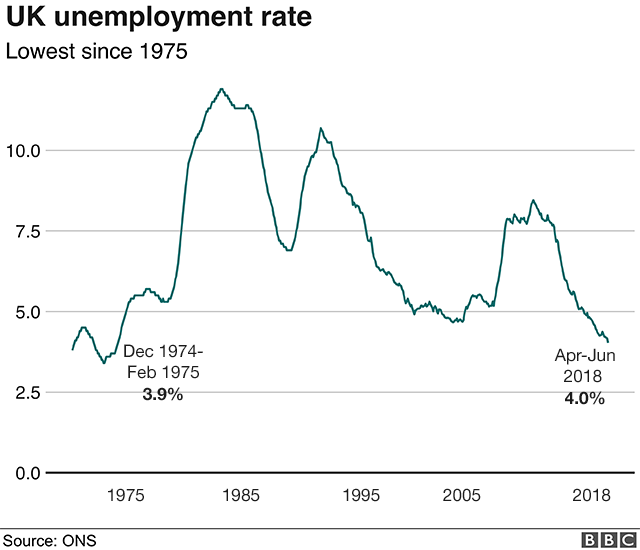
The NBC had far fewer passengers in 1980 and it was losing far more money that it was ten years earlier. Hardly the sign of a successful business, however you wish to measure success. The uptick in UK passenger figures in the mid 1980s (hardly a period of economic wealth) was down to PTEs with discounted cheap fares (e.g. Republic of South Yorkshire) whilst the 2000s can be attributed to London initially and then ENCTS.
It reflects the lack of commercialism in the NBC more than anything else. Remember that NBC originally proposed to close Southampton bus station (you know, the much vaunted example of profiteering by Stagecoach) in the late 1970s. They didn't and perhaps the more pressing economic difference is that you don't have to make that sort of decision if there is no pressure to make money or even operate reasonably efficiently. That's another reason for closing depots... they could have had a windfall AND be more efficient into the bargain. Perhaps that could've funded an earlier transition to one man operation, or investment into depots, or even affording moquette! Badgerline sold Weston super Mare, moved to a smaller, modern and cheaper depot, and reinvested the funds into new fleet but I recognise that a) it lost the bus station and b) it is more the exception than the rule.It's an interesting one, and probably more reflects the different economic priorities between an owner in it for the long haul and an owner seeking to make a quick buck. The former isn't necessarily a nationalised owner and the latter isn't necessarily a private owner, either.
The real money was made through the sale of city centre bus stations, not through the sale of depots. Maybe the NBC could have sold them and made a windfall but what would be the point? But if you're Alan Stephenson you may as well flog the land and cash in that windfall for yourself, which is exactly what he did in Otley and Harrogate.
By their very nature, the depots most ripe for closure were the smaller depots in smaller towns, neither of which were conducive to making lots of money from the sale of the land. There were operational savings to be made by consolidating- although, as Go North East have found recently in Chester-le-Street, that consolidation also has a price tag attached.
Although what really tended to happen was that the smaller depots were closed and then all the services from those towns were scrapped, as we see with Wooler and its one bus a day to Morpeth and Newcastle. Its main bus to the rest of Northumberland is now the 2-hourly bus to Alnwick operated by Glen Valley, who have a depot in Wooler.
And if, by your reasoning, most depots ripe for development were in smaller towns and were worth less, then it doesn't feed into the asset stripping MO as much and it's not always true. Small towns like Keswick and Ambleside had oversized facilities which were quite lucrative.
I'm not going to deny that there were some vultures out there. In fact, another poster cited them... ATL Holdings were chancers of the highest order - they were the very worst. Similarly, AJS teamed with Parkdale to pillage the property but in truth, most of the new owners weren't. In many instances, they sold off properties and pursue efficiencies that should've been done long before. Taking Northumberland... did Berwick need a bus depot in the middle of town? Did Rothbury need a full sized depot for four buses?
That's not to say that every depot closure was a good idea, and for the reasons you cite; Chester le Street's closure was the wrong solution to a problem and it goes in the same book as Bishop Auckland, or Chorley or Llanelli.
And also, don't think that I'm without a nostalgic side. I do miss those days of heading around the North East and rocking up to places like Whitley Bay with its semi circular bus station, or there being a depot at somewhere far flung like High Spen, or even a dormy shed in Barnard Castle. However, was it cost effective...? Not really.
As regards United's Wooler depot. It had a PVR of 7 (with an allocation of 8) and had a load of overheads when in reality, those services could've been operated from Alnwick and Berwick. Interestingly, the pattern of services now is not much changed from c.1981 when United instituted its large cuts save that the skeletal services on the 474 (that replaced the largely axed 510) went until recent BSIP initiatives.
Last edited: