Eyersey468
Established Member
- Joined
- 14 Sep 2018
- Messages
- 2,594
Regarding 96 it was an airport vehicle when new hence the (fake) curtains

The definition of insanity is doing the same thing over again and expecting different resultsI believe the new deckers will be MMCs
The definition of insanity is doing the same thing over again and expecting different results
I’m fairly sure ADL are only offering them with the same Cummins ISB 6.7 (and maybe Voith DIWA) that the current ones have. They might last a few years before we’re back to discussing the unreliability of X46/47 allocationsThey might have the same bodies but that's not to say they'll have the same engine/gearbox set-up.


We're sorry to advise that DalesBus 822 has broken down near Fellbeck - replacement bus is on the way and will call at Fountains Abbey (if gates open - otherwise at entrance) and Ripon but may be around 90 minutes late. Apologies for the delay.
Should order StreetDeck Ultroliners

Has been the case for the last couple of years at the very least. Looking at a 2019 Hull network map (so before the reductions brought on by COVID and its aftermath) and virtually all EY routes are only listed as having an hourly service on Sundays so it isn't new.Not noticed the change but Hull ‘local’ services don’t get better than hourly frequencies on Sundays, didn’t they use to be greater than that?
For a group that wants everything electric by 2035, they've bought a huge number of diesel E400MMCs over the last 3 years which should be expected to run in service well beyond that...Given Go Ahead said they want everything electric by 2035, which I'm not convinced will happen in that timescale, the MMCs may well prove to be the last new diesels bought by EY
Although Kleandrive going into administration won't help, ADL have been preparing to offer a repower option for the E400 MMC. I can't imagine that Go Ahead won't be looking at that in due course.For a group that wants everything electric by 2025, they've bought a huge number of diesel E400MMCs over the last 3 years which should be expected to run in service well beyond that...
(Not so much East Yorkshire but other divisions within the group)
For a group that wants everything electric by 2025, they've bought a huge number of diesel E400MMCs over the last 3 years which should be expected to run in service well beyond that...
(Not so much East Yorkshire but other divisions within the group)
Ember have shown that there is no intrinsic impossibility about running electric vehicles on long routes, the questions will be (a) when we get to a point where a 75-seat double decker bus has the range needed to cover those kinds of distances on fast roads, and (2) what the longer-term reliability and longevity of buses used in that way. Transdev's 36 is a good test-bed for it – if the buses can complete a full day's service without needing any top-up charges at Harrogate bus station during the day then that is looking promising, but otherwise there may be a need to add opportunity charging at some key locations such as Hull, Bridlington and Pocklington. But in principle, I don't see any reason why it shouldn't be viable. The cost of upgrading the electricity supplies to so many smaller depots is likely to be a barrier, though.How suitable would a fully electric fleet be for EY?
Thinking about some of the long distance routes such as X46/X47 etc, same question applies for Transdev's coastliner routes as well I guess.
It is not the distance of the route but the mileage covered in the day that are the issue for electrics. Ember achieves it by not heavily utilising all their vehicles so they can be charged up during the day (I just had a look at a couple of coaches on Bustimes to check my understanding and in all the cases I looked at they only did a couple of trips with a couple of hours parked up) which means you need more vehicles than basic scheduling would indicate and probably more inefficient than most operators would consider and incurs an additional cost impact (vehicle parking issues in the depot also being as big an issue as anything else for many operators).Ember have shown that there is no intrinsic impossibility about running electric vehicles on long routes, the questions will be (a) when we get to a point where a 75-seat double decker bus has the range needed to cover those kinds of distances on fast roads, and (2) what the longer-term reliability and longevity of buses used in that way. Transdev's 36 is a good test-bed for it – if the buses can complete a full day's service without needing any top-up charges at Harrogate bus station during the day then that is looking promising, but otherwise there may be a need to add opportunity charging at some key locations such as Hull, Bridlington and Pocklington. But in principle, I don't see any reason why it shouldn't be viable. The cost of upgrading the electricity supplies to so many smaller depots is likely to be a barrier, though.
Agreed, total daily mileage is more important than the distance from one of the route to the other – although a longer interurban route is likely to be more demanding than a shorter urban route just because of the amount of high-speed running on it. I hadn't really looked into Ember's scheduling, so I hadn't realised how much downtime the coaches had in each day – on the other hand, it's 170 miles each way from Glasgow to Inverness, so a coach making one return trip is covering more miles than any bus on the X46 will do in a day.It is not the distance of the route but the mileage covered in the day that are the issue for electrics. Ember achieves it by not heavily utilising all their vehicles so they can be charged up during the day (I just had a look at a couple of coaches on Bustimes to check my understanding and in all the cases I looked at they only did a couple of trips with a couple of hours parked up) which means you need more vehicles than basic scheduling would indicate and probably more inefficient than most operators would consider and incurs an additional cost impact (vehicle parking issues in the depot also being as big an issue as anything else for many operators).
The Transdev 36 is a more pertinent example for bus operators as they are working in a more traditional resource manner than Ember though the issue with that is getting the infrastructure for opportunity charging installed (easier if you own the sites yourself, as Transdev do with Harrogate Bus Station, than if you are using roadside locations or 3rd party bus stations). There are already a number of operators running electric buses on interurban routes, even double-deckers (Arriva in Leicestershire, Stagecoach around Chesterfield, Transdev in Harrogate & Pulhams seem to be running some on Cheltenham to Oxford as examples). As you say, on principle there aren't many bus routes that couldn't be run by electric buses but it is the cost of getting charging infrastructure installed (whether at remote and smaller depots or opportunity charging in bus stations or roadside where it is needed) that is holding things back.
Thank you. Is there a current EYMS Hull network map?Has been the case for the last couple of years at the very least. Looking at a 2019 Hull network map (so before the reductions brought on by COVID and its aftermath) and virtually all EY routes are only listed as having an hourly service on Sundays so it isn't new.
That's part of the reason I don't think they Will achieve it, I'm also not convinced they or for that matter the other groups will have the money to replace everything and there's the question of will the manufacturers have the capacity to build enough new vehicles?For a group that wants everything electric by 2035, they've bought a huge number of diesel E400MMCs over the last 3 years which should be expected to run in service well beyond that...
(Not so much East Yorkshire but other divisions within the group)
That's part of the reason I don't think they Will achieve it, I'm also not convinced they or for that matter the other groups will have the money to replace everything and there's the question of will the manufacturers have the capacity to build enough new vehicles?
Agreed, total daily mileage is more important than the distance from one of the route to the other – although a longer interurban route is likely to be more demanding than a shorter urban route just because of the amount of high-speed running on it. I hadn't really looked into Ember's scheduling, so I hadn't realised how much downtime the coaches had in each day – on the other hand, it's 170 miles each way from Glasgow to Inverness, so a coach making one return trip is covering more miles than any bus on the X46 will do in a day.
But for now, buses on The 36 rarely seem to be scheduled for a full day's service, either with breaks during the daytime or buses that are running the late shift not coming out of the depot until after lunchtime. The Oxford to Cheltenham service is similarly light but that's because the route doesn't have an evening service. But compare the buses on The 36 with how intensively they are used on other long-distance Transdev routes like Witch Way or Coastliner, where there are buses running in service from the start of the day right through to the end – which doesn't suggest that electric buses are quite ready for that sort of demanding schedule just yet.

I’m fairly sure ADL are only offering them with the same Cummins ISB 6.7 (and maybe Voith DIWA) that the current ones have. They might last a few years before we’re back to discussing the unreliability of X46/47 allocations
I think.a lot of it is for the PR to be honest, though within the EY fleet there are a lot of vehicles that will have to be replaced over the next 3 years due to the age of themAnother point is, is it actually needed?
I know it's good PR, but in reality, a modern diesel bus is efficient and produces relatively low emissions.

 www.facebook.com
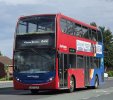
What are they forADL Enviro 400MMC YY26 FKJ/L/M were delivered today in all over white
Assume these are either stock models for york or GWY come to hull to be prepped.What are they for