Our new ticketing site is now live! Using either this or the original site (both powered by TrainSplit) helps support the running of the forum with every ticket purchase! Find out more and ask any questions/give us feedback in this thread!
Firstly because most of the lines out there were already built (they found out the hard way that planning on the basis of existing technology constrains you in the future). Secondly are the newer LGVs built to the same alignment standards as the older ones? Or are they on an alignment suitable for 400km/h running even if the time isn't yet ripe to utilise the potential?
Given the record-breaking test train that ran on LGV Est, I'd suggest that SNCF did indeed design a 400km/h alignment, even if they had no plans to use it at that speed in regular service for the foreseeable future.
However, recently constructed lines, including LGV Est in France and the line from Milan to Bologna in Italy, have alignments designed for 400kph. Italy is planning to increase the operating speed on this route to 360kph.
But I really don't see the problem in reducing the top speed to 320kph. It'll be a couple of minutes added to the time from London to Birmingham. Bear in mind the timetabled speed is planned to be 330kph, with a maximum running speed of 360kph to keep to timetable (but that only allows you to make up a couple of minutes).
For the first couple of years, running will only be to Curzon St and back. Assuming all trains from Curzon St call at Interchange (km post 156), it's 109km to the north portal of Chiltern Tunnel (at 47km), where the speed is limited to 320kph.
From a standing start at Interchange, HS2 trains will take 40km to reach 360kph; and they will have to start braking 4km before the tunnel portal. So that is only 65km of running at 360kph. Limiting the top speed for the first few years will make almost no difference. It's only when they get trains running through Interchange at 360kph on the fast centre lines towards Handsacre will any benefits be felt.
Firstly because most of the lines out there were already built (they found out the hard way that planning on the basis of existing technology constrains you in the future). Secondly are the newer LGVs built to the same alignment standards as the older ones? Or are they on an alignment suitable for 400km/h running even if the time isn't yet ripe to utilise the potential?
See JamesT's response - I stand corrected, some lines have alignments which could potentially allow 400kph running in the future. Although I noted that LGV Est's operating speed is 320kph, the same as the alleged proposal for HS2. I would be interested to know if 400kph running is under active development for any of these lines. Given how important it apparently is...
Given the record-breaking test train that ran on LGV Est, I'd suggest that SNCF did indeed design a 400km/h alignment, even if they had no plans to use it at that speed in regular service for the foreseeable future.
SNCF undertook 400kph+ record runs prior to that on both the LGV Atlantique and LGV Sud-Est, so yes, of course you can design stretches of high speed track to run a test train on. But that's very different from running it in service. For a start, the alignment would need to be at that maximum speed continuously for it to be worth doing.
Ultimately, we need to make our own decisions on specifying our infrastructure and do so on rational grounds, not "big boys told me to". If someone can demonstrate that 400kph running is worth the considerable additional cost over the distances high speed rail could potentially run in the UK, fair enough. I've not seen any evidence of that though.
The problem is that such reduction at this stage wouldn't bring much savings. Unless they go for ballasted track. But that would require new design, ripping up contracts etc. That means years of further delays for probably negligible savings after all that.
Other options is to change only train design, leaving infrastructure as it is being build. Again, can't see massive savings here.
On train design would this not depend how far advanced design is and, if switching to a more 'standard' specification would mean that more 'off the shelf' components could be used vs a specific development for HS2 ... which could also de-risk the commisioning?
For the first couple of years, running will only be to Curzon St and back. Assuming all trains from Curzon St call at Interchange (km post 156), it's 109km to the north portal of Chiltern Tunnel (at 47km), where the speed is limited to 320kph.
From a standing start at Interchange, HS2 trains will take 40km to reach 360kph; and they will have to start braking 4km before the tunnel portal. So that is only 65km of running at 360kph. Limiting the top speed for the first few years will make almost no difference. It's only when they get trains running through Interchange at 360kph on the fast centre lines towards Handsacre will any benefits be felt.
That's worse than I thought. I assumed there would be 150km of top speed running.
From the switch between 230 and 360 kph south of Handsacre to Birmingham Interchange is 29km. But it would take around 24km to get from 230 to 360kph. So that's 110km of 360kph running. BUT this isn't timetabled speed - that's 330kph. The time difference between 330 and 320 kph over that distance is less than a minute.
Ultimately, we need to make our own decisions on specifying our infrastructure and do so on rational grounds, not "big boys told me to". If someone can demonstrate that 400kph running is worth the considerable additional cost, fair enough. I've not seen any evidence of that though.
Years behind schedule , costs continue to balloon, a line from Birmingham to nowhere, poor value for money, have we arrived at the point when HS2 Ltd should file for administration?
As I understand it, contracts for the railway systems have been let fairly recently, presumably to the original spec (ie slab track and 360km/h).
So money will already be being spent on delivering this spec, and possibly with production in hand (eg for slab track construction).
Testing will be possible on the ETCS-equipped section of the ECML albeit not at speeds higher than 200km/h (125mph) or possibly 225km/h (140mph) if the infrastructure can support it.
The HS2 alignment for 360km/h (max, lower in tunnels and off the main line) is already fixed, so there is no benefit in changing it.
Possibly power supplied could be simplified/reduced for the lower power needs of Phase 1 (fewer trains at potentially lower speeds than envisaged).
See JamesT's response - yes, it does look like some lines have alignments which could potentially allow 400kph running in the future. Although I noted that LGV Est's operating speed is 320kph, the same as the alleged proposal for HS2. I would be interested to know if 400kph running is under active development for any of these lines. Given how important it apparently is...
SNCF undertook 400kph+ record runs prior to that on both the LGV Atlantique and LGV Sud-Est, so yes, of course you can design stretches of high speed track to run a test train on. But that's very different from running it in service. For a start, the alignment would need to be at that maximum speed continuously for it to be worth doing.
Ultimately, we need to make our own decisions on specifying our infrastructure and do so on rational grounds, not "big boys told me to". If someone can demonstrate that 400kph running is worth the considerable additional cost over the distances high speed rail could potentially run in the UK, fair enough. I've not seen any evidence of that though.
Philippe Mellier, the head of Alstom's transport division, said the commercial speed of TGV trains could reach 350-360 kph in the next five to six years. The latest TGVs run at 320 kph.
I can't find an article on why they then cancelled it.
If you're only looking at London to Birmingham, then higher speeds don't look worth it. But When you're designing something that is supposed to go to as far as Manchester and Leeds?
I find this hilarious that people are suggesting we have blindly accepted this, when most of the arguments against HS2 on this forum have been that we have been some sort of special snowflake producing our own thing. We've taken advice from those already running high speed rail on the best way to build a new line. The consensus was you build in some headroom. Consider that the first TGVs were only capable of 270kph, the latest coming this year are 350kph. Who's to say that within the next 50-100 years we won't want to run HS2 trains faster than 360kph?
I'm also not seeing where this massive extra cost is. Once you get over 300kph then slab track is going to be cheaper over the whole lifetime. Where's the step change that makes 320kph okay and 360kph not?
Exactly, even if HS2 reached its original destinations the distances are around 200mile/320km. In France Paris Marseille is around 470 miles (770km) and there are quite a few trains from Paris which are first stop Avignon which is well over 400 miles. In China the longest possible HSR journey on one train is 1700 miles, covered in around 11 hours. Even when the maximum HS milage was 200ish I see no point in going faster than 200mph/320kph, and I suspect the time saving of 225mph (360kph) v say even 186mph (300kph) over the London Birmingham leg is a few minutes and as stated upthread not all the route is suitable for max speed anyway as the tunnels into London are 140mph according to Openrailwaymap.
Even Germany, which is a much bigger country than the bit of the UK that would ever be considered for HSR have built a lot of their routes in the 250-280kph bracket, and on a quick scan of the map I cant find anything faster than 300kph.
What I find very hard to swallow is all the 'studies' that were done, that arrived at the original project specification. Were the outputs of these studies predetermined, i.e. we want to build a 400kph railway, justify it, even if not said out loud, making sure that those doing the study are 'compliant'.
I'm also not seeing where this massive extra cost is. Once you get over 300kph then slab track is going to be cheaper over the whole lifetime. Where's the step change that makes 320kph okay and 360kph not?
Agree. The cost of hs2 is in the slow bits in the urban approaches and tunneling to reach city centres, a lower speed wouldn't have made much of a difference, but require more stock, more depot space etc. Slab track required more for the expected tonnage of operations rather than the speed - phase2a only specified with it as a continuation of the contract.
360kph max with 330kph timings was about ensuring the 18 trains an hour could run on the phase 1 section even they entered late.
If you're only looking at London to Birmingham, then higher speeds don't look worth it. But When you're designing something that is supposed to go to as far as Manchester and Leeds?
I did a back-of-fag-packet estimate up-thread for the cost saving from London to Scotland, which reduced the journey time from 2h15 to 2h04. It gives 11 minutes saving. Assuming you can build an alignment at the same top speed through Northern England and Scottish Borders, which would be extremely challenging.
I find this hilarious that people are suggesting we have blindly accepted this, when most of the arguments against HS2 on this forum have been that we have been some sort of special snowflake producing our own thing. We've taken advice from those already running high speed rail on the best way to build a new line. The consensus was you build in some headroom. Consider that the first TGVs were only capable of 270kph, the latest coming this year are 350kph. Who's to say that within the next 50-100 years we won't want to run HS2 trains faster than 360kph?
You build headroom if it's worth building. It may also be helpful to consider whether other countries have actually used the headroom they built in to their designs.
Also the increase in max speeds over time appears to be levelling off:
1960s - First Shinkansen - 220kph
1970s - first TV - 270kph
1980s/90s - 300kph standard on new TGV lines
2000s - 320kph
2020s - 350kph (in places, maybe - although I'm not clear whether we're talking about trains capability or lines that are actually going to run at that speed)
I'm also not seeing where this massive extra cost is. Once you get over 300kph then slab track is going to be cheaper over the whole lifetime. Where's the step change that makes 320kph okay and 360kph not?
It's not so much a step change as an increasing curve upwards. Here are a couple of examples off the top of my head:
At higher speeds you need to start looking at dynamic track-ground interaction - i.e. the mechanical waves in the ground forming a 'mach cone' ahead of the train. HS2 found this was particularly problematic for certain soil types which had low mechanical wave speeds. I don't know what solution was eventually decided but the talk was of having to excavate and replace several metres of ground under the formation.
Transitions from plain track alignment into structures becomes a problem. Say you have a deep cutting in clay, going into a tunnel. The ground in the cutting will heave upwards and this will continue for a long duration. But the tunnel won't move nearly as much. To maintain vertical track alignment you need to ensure the differential movement is limited. In normal circumstances you would use ballast to iron out the difference, tamping back into alignment. You can't do that with slab track so you need a permanent fix which usually comprises some sort of piled raft with progressively shorter piles going away from the tunnel. There would be a similar issue at the interface of high embankments with bridges/viaducts.
These are ground-related (betraying my specialism), doubtless there are more from other disciplines.
== Doublepost prevention - post automatically merged: ==
Exactly,-------- Even when the maximum HS milage was 200ish I see no point in going faster than 200mph/320kph, and I suspect the time saving of 225mph (360kph) v say even 186mph (300kph) over the London Birmingham leg is a few minutes and as stated upthread not all the route is suitable for max speed anyway as the tunnels into London are 140mph according to Openrailwaymap.
Rough maths not formatting well but 186mph to 200 mph London - Birmingham saves you 4.52 minutes. Increasing to 225mph from 200 gives you another 6.67 minutes saving.
I was under the impression that normal running was to be at 320kph anyway, and 360kph was to be used only to catch up when delayed? Can't recall where I heard this.
Speculatively speaking, Green Signals podcast spoke about the need for 11 car sets (given that 8 car sets running in multiple north of Birmingham on existing infrastructure won’t fit in any platforms) but this will be a net capacity decrease for more northerly services.
This would require a contract negotiation, or a secondary contract for a bolstered fleet to replace existing rolling stock.
If HS2 are considering an amended or lowered top speed, this contract renegotiation would be the opportune time to theoretically lower some of the cost, albeit contract negotiations generally tend to be more expensive. Unsure however how much could be saved versus the cost of lowering track specification.
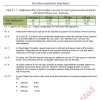
Page 66, looks like the attached. Timing tables etc provided, but it's about carbon impact, but there's some useful info on what we are discussing. It can still make quite a difference.
But you dont get full speed over the whole section anyway, the last 10 miles ish into London is 250km/h/155mph anyway, and then by the time you accelerate and brake how many miles of higher than 186mph 300km/m running do you actually get between London and Birmingham? As for the original proposal extending Northwards, where you would then maybe have 200miles of HSR. I cant see that happening at any point in the foreseeable future so to my mind we need to plan around and buy rolling stock for what we have under construction now. Timescales for any significant expansion northwards would probably be over 30 years anyway so new trains would be needed anyway.
Ultimately, we need to make our own decisions on specifying our infrastructure and do so on rational grounds, not "big boys told me to". If someone can demonstrate that 400kph running is worth the considerable additional cost over the distances high speed rail could potentially run in the UK, fair enough. I've not seen any evidence of that though.
Why would you not ask those with experience for advice? The advice was to futureproof, which is generally good advice. Rather than assuming that the present technological constraints will always apply in the future, build with the possiblity of enhancements in mind. How much extra did building to a 400km/h alignment cost compared with a 200km/h alignment?
So what happens when a future government 30 years down the line announces a new project to connect HS2 to Scotland? You are now building a 400ish mile route and the bottom half is forever constrained because no one futureproofed it.
Rough maths not formatting well but 186mph to 200 mph London - Birmingham saves you 4.52 minutes. Increasing to 225mph from 200 gives you another 6.67 minutes saving.
Latest six monthly report gives reasonable positive support to civil progress over the last six months but confirm systems contracts have been slowed down and wont fully mobilise until civils works is completed. On speed Heidi Alexander says this
I have commissioned Mark Wild to assess how much money and time could be saved by adopting a specification for HS2 that is more in line with the high-speed railways successfully delivered by the rest of the world. This could involve relying on proven technology and reducing the top operating speed of the railway in line with HS1 and other European counterparts.
On current specification, HS2 trains will run at 360 kilometres per hour (kph), which would make them the fastest conventional high-speed trains anywhere in the world.
The definition of high-speed covers trains running at least 250 kph. China and Spain have the highest design speeds of 350 kph. The maximum commercial passenger speed on the UK conventional rail network is 200 kph, and HS1 runs at 300 kph.
However, no railway in the UK, or globally, is currently engineered for 360 kph. This means that the project would have to wait for HS2 tracks to be built before testing any trains – an approach which could increase costs and delay the completion of the project. The alternative would have been to send trains abroad to test on an existing track running at that speed.
Mark Wild’s initial and provisional estimate is that a specification at reduced speeds could save in the low billions and bring the railway into service sooner, by reducing risk in the delivery of the programme and its testing. However, in learning the lessons of the past, I am eager not to make this decision prematurely; I have asked Mark Wild to report back to me before the summer recess, and I will be considering his advice carefully.
Savings on this scale seem surprising given alignment is set and civils so advanced. The biggest area must surely be in replacing slab track with ballasted track where suitable. Not sure your going to save anything on OLE and signalling. So perhaps just a UK gauge version of a Frecciarossa could save time and type testing but Hitachi/Alstom will want compensation.
In respect of the reset she says
Mark Wild’s work on the reset has shown that HS2 Ltd did not have an accurate assessment of how much work had been delivered, or of how much was left to do. It is now clear that previous plans significantly underestimated the work required.
We are aware of an issue with emails from the Forum to Microsoft-based email accounts (hotmail/outlook/live.com email addresses). This is being looked into currently, thanks for your patience meanwhile.