• Our new ticketing site is now live! Using either this or the original site (both powered by TrainSplit) helps support the running of the forum with every ticket purchase! Find out more and ask any questions/give us feedback in this thread!

The Labour Party under Andy Burnham

Falcon1200

Established Member
Joined
14 Jun 2021
Messages
6,578
Location
Neilston, East Renfrewshire
A lady called Maggie sold off loads of state assets for cheap to her mates,

Actually shares in the privatised industries were offered to the public, and the staff, often to the great benefit of the latter in particular; That was certainly the case with Railtrack, if you sold the shares at the right time - And I doubt most BR staff could really be called 'Maggie's mates'. As @RT4038 says, it is difficult to understand the state the country was in back in 1979 for anyone not around, or an adult, then. I voted Conservative in 79, my first General Election, and if transported back in time would do the same again. But I have not however voted Tory in every election since!
 
Sponsor Post - registered members do not see these adverts; click here to register, or click here to log in
R

RailUK Forums

Magdalia

Established Member
Joined
1 Jan 2022
Messages
7,397
Location
The Fens
A lady called Maggie sold off loads of state assets for cheap to her mates, and systematically destroyed industries large regions of our country before I was born, and somehow that's my fault?

Actually shares in the privatised industries were offered to the public, and the staff, often to the great benefit of the latter in particular
When considering privatisation, it is important to appreciate the distinction between the primary market and the secondary market.

The primary market is the flotations on the stock market. The privatisation flotations were deliberately underpriced to ensure that the offers were oversubscribed. Furthermore, various financial institutions in the City of London, and the advertising industry, were paid handsomely for their services organising the flotations.

It is correct that lots of the shares went to individuals at the original flotation but.....

The secondary market is the trading of existing shares. When an offer in the primary market is underpriced, the price jumps in the secondary market when trading starts. There is a trading strategy known in the City as "stagging", where investors buy cheaply at the initial offer then sell very quickly pocketing a nice capital gain. Shrewd retail investors with cash to invest could make a quick buck, often rolling over what they had received from stagging the last privatisation to repeat in the next privatisation.

Of course, when the retail investors sold their shares, the buyers were mostly the financial institutions, not other individual shareholders. There was a lot of guff about creating a nation of shareholders, and some politicians might have believed the hype, but the economic reality wasn't like that, and I suspect that the key political players knew that all along.

Furthermore, the long term impact could also have been foreseen, which was a lot of the privatised industries becoming increasingly reliant on foreign not UK shareholders.

It is also worth pointing out that "right to buy" for council houses had a similar long term effect, though without the stagging. I have seen an estimate that about a third of "right to buy" council houses are now in the private rental market, though I can't remember the source.
 

JamieL

Member
Joined
6 Aug 2022
Messages
947
Location
UK
You don't cut your way to prosperity.

== Doublepost prevention - post automatically merged: ==


WFA was an odd one, as cutting it for well off folks was relatively uncontroversial, they just chose too agressive of a cut-off.

You are living in a fantasy land if you think ANY party will deliver that. Even Reform UK have now abandoned their massive tax cut pledge already:

Cutting public spending is a pre-requisite to cutting taxation unless you can grow the economy. And the economy is not going to grow when the people that would grow it are being discouraged from doing so by sky-high taxes.
 

brad465

Veteran Member
Joined
11 Aug 2010
Messages
11,503
Location
Taunton or Kent
Cutting public spending is a pre-requisite to cutting taxation unless you can grow the economy. And the economy is not going to grow when the people that would grow it are being discouraged from doing so by sky-high taxes.
I seem to recall Truss and Kwarteng tried this: they announced sweeping tax cuts across the board and said a growing economy would compensate for this. But the markets didn't believe them and the rest is history.
 

Bletchleyite

Veteran Member
Joined
20 Oct 2014
Messages
113,568
Location
"Marston Vale mafia"
Cutting public spending is a pre-requisite to cutting taxation unless you can grow the economy. And the economy is not going to grow when the people that would grow it are being discouraged from doing so by sky-high taxes.

Our taxes are not "sky high". They are low by European social democracy standards. If you want a US style low services, low tax approach, perhaps you might consider relocating there? And if you want a South East Asian (Singapore on Thames or Dubai) model, then that shouldn't exist anywhere, because it makes a few rich off the back of people who are to all intents and purposes slaves, their wages are so low and conditions so poor.

I do think that 60% marginal "cliff" needs fixing, it was nonsense in the first place created by being unwilling to increase higher rate tax by a couple of percentage points which is what should have been done.
 

jfollows

Established Member
Joined
26 Feb 2011
Messages
10,132
Location
Wilmslow
Wasn’t there also the effect of more people taking up pension credit? Which of course they’re entitled to, but is still money the government wasn’t previously expecting to have to pay out.
They don’t learn, do they?
Previously something similar happened when they axed the free TV licence for over 70s except for those on Pension Credit. Cue huge number of valid applications for Pension Credit by people pissed off about losing their free TV licence. I think it ended up as a net cost to the government rather than the planned saving.
 

SteveP29

Member
Joined
23 Apr 2011
Messages
1,181
Location
Edinburgh/ Chester le Street
The Government should be crowing about this as this is the sort of stuff that their voters actually in general would like and might actually have a positive impact on many people. Instead we seem to have basically radio silence.

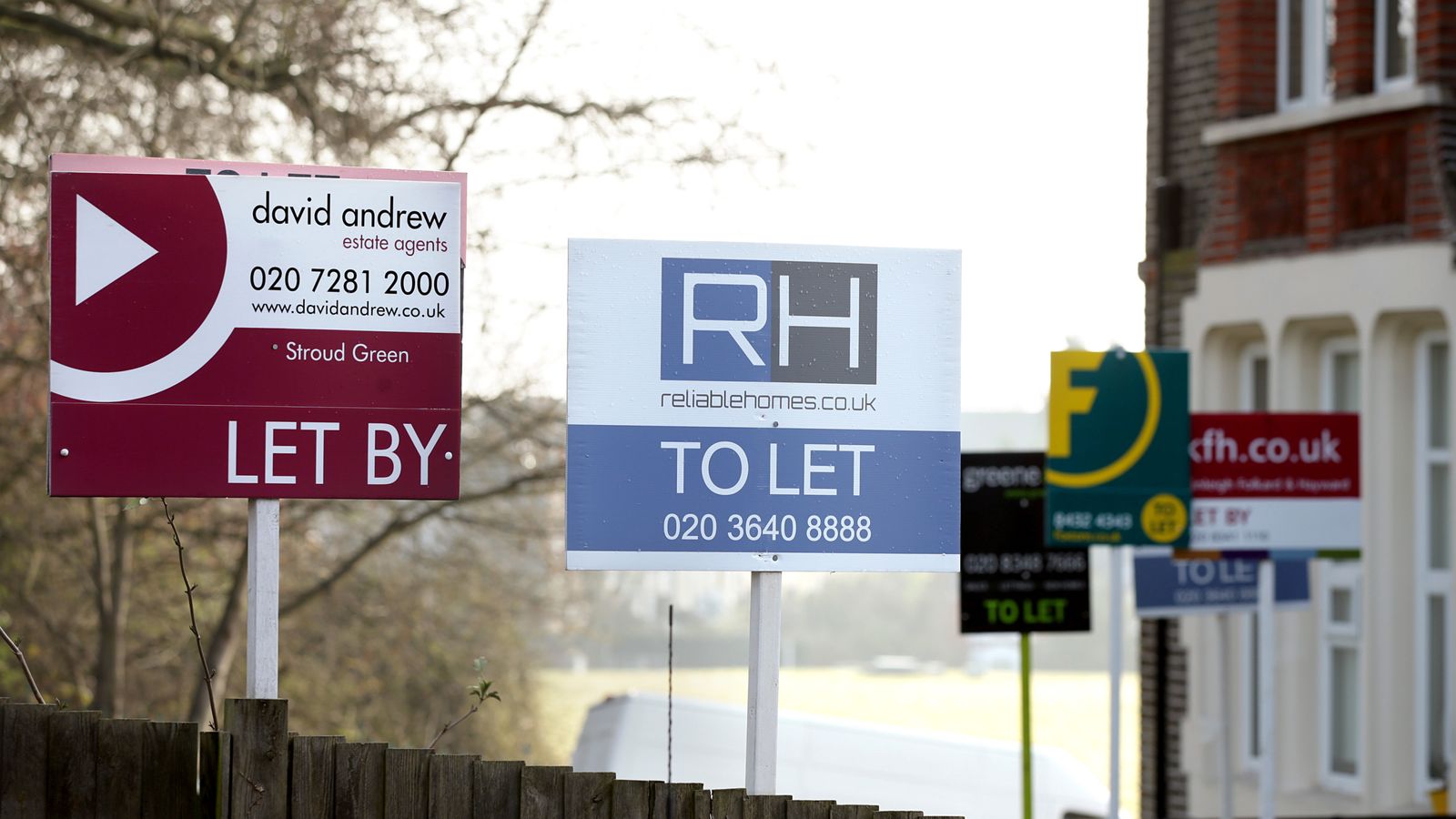
They're not crowing about it because so many in Government and in the Commons are landlords themselves and, although welcome, rights don't reduce what many feel are exploitative rents, which would likely lead to more complaints and protests about it, hence them not drawing much attention to it.
 

ChrisC

Established Member
Joined
7 Oct 2018
Messages
2,264
Location
Nottinghamshire
They don’t learn, do they?
Previously something similar happened when they axed the free TV licence for over 70s except for those on Pension Credit. Cue huge number of valid applications for Pension Credit by people pissed off about losing their free TV licence. I think it ended up as a net cost to the government rather than the planned saving.
If a little more thought and time had been taken over the decision to remove the winter fuel allowance, the government could have saved a large amount money. If they had made a sensible decision of withdrawing the winter fuel payment to pensioners getting more than £20k or even £25k a year, it could have been quite an acceptable or even a popular decision to many people. Now they have ended up having to pay so much more out in Pension Credit and still giving winter fuel allowance to reasonably wealthy pensioners getting a yearly income of up to £35,500. With my state pension plus my work pension I’m getting just under £25 a year and certainly do not need a £200 winter fuel payment. So many other retired people I know in the same situation as me think the same.
 

Yew

Established Member
Joined
12 Mar 2011
Messages
7,239
Location
UK
Cutting public spending is a pre-requisite to cutting taxation unless you can grow the economy. And the economy is not going to grow when the people that would grow it are being discouraged from doing so by sky-high taxes.
I don't think I've been one of those advocating for tax cuts. Similarly, when public services form such a large part of the economy, cutting public spending is not without downsides - it's less money moving around in the economy as typically those who benefit from tax cuts are those with a lower marginal propensity to consume.


Our taxes are not "sky high" just look at some of the rates we were charging on Income tax in the 60's.
 

ainsworth74

Forum Staff
Staff Member
Global Moderator
Joined
16 Nov 2009
Messages
31,108
Location
Redcar
They don’t learn, do they?
Previously something similar happened when they axed the free TV licence for over 70s except for those on Pension Credit. Cue huge number of valid applications for Pension Credit by people pissed off about losing their free TV licence. I think it ended up as a net cost to the government rather than the planned saving.
Indeed very similar thing happened then. But the take-up following the change to Winter Fuel was definitely higher than that following changes to the TV licencing regime. Either way it ironically did ensure that people who really need more financial help accessed it. And in the case of Winter Fuel probably ensure that money was being spent on people who really needed it even if it did mean that the savings weren't realised.
They're not crowing about it because so many in Government and in the Commons are landlords themselves and, although welcome, rights don't reduce what many feel are exploitative rents, which would likely lead to more complaints and protests about it, hence them not drawing much attention to it.
Yeah fair point! I belive we don't have completely accurate figures but we do know that at least 83 MPs are landlords earning over £10,000 per year from it (the level at which it must be declared. Most of them currently Labour. Interestingly it appears that that is actually less than previous as it was slightly over a hundred in the last Parliament (most of them Tory at that point).

Labour has been warned the government won't be trusted on renters' rights after it emerged that MPs rake in at least £830,000 a year in rent.

Some 83 members of parliament earn a minimum of £10,000 from renting properties, according to the latest register of interests, with Sir Keir Starmer's party leading the pack of mostly residential landlords.

The true figure which MPs earn from rent is unknown, but is likely to be higher than £830,000, as 170 registered properties have received rental income in the past year.


More than 100 MPs have earned over £10,000 a year as landlords over the course of this parliament, research from Sky News has found.

A total of 83 Tories have declared they received the sizeable rental payments since the last election in December 2019, along with 18 Labour MPs, four Liberal Democrats and one member of the SNP.

But many more could be benefiting from a smaller income as landlords, as MPs only have to publish it on the register of interests if rent tops the £10,000 annual figure.


All that being said however, perfect is the enemy of good. Is the Renters Rights Act perfect? Of course not. But it will get rid of Section 21 "no-fault" evictions which introduced a huge amount of insecurity in housing tenure, places limits on future rent increases, etc etc. This is still good stuff overall even if it isn't perfect.

If they had made a sensible decision of withdrawing the winter fuel payment to pensioners getting more than £20k or even £25k a year, it could have been quite an acceptable or even a popular decision to many people.

Maybe I'm just becoming jaded in my youth (is that how the saying goes? :lol:) but I'm far from convinced that any change would have been meet with anything other than the fury the one they proposed did. I still, personally, think that tying it to Pension Credit eligibility avoiding any other means testing (with it's admin overhead) was the most logical way of doing it. That being said I certainly agree where they've ended up seems to be the worse of all worlds!
 

JamesT

Established Member
Joined
25 Feb 2015
Messages
4,888
I don't think I've been one of those advocating for tax cuts. Similarly, when public services form such a large part of the economy, cutting public spending is not without downsides - it's less money moving around in the economy as typically those who benefit from tax cuts are those with a lower marginal propensity to consume.

Our taxes are not "sky high" just look at some of the rates we were charging on Income tax in the 60's.
The overall tax burden is the highest for 70 years. Income tax rates may have fallen since the 60s, but other taxes have more than stepped in. e.g. VAT only started in 1973, Purchase Tax was only on luxury goods.

But this is now the fundamental question, how do we get out of the current path? Taxes are high in UK terms, raising them has demonstratably choked off economic growth. Government debt is consuming an increasing proportion of public spending so there's no margin to just let the spending go to try and stimulate activity.
 

Bletchleyite

Veteran Member
Joined
20 Oct 2014
Messages
113,568
Location
"Marston Vale mafia"
raising them has demonstratably choked off economic growth

I don't think there's evidence to back that up (that doesn't come from right wing think tanks or the Daily Torygraph). What has demonstrably choked off economic growth is Brexit, yet the politicians fear to point out the massive elephant in the room, namely that the way to reverse that is to rejoin in some form, even if just the Single Market as part of EFTA or similar.
 
Joined
22 Jan 2024
Messages
588
Location
Yorkshire
Our taxes are not "sky high". They are low by European social democracy standards. If you want a US style low services, low tax approach, perhaps you might consider relocating there?

Taxes here are high compared to what public services we actually get for them. Nothing seems to work properly any more.
 

Halwynd

Member
Joined
11 Sep 2021
Messages
568
Location
North West
Actually shares in the privatised industries were offered to the public, and the staff, often to the great benefit of the latter in particular; That was certainly the case with Railtrack, if you sold the shares at the right time - And I doubt most BR staff could really be called 'Maggie's mates'. As @RT4038 says, it is difficult to understand the state the country was in back in 1979 for anyone not around, or an adult, then. I voted Conservative in 79, my first General Election, and if transported back in time would do the same again. But I have not however voted Tory in every election since!

Despite living through Maggie's reign of terror, she did impress me. I mean, who else could sell shares in utilities various to people who already owned them? Marvellous woman....
 

RT4038

Established Member
Joined
22 Feb 2014
Messages
5,457
Norway’s Sovereign Wealth Fund value after deciding not to sell off the rights etc. to North Sea Oil (unlike the Free Market Zealot Thatcher):

19.586 trillion kroner or about £1.4 trillion

From which the annual interest is invested back in Government programmes for the benefit of the nation.

According to the chief economist at PricewaterhouseCoopers, John Hawksworth, had all this money been set aside by the UK and invested in ultra-safe assets it would have been worth £450bn by 2008. He admits that is a very conservative estimate: Sukhdev Johal, professor of accounting at Queen Mary University of London, thinks the total might well have been £850bn by now.

But hey - at least it made some of Maggie’s mates and party donors a little bit more richer and gave nice tax cuts to the richest in the nation.
Norway could afford to do that - it didn't have the structural issues that meant Britain needed the whole value of the rights sale then - the interest was simply not enough. Comparing the two economies at that time is like apples and pears.

Despite living through Maggie's reign of terror, she did impress me. I mean, who else could sell shares in utilities various to people who already owned them? Marvellous woman....
The Government owned the Utilities. The people do not own the Government, so it was not theirs already.
 
Last edited:

Yew

Established Member
Joined
12 Mar 2011
Messages
7,239
Location
UK
Taxes here are high compared to what public services we actually get for them. Nothing seems to work properly any more.
A large part of that is the killing that private outsourcing companies make from running them.
 

styles

Established Member
Joined
7 Dec 2014
Messages
4,917
Location
Gwynedd
Taxes here are high compared to what public services we actually get for them. Nothing seems to work properly any more.
This is what I kind of resent when it comes to tax in the UK.

I've no moral objection to paying higher taxes. My business does quite well and I benefit from a low dividends tax regime. Arguably, I should pay more.

However it seems like there isn't a week which goes by in which there's an example of the government wasting a ludicrous sum of money on a poorly-run IT project, spineless defence of the unsustainable triple lock on state pensions, or a multi-million pound contract which isn't fit for purpose.

Until we get good financial governance in place, I will continue to exploit any tax avoidance scheme (not evasion) I have at my disposal.
 

JonathanH

Veteran Member
Joined
29 May 2011
Messages
23,350
I do think that 60% marginal "cliff" needs fixing, it was nonsense in the first place created by being unwilling to increase higher rate tax by a couple of percentage points which is what should have been done.
No matter what distortions it creates, It would be a toxic move to reduce any sort of tax on higher earners who can afford to pay that tax. At the moment, people can put their income above £100,000 into pension contributions to avoid hitting the 60% tax band, which similarly causes a distortion. The removal of higher rate tax relief on pension contributions is often discussed as an ill-focused subsidy to higher earners.

It is clear that the government needs more tax revenue, and the least controversial way to get it is to take it from the better off.
 

JamesT

Established Member
Joined
25 Feb 2015
Messages
4,888
No matter what distortions it creates, It would be a toxic move to reduce any sort of tax on higher earners who can afford to pay that tax. At the moment, people can put their income above £100,000 into pension contributions to avoid hitting the 60% tax band, which similarly causes a distortion. The removal of higher rate tax relief on pension contributions is often discussed as an ill-focused subsidy to higher earners.

It is clear that the government needs more tax revenue, and the least controversial way to get it is to take it from the better off.
Meddling with pensions tax relief probably wouldn’t gain that much and would affect quite a few people. The threshold is roughly £50k where higher rate tax kicks in and the same tax relief. (You also lose some savings allowance). Given the way these have been frozen for several years that’s an increasing number of people. It’s also effectively double taxation as you pay something on the contributions and then again as income tax on the pension payments.

There’s also the lessons from history, previous chancellors have taxed pensions (notably Gordon Brown and the dividend tax relief) which have led to most defined benefit schemes becoming unaffordable. Surely we should be encouraging people to save for their retirement so they are less likely to be a burden on the state in future? Not penalising those who do?
 

JonathanH

Veteran Member
Joined
29 May 2011
Messages
23,350
Surely we should be encouraging people to save for their retirement so they are less likely to be a burden on the state in future? Not penalising those who do?
Higher rate taxpayers aren't usually regarded as the people who are going to be a disproportionate burden on the state in the future.
 

JamesT

Established Member
Joined
25 Feb 2015
Messages
4,888
Higher rate taxpayers aren't usually regarded as the people who are going to be a disproportionate burden on the state in the future.
Being a higher rate taxpayer now is no guarantee of being wealthy in the future. Especially with estimates on the size of pot to get even a modest income running to hundreds of thousands of pounds.
 

JamieL

Member
Joined
6 Aug 2022
Messages
947
Location
UK
It is clear that the government needs more tax revenue, and the least controversial way to get it is to take it from the better off.
This is the issue - everyone wants someone else to pay and that is not sustainable. If we want a society where pensioners are universally paid an inflation beating/wage beating pension, where unemployment payments provide the same quality of life as most low-paid jobs, where disability payments are granted for the full range of issues (including all mental illnesses), where there is a universal/free NHS for all and a wide range of public services provision, then every working person needs to pay more. Realistically, if we want all that, we probably need to all give up an extra 10% of our disposable income to pay for it. That is every pay grade and worker - not just an abstract and other group called the "wealthy". And that would be just to sustain what we have now.

Realistically, at some point we are probably going to have to make some hard choices. Such as State pension payments/allowances align to wage growth/decline, that disability benefits are more restricted and perhaps where there is a small access charge for the NHS. Otherwise we stick to the current gloom cycle - the economy won't grow because it is excessively taxed which means the high public funding can only be sustained by even more taxation. Labour have proven themselves unable or unwilling to break this cycle.
 

Falcon1200

Established Member
Joined
14 Jun 2021
Messages
6,578
Location
Neilston, East Renfrewshire
who else could sell shares in utilities various to people who already owned them?

An interesting point of view! Did BR staff feel that they 'owned' the operation - Not in my experience, having joined the railway in 1978. OTOH BR had its fair share of staff who thought they were owed a living, and did the minimum possible to earn that. Privatisation, of Railtrack in my case, gave staff a direct stake in the success or failure of the company, measurable by the share price and the dividends paid. How the privatisation of the railway was carried out however is another matter entirely.

Our taxes are not "sky high"

Depends perhaps what is meant by 'sky high'. When I started work in 1978 I did not envisage ever becoming a higher rate taxpayer, yet today, living in Scotland, I pay 42% on part of my pension, also on savings interest. not to mention 3k a year Council Tax. Plus of course the tax paid on purchases - The Governments get more from me than just income tax.

However it seems like there isn't a week which goes by in which there's an example of the government wasting a ludicrous sum of money

Indeed; Recently the Scottish Government, forever pleading poverty, has placed Facebook ads extolling the supposed virtues of Independence, something they cannot achieve and were not elected to do - The clue to their job is in their name.
 

Bletchleyite

Veteran Member
Joined
20 Oct 2014
Messages
113,568
Location
"Marston Vale mafia"
No matter what distortions it creates, It would be a toxic move to reduce any sort of tax on higher earners who can afford to pay that tax.

I don't think you're reading the room - Farage seems to have managed to get people feeling sorry for rich people, and this rate is objectively unfair. It would be better to reimpose a higher-higher rate than have this ludicrous situation arise.

== Doublepost prevention - post automatically merged: ==

Taxes here are high compared to what public services we actually get for them. Nothing seems to work properly any more.

That is because taxes are too low. Aside from where you have significant other incomes like Switzerland or Dubai, you can either have a low tax low service country (e.g. USA) or a high tax high service country (Scandinavia). Messing around in the middle doesn't work and never has.

Also don't forget that in most countries you'll have a £200 (or that sort of magnitude) a month health insurance premium over and above tax. That makes UK income tax no longer seem quite as high.

== Doublepost prevention - post automatically merged: ==

There’s also the lessons from history, previous chancellors have taxed pensions (notably Gordon Brown and the dividend tax relief) which have led to most defined benefit schemes becoming unaffordable. Surely we should be encouraging people to save for their retirement so they are less likely to be a burden on the state in future? Not penalising those who do?

Defined benefit schemes are in effect Ponzi schemes (the state pension included) so moving to a contributory system makes sense. We also need to find a way to move the state pension to that, though it would be difficult!

Pension saving in a defined contribution scheme should of course be encouraged by the tax system, though.
 

JamesT

Established Member
Joined
25 Feb 2015
Messages
4,888
Defined benefit schemes are in effect Ponzi schemes (the state pension included) so moving to a contributory system makes sense. We also need to find a way to move the state pension to that, though it would be difficult!

Pension saving in a defined contribution scheme should of course be encouraged by the tax system, though.
How are they a ponzi scheme? Apart from the schemes run by the government the money is there in the fund invested to be ready to pay out. You may have seen the strikes in the university sector when the benefits were cut following a revaluation.
 

Halwynd

Member
Joined
11 Sep 2021
Messages
568
Location
North West
An interesting point of view! Did BR staff feel that they 'owned' the operation - Not in my experience, having joined the railway in 1978. OTOH BR had its fair share of staff who thought they were owed a living, and did the minimum possible to earn that. Privatisation, of Railtrack in my case, gave staff a direct stake in the success or failure of the company, measurable by the share price and the dividends paid. How the privatisation of the railway was carried out however is another matter entirely.

Forgive me, I was being a bit 'Harold Macmillan'... selling off the family silver and all that. ;)
 

SteveP29

Member
Joined
23 Apr 2011
Messages
1,181
Location
Edinburgh/ Chester le Street
The overall tax burden is the highest for 70 years. Income tax rates may have fallen since the 60s, but other taxes have more than stepped in. e.g. VAT only started in 1973, Purchase Tax was only on luxury goods.

But this is now the fundamental question, how do we get out of the current path? Taxes are high in UK terms, raising them has demonstratably choked off economic growth. Government debt is consuming an increasing proportion of public spending so there's no margin to just let the spending go to try and stimulate activity.

I'm happy with the taxes I pay, what I can't agree with is how we're being fleeced elsewhere, everything else is so sky high.
Profiteering from rent, insurance, utilities, food, public transport, everything costs so much more than I feel it should.

Landlords pay off their mortgage, every penny after that is all profit.
Energy companies making record profits year on year on year.
Tesco moaning about having to stump up more in National Insurance for its employees, yet post Billions in profits.
Bus companies increasing the cost of their monthly pass by 10% (Lothian)

When does it stop?
When do we get a break?
How is the economy supposed to grow, when everything we need to survive takes up the majority of what we earn?

I am lucky that I am able to go to the football, we were in a pub 3 weeks ago, pint of Guinness £4, other drinks at a reasonable price, pub full.
Went in Saturday gone, Guinness now £6, 'cheap' pints promotion ended for Saturdays, 6 people in there when we walked in, after 1 drink, we left, the 6 before us had left while we were having that drink, pub now empty.
Their rampant greed has cost them hundreds of Pounds.

 

Bletchleyite

Veteran Member
Joined
20 Oct 2014
Messages
113,568
Location
"Marston Vale mafia"
Bus companies increasing the cost of their monthly pass by 10% (Lothian)

You know Lothian is a municipal operator, right, not a fat profiteering commercial operator? If their fares have gone up it's because their costs have.

== Doublepost prevention - post automatically merged: ==

Went in Saturday gone, Guinness now £6, 'cheap' pints promotion ended for Saturdays, 6 people in there when we walked in, after 1 drink, we left, the 6 before us had left while we were having that drink, pub now empty.
Their rampant greed has cost them hundreds of Pounds.

Pubs are not greedy. It's barely possible for them to keep their head above water now. Nobody (bar Tim Martin) makes a fortune running a pub; it's basically a lifestyle choice that'll get you minimum wage if you're lucky.
 

Richard Scott

Established Member
Associate Staff
International Transport
Railtours & Preservation
Joined
13 Dec 2018
Messages
4,583
Energy companies making record profits year on year on year.
Tesco moaning about having to stump up more in National Insurance for its employees, yet post Billions in profits.
Don't forget these profits go to shareholders many of which are pension funds paying our pensions in future. Not all shareholders are fat cats, I'm willing to bet most aren't.
Whether or not it's still true I read a financial article years ago stating 10% of pension funding comes from investments in BP alone. We all willing to lose that because we deem these companies to make too much money? Where do we think all this money goes?
 

Top