Just to add to what others have said certainly on departure from Manchester Victoria there were no engines running only the sound of the electric motors so presumably it's the same idea of the semi hybrid cars same buses.

-
Our new ticketing site is now live! Using either this or the original site (both powered by TrainSplit) helps support the running of the forum with every ticket purchase! Find out more and ask any questions/give us feedback in this thread!
You are using an out of date browser. It may not display this or other websites correctly.
You should upgrade or use an alternative browser.
You should upgrade or use an alternative browser.
802207 Hitachi testing battery power for Transpennine
- Thread starter MR-507508
- Start date
- Status
- Not open for further replies.
Sponsor Post - registered members do not see these adverts; click here to register, or click here to log in
R
RailUK Forums
InTheEastMids
Established Member
- Joined
- 31 Jan 2016
- Messages
- 1,397
The Hitachi Rail PR says the battery capacity is "storing enough electricity to power more than 75 houses for a day". This is probably based on Ofgem Typical Domestic Consumption Values which recently fell from 2900 to 2700 kWh/year. 2700/365 is about 7.4 kWh/day, which for 75 houses means about 555 kWh as the capacity.Pedant alert but despite what is written in the article, the battery will not have been 700kw. It might have been 700kWh and/or it might be attached to motor that can generate 700kW (probably the existing motor(s) from the sounds of it) but the battery is not 700kw.
So the 700 kW probably does refer to the power output of the battery system.
A 5-car 802 has 12 motors, i.e. 2.7 MW, so there is scope to increase the battery power and get closer to 25kV performance - might come in handy west of Exeter, for instance?The traction motors on the 800-807s are rated at 226kW each, continuous.

Nottingham59
Established Member
Can you explain why not? What is the power rating of the battery?the battery will not have been 700kw.
Hitachi say "more than 700kW"
Brand new battery technology to be trialled on TransPennine train : Hitachi Global
Search Hitachi press releases and official announcements.
www.hitachi.com
Can you explain why not? What is the power rating of the battery?
Hitachi say "more than 700kW"
Brand new battery technology to be trialled on TransPennine train : Hitachi Global
Search Hitachi press releases and official announcements.www.hitachi.com
Batteries store energy and this is measured in kWh (kilowatt hours). This is the equivalent to the capacity of the fuel tank in a diesel. The (Electric) motors are what are actually driving the vehicle/train and it is their power that is measured in kW. In this case the battery is probably (‘more than’) 700kWh (being misreported as 700kW). This 700kWh is used to power the 12 motors, 226kW each for a total power at rail of 2.3MW, the same as any other class 802.
So if you increase (or decrease) the size of the battery the train itself won’t be any more (or less) powerful, it will simply change the distance it can travel and the acceleration/deceleration because of the impact of having a heavier or lighter battery (like having a smaller or larger fuel tank in a diesel).
Hopefully this makes sense? If it doesn’t I’ll try to have another go!!
Last edited:
@Noddy: I had been resisting replying on your behalf for quite a few hoursBatteries store energy and this is measured in kWh (kilowatt hours). This is the equivalent to the capacity of the fuel tank in a diesel. The (Electric) motors are what are actually driving the vehicle/train and it is their power that is measured in kW. In this case the battery is probably (‘more than’) 700kWh (being misreported as 700kW). This 700kWh is used to power the 12 motors, 226kW each for a total power of 2.3MW, the same as any other class 802.
So if you increase (or decrease) the size of the battery the train itself won’t be any more (or less) powerful, it will simply change the distance it can travel and the acceleration/deceleration because of the impact of having a heavier or lighter battery (like having a smaller or larger fuel tank in a diesel).
Hopefully this makes sense? If it doesn’t I’ll try to have another go!!

But to add something, which I hope others may find helpful. Note, this is going to be simplified, but:
Battery capacity is measured in Wh (or kWh, or MWh or whatever). In this case it's 700kWh. This means 700 kiloWatt Hours. So what does this actually mean ? While there are a number of other variables to take into consideration, to put it very simply:
A 700kWh battery can (in theory) supply 700kW for 1 hour, Assuming the rest of the system (including wiring) can cope, and pull that amount, and deal with any thermal issues.
A 700kWh battery can also (in theory) supply 100kW for 7 hours, again dependent on other factors.
While this is back of the envelope style calculations, and does not take into account a number of variables, I make 226kW*12=2712kW, so about 15 minutes (a quarter of an hour) with a 700kWh battery without regen or other charging in the mean time. There will always be some other losses in the system. I therefore do agree with @Noddy that the battery has a capacity of 'more than' 700kWh, but how much more is difficult to say
We must look at the overall system, not just the battery in isolation
Hope that's helpful/useful
NotATrainspott
Established Member
- Joined
- 2 Feb 2013
- Messages
- 3,304
The kWh is an awful unit to end up in common use. 1 kWh is 1000W over 60x60 seconds, so 3,600,000J or 3.6MJ. That isn't any better, although it removes some of the confusion with kW for power.
BMW tried using Ah (ampere-hour, dimensionally equivalent to coulombs) for the i3 possibly to sidestep this confusion but it hasn't worked out either. Many car makers seem to focus on range rather than kWh for their advertising (which is generally more useful anyway) but kWh still leaks out when discussing efficiency in miles/kWh.
Given the importance of kWh now and into the future, we should really sort out a SI-derived unit name for it. Maybe the Goodenough, after John B Goodenough and his Nobel Prize-winning work to develop Lithium-ion battery cathodes?
In any case, this is an excellent project and I can see there being a lot of interest in it from the rail industry and government. The 80x platform seems like an ideal candidate for testing in passenger service, given the ease with which different battery configurations could be swapped in. In the worst case scenario, you can just put back all the diesel gensets, so there's not as much risk in being bolder and pushing the boundaries of the technology. Once we have good data on what works and what doesn't, it'll be easier to develop new models designed for batteries and not gensets.
BMW tried using Ah (ampere-hour, dimensionally equivalent to coulombs) for the i3 possibly to sidestep this confusion but it hasn't worked out either. Many car makers seem to focus on range rather than kWh for their advertising (which is generally more useful anyway) but kWh still leaks out when discussing efficiency in miles/kWh.
Given the importance of kWh now and into the future, we should really sort out a SI-derived unit name for it. Maybe the Goodenough, after John B Goodenough and his Nobel Prize-winning work to develop Lithium-ion battery cathodes?
In any case, this is an excellent project and I can see there being a lot of interest in it from the rail industry and government. The 80x platform seems like an ideal candidate for testing in passenger service, given the ease with which different battery configurations could be swapped in. In the worst case scenario, you can just put back all the diesel gensets, so there's not as much risk in being bolder and pushing the boundaries of the technology. Once we have good data on what works and what doesn't, it'll be easier to develop new models designed for batteries and not gensets.
tumbledown
Member
Nevertheless, the power produced is limited by the speed of the chemical reaction taking place and the safe dissipation of the heat created, so the rated power of the battery is of interest if it is known, since it may be well below the power the motors are capable of accepting.Batteries store energy and this is measured in kWh (kilowatt hours)
Agreed. As I mentioned, lots of other variables to take into account. Motors may be able to pull 700kW. Can the wiring ? Is any voltage conversion needed between the battery and the motor ? Can those converters/regulators handle the needed current ? Not a simple equation.Nevertheless, the power produced is limited by the speed of the chemical reaction taking place and the safe dissipation of the heat created, so the rated power of the battery is of interest if it is known, since it may be well below the power the motors are capable of accepting.
Truth be told, both figures are needed (kWh, and max safe drain from the battery, and TBH from a electrical standpoint what Voltage is the battery, and what voltage are the motors and wiring are rated/specified for)
@Noddy: I had been resisting replying on your behalf for quite a few hours
But to add something, which I hope others may find helpful. Note, this is going to be simplified, but:
Battery capacity is measured in Wh (or kWh, or MWh or whatever). In this case it's 700kWh. This means 700 kiloWatt Hours. So what does this actually mean ? While there are a number of other variables to take into consideration, to put it very simply:
A 700kWh battery can (in theory) supply 700kW for 1 hour, Assuming the rest of the system (including wiring) can cope, and pull that amount, and deal with any thermal issues.
A 700kWh battery can also (in theory) supply 100kW for 7 hours, again dependent on other factors.
While this is back of the envelope style calculations, and does not take into account a number of variables, I make 226kW*12=2712kW, so about 15 minutes (a quarter of an hour) with a 700kWh battery without regen or other charging in the mean time. There will always be some other losses in the system. I therefore do agree with @Noddy that the battery has a capacity of 'more than' 700kWh, but how much more is difficult to say
We must look at the overall system, not just the battery in isolation
Hope that's helpful/useful
Nevertheless, the power produced is limited by the speed of the chemical reaction taking place and the safe dissipation of the heat created, so the rated power of the battery is of interest if it is known, since it may be well below the power the motors are capable of accepting.
Agreed. As I mentioned, lots of other variables to take into account. Motors may be able to pull 700kW. Can the wiring ? Is any voltage conversion needed between the battery and the motor ? Can those converters/regulators handle the needed current ? Not a simple equation.
Truth be told, both figures are needed (kWh, and max safe drain from the battery, and TBH from a electrical standpoint what Voltage is the battery, and what voltage are the motors and wiring are rated/specified for)
Indeed all valid points, and as I said it is a slightly pedantic point I was raising (although a mistake commonly seen on EV forums).
I will just point out the motors for the train are only going to draw the full 3(ish)MW (there clearly is an issue around this figure as well!) if they are (all) at full power (ie the highest acceleration setting). Assuming slower acceleration and/or achieving a cruising speed will also extend the time from the suggested 15 minutes as they will draw less energy, even before taking account of regen gains.
Looking at my EV it has a 60kWh battery attached to 150kw motor. But in normal driving conditions it would drive for at least 3 hours before needing to recharge. Even at a race track the motor would not be running continuously at 150kw.
As @NotATrainspott say it is an excellent project and battery trains will be the future for areas where electrification isn’t viable.
Last edited:
This isn't entirely true. Full power will be drawn when accelerating to max speed, which will occur at medium to high speeds where the power of the motors can be fully applied to the rails. At low speeds the acceleration of the train is limited by rail adhesion, so full power cannot physically be applied without excessive wheelslip.I will just point out the motors for the train are only going to draw the full 3(ish)MW (there clearly is an issue around this figure as well!) if they are (all) at full power (ie the highest acceleration setting). Assuming slower acceleration and/or achieving a cruising speed will also extend the time from the suggested 15 minutes as they will draw less energy, even before taking account of regen gains.
What will change is the balancing speed at which the power applied is equal to the losses of the system, but given Hitachi is only aiming for 75mph this limit may not even be reached either.
BlueLeanie
On Moderation
This is exciting in so many different ways.
There's now the real opportunity to operate heritage electric locos or units on non electrified tracks. Ok, they won't be quite as authentic if you take out the 4-8 tonne transformer and drop in 4-8 tonnes of batteries instead, but they'd be operational.
There's now the real opportunity to operate heritage electric locos or units on non electrified tracks. Ok, they won't be quite as authentic if you take out the 4-8 tonne transformer and drop in 4-8 tonnes of batteries instead, but they'd be operational.

D365
Veteran Member
- Joined
- 29 Jun 2012
- Messages
- 13,192
An operational electric locomotive is arguably more authentic than any non-operational locomotive.This is exciting in so many different ways.
There's now the real opportunity to operate heritage electric locos or units on non electrified tracks. Ok, they won't be quite as authentic if you take out the 4-8 tonne transformer and drop in 4-8 tonnes of batteries instead, but they'd be operational.
But I’m not sure what this has to do with Class 802s.
Nicholas Lewis
Established Member
Traction motors power quoted will be the continuous rating but it will have an overload capability of 20-30% short term which can be exploited when on 25kV but will be restricted to the max output of the battery that can be tolerated without causing internal mechanical stresses or life degradation. Also would be interesting to know what level of energy recuperation they achieved over the trial trips.This isn't entirely true. Full power will be drawn when accelerating to max speed, which will occur at medium to high speeds where the power of the motors can be fully applied to the rails. At low speeds the acceleration of the train is limited by rail adhesion, so full power cannot physically be applied without excessive wheelslip.
What will change is the balancing speed at which the power applied is equal to the losses of the system, but given Hitachi is only aiming for 75mph this limit may not even be reached either.
Anyhow a rather short trial which begs the question what the Greenford 230 trial is dragging on.
Nogoohwell
Member
Deleted
Last edited:
Trainbike46
Established Member
This all makes sense, but misses a rather key point.Batteries store energy and this is measured in kWh (kilowatt hours). This is the equivalent to the capacity of the fuel tank in a diesel. The (Electric) motors are what are actually driving the vehicle/train and it is their power that is measured in kW. In this case the battery is probably (‘more than’) 700kWh (being misreported as 700kW). This 700kWh is used to power the 12 motors, 226kW each for a total power at rail of 2.3MW, the same as any other class 802.
So if you increase (or decrease) the size of the battery the train itself won’t be any more (or less) powerful, it will simply change the distance it can travel and the acceleration/deceleration because of the impact of having a heavier or lighter battery (like having a smaller or larger fuel tank in a diesel).
Hopefully this makes sense? If it doesn’t I’ll try to have another go!!
A battery system has a capacity, or how much energy can be stored in it. This is typically measured in kWh (though less confusing units, such as MJ, are available, as pointed out by @NotATrainspott).
However, a battery system also a maximum rate at which it can charge and release energy. Both of these rates would be measured in kW.
Which the article is talking about is rather unclear to me, in part because of the long history of people mixing up kW and kWh!
Nottingham59
Established Member
The Hitachi April press release is quite clear, and they are the people who really should know.Which the article is talking about is rather unclear to me, in part because of the long history of people mixing up kW and kWh!
Brand new battery technology to be trialled on TransPennine train : Hitachi Global
Search Hitachi press releases and official announcements.
www.hitachi.com
BATTERY PEAK POWER OUTPUT
"Testing of the UK's first intercity battery train commenced earlier today. The battery, which generates a peak power of more than 700kw, has now been successfully retrofitted onto a TransPennine Express 'Nova 1' train (five-carriage intercity Class 802), ahead of the trial on Transpennine routes this summer."
BATTERY ENERGY STORAGE CAPACITY
"The single battery unit is incredibly powerful, storing enough electricity to power more than 75 houses for a day."
One common assumption is that a typical house average 1kW of electricity, so this equates to an energy storage capacity of 75x24hx1kW = 1800kWh. In Post #62 @InTheEastMids suggests that house now use 7.4kWh per day, which equates to 75x7.4kWh = 555kWh. So it all depends on what Hitachi assumed for their press release. It's a pity they didn't give an actual figure.
No other source has published a better figure yet. No doubt someone will soon.
Last edited:
D365
Veteran Member
- Joined
- 29 Jun 2012
- Messages
- 13,192
Is that not the C rate? Or is that a unit for battery cells only?However, a battery system also a maximum rate at which it can charge and release energy. Both of these rates would be measured in kW.
This all makes sense, but misses a rather key point.
A battery system has a capacity, or how much energy can be stored in it. This is typically measured in kWh (though less confusing units, such as MJ, are available, as pointed out by @NotATrainspott).
However, a battery system also a maximum rate at which it can charge and release energy. Both of these rates would be measured in kW.
Which the article is talking about is rather unclear to me, in part because of the long history of people mixing up kW and kWh!
The Hitachi April press release is quite clear, and they are the people who really should know.
Brand new battery technology to be trialled on TransPennine train : Hitachi Global
Search Hitachi press releases and official announcements.www.hitachi.com
BATTERY PEAK POWER OUTPUT
"Testing of the UK's first intercity battery train commenced earlier today. The battery, which generates a peak power of more than 700kw, has now been successfully retrofitted onto a TransPennine Express 'Nova 1' train (five-carriage intercity Class 802), ahead of the trial on Transpennine routes this summer."
BATTERY ENERGY STORAGE CAPACITY
"The single battery unit is incredibly powerful, storing enough electricity to power more than 75 houses for a day."
One common assumption is that a typical house average 1kW of electricity, so this equates to an energy storage capacity of 75x24hx1kW = 1800kWh. In Post #62 @InTheEastMids suggests that house now use 7.4kWh per day, which equates to 75x7.4kWh = 555kWh. So it all depends on what Hitachi assumed for their press release. It's a pity they didn't give an actual figure.
No other source has published a better figure yet. No doubt someone will soon.
Batteries are not normally measured based on their peak power output (which doesn’t actually tell you that much as one battery may be able to output 700kw for 10 minutes, another may be able to do it for 24 hours), but rather their capacity to store energy hence why I queried it, and I should have been clearer out my response about output (others later did). As @Trainbike46 says people have a long history of mangling (or misunderstanding) kW and KWh. The original modern railways article you quoted simply said it has a ‘700kw battery’ (post 55) but the hitachi press release is clear that the battery has a peak power output of 700kw (rather disappointing imo-versions of my car can do 200kw and it’s just a family hatchback!), a vital piece of information which Modern Railways omitted.
On the likely capacity of the battery Ofgem say a ‘typical’ house consumes 2700kWh per year, so around 555kWh seems like reasonable figure. The press release says it was calculated based on Ofgem ‘average house’ figures, but isn’t explicit on exactly which figures it uses as Ofgem also publish low, medium (‘typical’) and high energy house figures.
Last edited:
BlueLeanie
On Moderation
On the likely capacity of the battery Ofgem say a ‘typical’ house consumes 2700kWh per year, so around 555kWh seems like reasonable figure. The press release says it was calculated based on Ofgem ‘average house’ figures, but isn’t explicit on exactly which figures it uses as Ofgem also publish low, medium (‘typical’) and high energy house figures.
The Ofgem site is most unhelpful. Using 100W bulbs as an example when anyone under 34 years of age is unlikely to have bought one as an adult. The claim that a Tumble Drier uses 4.5kWh on an average single cycle seems ropey too. I only ever use mine on "low" heat (1kW) and it's never taken 4.5 hours to dry a load!
It's also unhelpful when things are so oversimplified that the content becomes time-wasting filler. Give us the actual storage capacity, and the peak and continuous supply.
I've seen claims that the 802 used standard Nissan Leaf battery packs, in which case it can't be 555kWh capacity as official Nissan Leaf Batteries don't seem to be produced in "odd" sizes.
Nottingham59
Established Member
They used a special battery pack designed by Turntide Technologies, using Lithium Iron Phosphate (LFP) technology which is especially suitable for rail traction power requirements.I've seen claims that the 802 used standard Nissan Leaf battery packs, in which case it can't be 555kWh capacity as official Nissan Leaf Batteries don't seem to be produced in "odd" sizes.
== Doublepost prevention - post automatically merged: ==
Yes, you're right. I hadn't read all the way down to the Notes for Editors. So 555kWh capacity. ThanksThe press release says it was calculated based on Ofgem ‘average house’ figures,
They used a special battery pack designed by Turntide Technologies, using Lithium Iron Phosphate (LFP) technology which is especially suitable for rail traction power requirements.
== Doublepost prevention - post automatically merged: ==
Yes, you're right. I hadn't read all the way down to the Notes for Editors. So 555kWh capacity. Thanks
Where does it say they use LFP? There are advantages in using LFP (can be everyday charged to 100% with no degradation, reduced fire risk etc) but the big disadvantage is they are heavier/less energy dense than other Lithium chemistries.
Last edited:
InTheEastMids
Established Member
- Joined
- 31 Jan 2016
- Messages
- 1,397
C rate is the relationship between a battery's charge or discharge power and energy capacity, it = power (kW) / energy (kWh).Is that not the C rate? Or is that a unit for battery cells only?
C rate of 1 means there is enough stored energy to (dis)charge in 1 hour. If it can discharge in half an hour it's 2C and if it takes 2h to discharge it's 0.5C or C/2.
So if the Hitachi battery does have a 700kW continuous rating and 555 kWh usable capacity then it's about 1.25C
In utility batteries, power tends to be the main thing that gets quoted, to the point where it's sometimes difficult to find out how many MWh of energy is stored. Whereas, in mobility applications, the capacity tends to be stressed because that determines range, and vehicle performance is normally determined by the power of the motor rather than the battery.Batteries are not normally measured based on their peak power output
However, Hitachi's trial is different because the installed motor power of a 5-car 802 at 2.7 MW is higher than the diesel output (2.1 MW) that the trial seems to have replicated (with 1.4 MW diesel and 0.7 MW battery). However I am sure consideration is being given to upping the battery power, as it may not have an enormous range penalty and would allow a battery 80x to match electric performance away from the wires. I can see where this could be useful, where the diesel performance of 80x isn't up to replacing things like 22x, and is why I think this trial strongly indicates the 810 is going to look obsolete at the moment it enters service, the Bristol Brabazon of diesel powered trains.
Agree, I don't think it's LFP. Turntide's products on their website are all Li-NMC (Nickel Manganese Cobalt). However they have recently won funding from Innovate UK to develop an LFP battery that improves on what has been trialled. Hitachi are also partners in that project, so that may be causing confusion.Where does it say they use LFP?
Nottingham59
Established Member
Where does it say they use LFP?

Underfloor battery power trialled on TPE Class 802
A UK project to develop new powerful underfloor batteries could be the beginning of the end of the diesel multiple unit and save the need for expensive electrification.
 www.railmagazine.com
"The new battery is being produced by Turntide Technologies, and is of the LFP (Lithium Iron Phosphate) type."
EDIT:
Here is the Turntide 10 Sept press release with more details of the battery configuration.
Hitachi Rail: Decrease the Emissions of Passenger Trains
A retrofit solution to decrease the emissions of passenger trains. Battery provider partnership equals zero-emission, U.K. rail journeys.
 turntide.com
The Hybrid Solution: A High-Performance Train Battery Pack with an Intelligent Built-in Battery Management System
Delivering sustainable mobility solutions means having high energy density. The solution should also be a flexible and scalable modular design for rapid deployment. The Series system voltage is a 48-volt (V) to 630-V capacity and more than 750 kilowatts.
The partnership produced a high-performance rail application battery pack of 16 batteries with a nominal system voltage of more than 2,500 V, designed to last four years on arduous routes or up to 15 years on lighter routes. This modular solution is ideal for retrofitting existing trains and avoiding extensive reengineering or rebuilding of the entire train.
Last edited:
InTheEastMids
Established Member
- Joined
- 31 Jan 2016
- Messages
- 1,397
I think what's going on here is journalists are a bit guilty of conflating two projects, in particular Rail Magazine.Underfloor battery power trialled on TPE Class 802
A UK project to develop new powerful underfloor batteries could be the beginning of the end of the diesel multiple unit and save the need for expensive electrification.
EDIT:
Here is the Turntide 10 Sept press release with more details of the battery configuration.
Hitachi Rail: Decrease the Emissions of Passenger Trains
A retrofit solution to decrease the emissions of passenger trains. Battery provider partnership equals zero-emission, U.K. rail journeys.
The Turntide press release refers to the on-rail trial that concluded in August, where results have just been announced.
The Rail Magazine article refers to a new, different, Innovate UK supported project to develop an improved battery pack, whose performance will be simulated in the lab by University of Birmingham, not - at this stage - a real world trial. The Rail article then goes off into a confusing mish-mash of references to previous Hitachi battery train and other projects, because that is what was in the press release and the author probably had a word count target and a deadline.
In utility batteries, power tends to be the main thing that gets quoted, to the point where it's sometimes difficult to find out how many MWh of energy is stored. Whereas, in mobility applications, the capacity tends to be stressed because that determines range, and vehicle performance is normally determined by the power of the motor rather than the battery.
Yep, agree with this. In home batteries kWh is more often quoted (eg the Tesla Powerwall is 13.5kWh, MyEnergi Libbi comprises of 5kWh modules, up to 20kWh) because it gives the potential purchaser a rough estimation of how long the battery will power their house), but at utility scale peak output tells you how much power you can provide at an instant. As I said earlier for mobility applications peak output is an odd figure to publish as the only figure, because it gives you no idea whether the battery will last 10 minutes or 10 hours, and in a well developed system the limiting factor should be the power of the motor(s) not the battery. I guess the issue is that batteries on trains seem to be very much in there infancy and behind other applications.
BlueLeanie
On Moderation
They used a special battery pack designed by Turntide Technologies, using Lithium Iron Phosphate (LFP) technology which is especially suitable for rail traction power requirements.
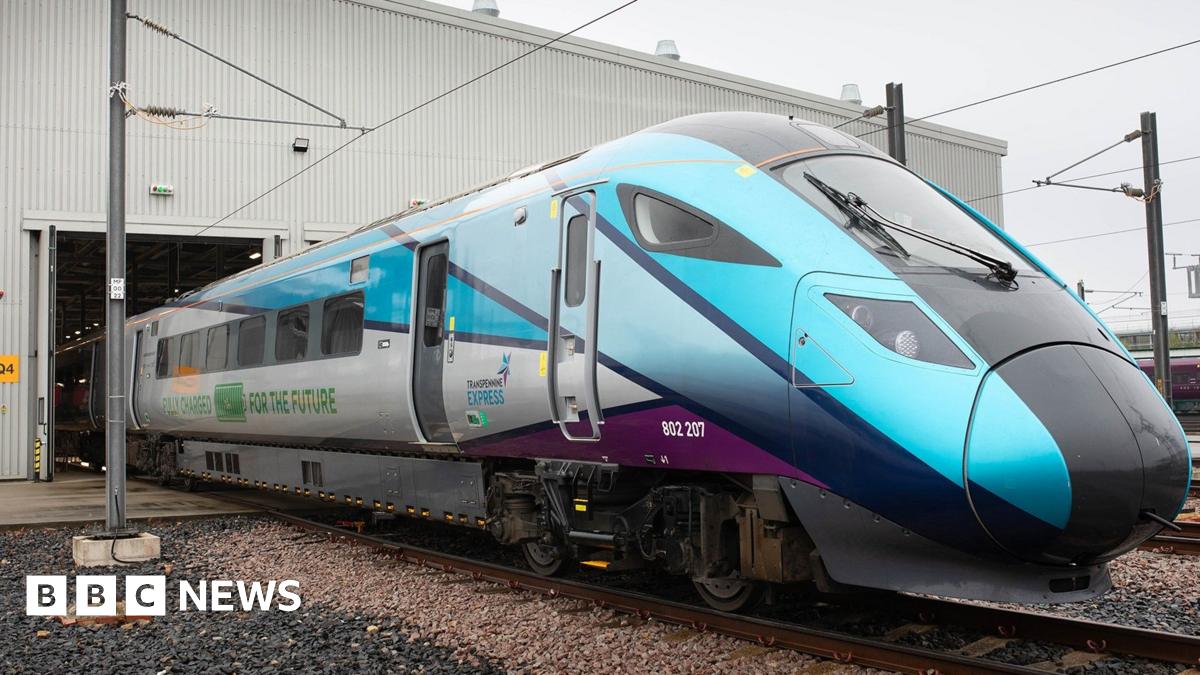
According to the BBC article:-
Hitachi’s new train replaces one of these diesel generator units with 16 batteries, like those found in electric vehicles (EVs).
Hitachi’s train uses Nissan Leaf cells.
Source:-
Will new battery-powered trains replace diesel, and are they safe?
Manufacturers see lithium power as the future of rail travel in the UK - but the trains could pose unique challenges.
 www.bbc.co.uk
The current (if you excuse the pun) Nissan Battery product range is 40kWh (39kWh useable).
So 16 batteries would be 640kWh (624kWh) usable
Which comes in nicely at approximately 75 homes using just over 8kWh a day.
InTheEastMids
Established Member
- Joined
- 31 Jan 2016
- Messages
- 1,397
It could be 16 of the Gen 1 systems that are on this page. Even if not, it does give you a feel of the size and weight of what the train has been carrying aroundAccording to the BBC article:-
Source:-
Will new battery-powered trains replace diesel, and are they safe?
Manufacturers see lithium power as the future of rail travel in the UK - but the trains could pose unique challenges.
The current (if you excuse the pun) Nissan Battery product range is 40kWh (39kWh useable).
So 16 batteries would be 640kWh (624kWh) usable
Which comes in nicely at approximately 75 homes using just over 8kWh a day.
Energy Storage - Turntide
Our flexible, energy storage lithium-ion NMC batteries offer 15% more energy with improved density. They’re ideal for rugged applications.
turntide.com
Apparently it weighed no more than the diesel engine it replacedIt could be 16 of the Gen 1 systems that are on this page. Even if not, it does give you a feel of the size and weight of what the train has been carrying around
Energy Storage - Turntide
Our flexible, energy storage lithium-ion NMC batteries offer 15% more energy with improved density. They’re ideal for rugged applications.
According to the BBC article:-
Source:-
Will new battery-powered trains replace diesel, and are they safe?
Manufacturers see lithium power as the future of rail travel in the UK - but the trains could pose unique challenges.
The current (if you excuse the pun) Nissan Battery product range is 40kWh (39kWh useable).
So 16 batteries would be 640kWh (624kWh) usable
Which comes in nicely at approximately 75 homes using just over 8kWh a day.
(Assuming the BBC article is correct) Nissan Leaf battery packs are notorious for their lack of any sort of thermal management causing them to heat up during charging and as a result suffer from very high degradation. That does mean they are fairly widely available, but they should very much be regarded as a beta product and don’t seem a sensible choice for an application that would need frequent rapid charging. It comes back to the issue of rail applications being far behind in the battery world.

darylyates17
Member
Is 802207 in full use now? It’s my last 802 with TPE I’ve yet to ride on.
- Status
- Not open for further replies.