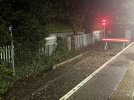
The previous "serious discussion" after the Salisbury Tunnel crash did lead to a renewed interest in cutting back foliage, and I've certainly noticed a number of locations where things seem to be more under control than before. But I agree that it didn't go far enough, and I hope that an outcome of the investigation into yesterday's incident will be more funding for vegetation control and railhead treatment trains.
I remember many years ago, in the days of steam, lineside fires caused by sparks from engines dealt with much overgrown lineside vegetation.
Leaves on the line are partly an unintended consequence of the end of steam on the main lines.
I think this is only part of the story. Besides the obvious, i.e. budget cuts, I can think of a couple of nuances to your recollection.
The chemicals used have changed. BR moved away from triazine herbicides in 1991 because levels of this chemical were found in drinking water supplies (
source). This is probably more pertinent to permanent way instead of linside boundary fences and cuttings/embankments. Anecdotally, I've heard it suggested that these herbicides are much less effective and that has led to the rampant growth of Buddleia.
Additionally, is it not true that foliage management was for the purpose of
avoiding lineside fires, rather than foliage management occurring
by the fires? I believe I've seen pictures of controlled burns too, especially on embankments. The absense of steam trains meant the fire risk was reduced, which is why there was simply less need to cut back foliage, especially in the early years before things got really out of hand (for a combination of reasons).
Another factor is that tread brakes were still common after steam. These would help clean the wheel's traction surface, though obviously not entirely remove the risk. In the days of dirty oily steam and diesel locomotives, leaves were certainly not the only cause of poor adhesion. Nowadays tread-braked units are still susceptible, obviously, but it was probably not the departure of steam trains which led to the abandonment of vegetation management.
Remember, foliage was kept under pretty strict control even in predominantly electric regions.


 www.railforums.co.uk