Yes, that's a perfectly valid motive, but then in the previous quote you mentioned concern about getting a CCJ (which can affect your credit rating). So the specific reason for doing this is to insulate yourself from the CCJ threat, but get a district judge to rule on the law here. The bit I am less sure of is whether there is a procedural issue with paying a PF and then using the Small Claims track to dispute it, and a district judge will be well tuned to procedural factors.Yes, I see the general advantage in getting ahead of things like this, however, given the advice of Watershed and AlterEgo, it seems like there is a strong chance the operator won't pursue civil litigation anyway, meaning there's a good chance I would be initiating something that would have just 'gone away' had I not pursued the matter. So paying and going to SCC would just be bringing hassle, trouble and cost onto myself for potentially no reason.

-
Our new ticketing site is now live! Using either this or the original site (both powered by TrainSplit) helps support the running of the forum with every ticket purchase! Find out more and ask any questions/give us feedback in this thread!
You are using an out of date browser. It may not display this or other websites correctly.
You should upgrade or use an alternative browser.
You should upgrade or use an alternative browser.
Ticket on train confusion - penalty fare
- Thread starter allypally
- Start date
- Status
- Not open for further replies.
Sponsor Post - registered members do not see these adverts; click here to register, or click here to log in
R
RailUK Forums
But if you didn't know about it ......A CCJ won't affect your credit rating if you pay it in full within 30 days.
Yes, that's a perfectly valid motive, but then in the previous quote you mentioned concern about getting a CCJ (which can affect your credit rating). So the specific reason for doing this is to insulate yourself from the CCJ threat, but get a district judge to rule on the law here. The bit I am less sure of is whether there is a procedural issue with paying a PF and then using the Small Claims track to dispute it, and a district judge will be well tuned to procedural factors.
Ah, I understand your rationale now. Thanks.
I was assuming from earlier posts that @allypally was going to keep contact information up to date. That has no impact on what action is or isn't taken.But if you didn't know about it ......
Below is an excerpt of the email I have sent to LTW:
I boarded the train without a valid ticket, which I recognise is a breach of the railway byelaws (from which I am now immune from prosecution under the penalty fare regulations). However, before inspection, but after departure of the train, I purchased a valid ticket via a mobile app before inspectors boarded the train. Ten minutes later, my ticket was inspected and I was given a penalty fare for allegedly not having a valid ticket. The collector did not accuse me attempting to fare evade nor was I prosecuted for fare evasion or any breach of a byelaw.
You will see that the first appeal decision states (numberings and emphasis mine):
1. Many rail users consider penalty fares to be an accusation of fare avoidance but this is not the case at all...
2. I understand a valid ticket was unavailable for inspection because a ticket wasn't purchased prior to boarding the train.
The second appeal decision states:
3. Rest assured that Penalty Services is neither judge nor jury and we are not deciding anyone's innocence or guilt when judging appeals so your honesty is not under any scrutiny whatsoever.
4. Similarly, because there is no onus on the train company to prove there was any intention to avoid payment of the correct fare before issuing a penalty fare, the discretion guidelines are not based on intent.
5. Condition 6.1 of the National Rail Conditions of Travel (NRCoT) sets out the circumstances under which it is acceptable to board the train without a valid ticket.
6. In line with the NRCoT, which states passengers should pay the correct fare for their entire journey before they travel, tickets purchased after boarding are not valid and cannot be considered.
The third appeal decision states:
8. We feel you probably purchased this ticket when you realised the Revenue Protection Officer was approaching you.
9. If this not had been the case we feel you may not have bought a ticket.
10. We note you did not have a valid ticket before you boarded the train service, which you must have, and this remains your responsibity [sic].
11. A ticket purchased after the train has departed in [sic] not valid.
These rejections are self-contradictory and are erroneous in law.
I boarded the train without a valid ticket, which I recognise is a breach of the railway byelaws (from which I am now immune from prosecution under the penalty fare regulations). However, before inspection, but after departure of the train, I purchased a valid ticket via a mobile app before inspectors boarded the train. Ten minutes later, my ticket was inspected and I was given a penalty fare for allegedly not having a valid ticket. The collector did not accuse me attempting to fare evade nor was I prosecuted for fare evasion or any breach of a byelaw.
You will see that the first appeal decision states (numberings and emphasis mine):
1. Many rail users consider penalty fares to be an accusation of fare avoidance but this is not the case at all...
2. I understand a valid ticket was unavailable for inspection because a ticket wasn't purchased prior to boarding the train.
The second appeal decision states:
3. Rest assured that Penalty Services is neither judge nor jury and we are not deciding anyone's innocence or guilt when judging appeals so your honesty is not under any scrutiny whatsoever.
4. Similarly, because there is no onus on the train company to prove there was any intention to avoid payment of the correct fare before issuing a penalty fare, the discretion guidelines are not based on intent.
5. Condition 6.1 of the National Rail Conditions of Travel (NRCoT) sets out the circumstances under which it is acceptable to board the train without a valid ticket.
6. In line with the NRCoT, which states passengers should pay the correct fare for their entire journey before they travel, tickets purchased after boarding are not valid and cannot be considered.
The third appeal decision states:
8. We feel you probably purchased this ticket when you realised the Revenue Protection Officer was approaching you.
9. If this not had been the case we feel you may not have bought a ticket.
10. We note you did not have a valid ticket before you boarded the train service, which you must have, and this remains your responsibity [sic].
11. A ticket purchased after the train has departed in [sic] not valid.
These rejections are self-contradictory and are erroneous in law.
- Excerpt 8 contradicts 3, as 8 is an assumption of my intent.
- Excerpts 8 and 9 are statements of discretion, which are inappropriate given the job of the assessors was solely to apply the law correctly (i.e. to assess the validity of the ticket I presented to the inspector).
- Excerpt 9 is an accusation of fare avoidance that contradicts 1 and 3.
- Excerpt 9 contradicts 4 because penalty fares are not issued in the context of avoiding payment in the first place, only if a valid ticket could not be presented.
- Excerpt 5 is irrelevant as the criteria that must be used to assess the validity of a ticket FOR THE PURPOSES of issuing a penalty fare are determined SOLELY by the penalty fare legislation (i.e. the NRCoT are not relevant).
- Excerpt 6 is a logical fallacy as just because boarding the train without a ticket is a breach of the NRCoT, it does not follow that tickets purchased after boarding are thus invalid.
- Excerpt 10 is irrelevant that my failure to uphold my responsibility to buy a ticket before boarding does not justify the issuance of a penalty fare.
- Excerpt 11 is wrong in law (in the context of penalty fares).
- Excerpt 2 is confusing the byelaws with the penalty fare legislation. Boarding without a ticket is a breach of the byelaw and is handled by prosecution. Boarding without a ticket is not addressable with the issuance of a penalty fare. Furthermore, boarding without a ticket does not render tickets bought onboard invalid.

WesternLancer
Veteran Member
- Joined
- 12 Apr 2019
- Messages
- 15,290
I think you need to end with something more you would like LTW to do about it if you can. Reviewing it might just mean reading what you have written. Eg maybe ask them to intervene, or ask them to consider questioning the appeals body as to how they perform their role and if they do that in line with the relevant legislation or some such.Below is an excerpt of the email I have sent to LTW:
I boarded the train without a valid ticket, which I recognise is a breach of the railway byelaws (from which I am now immune from prosecution under the penalty fare regulations). However, before inspection, but after departure of the train, I purchased a valid ticket via a mobile app before inspectors boarded the train. Ten minutes later, my ticket was inspected and I was given a penalty fare for allegedly not having a valid ticket. The collector did not accuse me attempting to fare evade nor was I prosecuted for fare evasion or any breach of a byelaw.
You will see that the first appeal decision states (numberings and emphasis mine):
1. Many rail users consider penalty fares to be an accusation of fare avoidance but this is not the case at all...
2. I understand a valid ticket was unavailable for inspection because a ticket wasn't purchased prior to boarding the train.
The second appeal decision states:
3. Rest assured that Penalty Services is neither judge nor jury and we are not deciding anyone's innocence or guilt when judging appeals so your honesty is not under any scrutiny whatsoever.
4. Similarly, because there is no onus on the train company to prove there was any intention to avoid payment of the correct fare before issuing a penalty fare, the discretion guidelines are not based on intent.
5. Condition 6.1 of the National Rail Conditions of Travel (NRCoT) sets out the circumstances under which it is acceptable to board the train without a valid ticket.
6. In line with the NRCoT, which states passengers should pay the correct fare for their entire journey before they travel, tickets purchased after boarding are not valid and cannot be considered.
The third appeal decision states:
8. We feel you probably purchased this ticket when you realised the Revenue Protection Officer was approaching you.
9. If this not had been the case we feel you may not have bought a ticket.
10. We note you did not have a valid ticket before you boarded the train service, which you must have, and this remains your responsibity [sic].
11. A ticket purchased after the train has departed in [sic] not valid.
These rejections are self-contradictory and are erroneous in law.
I would greatly appreciate it if you would review my case in view of what I have described above and attached.
- Excerpt 8 contradicts 3, as 8 is an assumption of my intent.
- Excerpts 8 and 9 are statements of discretion, which are inappropriate given the job of the assessors was solely to apply the law correctly (i.e. to assess the validity of the ticket I presented to the inspector).
- Excerpt 9 is an accusation of fare avoidance that contradicts 1 and 3.
- Excerpt 9 contradicts 4 because penalty fares are not issued in the context of avoiding payment in the first place, only if a valid ticket could not be presented.
- Excerpt 5 is irrelevant as the criteria that must be used to assess the validity of a ticket FOR THE PURPOSES of issuing a penalty fare are determined SOLELY by the penalty fare legislation (i.e. the NRCoT are not relevant).
- Excerpt 6 is a logical fallacy as just because boarding the train without a ticket is a breach of the NRCoT, it does not follow that tickets purchased after boarding are thus invalid.
- Excerpt 10 is irrelevant that my failure to uphold my responsibility to buy a ticket before boarding does not justify the issuance of a penalty fare.
- Excerpt 11 is wrong in law (in the context of penalty fares).
- Excerpt 2 is confusing the byelaws with the penalty fare legislation. Boarding without a ticket is a breach of the byelaw and is handled by prosecution. Boarding without a ticket is not addressable with the issuance of a penalty fare. Furthermore, boarding without a ticket does not render tickets bought onboard invalid.
Others may have better suggestions of course.
I think you need to end with something more you would like LTW to do about it if you can. Reviewing it might just mean reading what you have written. Eg maybe ask them to intervene, or ask them to consider questioning the appeals body as to how they perform their role and if they do that in line with the relevant legislation or some such.
Others may have better suggestions of course.
Took this onboard and made sure to include when I contacted LTW/TransportFocus.
Sadly, after being assigned a caseworker, I only received a copy of the NRCoT and the following:
"I appreciate your concerns, though I must advise that Transport Focus is not an official part of the PFN appeals process. The responsibility for handling these appeals lies with the independent appeals body, who would make the ultimate decision as to whether a PFN to upheld or cancelled.
The queries you have raised are best directed to Govia Thameslink Railway (GTR) as they will be able to advise on their specific ticket requirements. The role of Transport Focus, whilst committed to representing and advocating for passengers' interests, is ultimately to ensure that the regulations set forth in the National Rail Conditions of Travel (NRCoT) have been followed. These regulations govern the operations and procedures related to penalty fares and their appeals, ensuring consistency across the rail network.
If you require further assistance or clarification on this matter, please do contact GTR directly. They will be able to provide detailed guidance and support regarding your specific concerns.
I am very sorry that this response does not immediately help with resolving your queries."
I shall just do nothing more then?

AlbertBeale
Established Member
Took this onboard and made sure to include when I contacted LTW/TransportFocus.
Sadly, after being assigned a caseworker, I only received a copy of the NRCoT and the following:
"I appreciate your concerns, though I must advise that Transport Focus is not an official part of the PFN appeals process. The responsibility for handling these appeals lies with the independent appeals body, who would make the ultimate decision as to whether a PFN to upheld or cancelled.
The queries you have raised are best directed to Govia Thameslink Railway (GTR) as they will be able to advise on their specific ticket requirements. The role of Transport Focus, whilst committed to representing and advocating for passengers' interests, is ultimately to ensure that the regulations set forth in the National Rail Conditions of Travel (NRCoT) have been followed. These regulations govern the operations and procedures related to penalty fares and their appeals, ensuring consistency across the rail network.
If you require further assistance or clarification on this matter, please do contact GTR directly. They will be able to provide detailed guidance and support regarding your specific concerns.
I am very sorry that this response does not immediately help with resolving your queries."
I shall just do nothing more then?
And were the NRCoT rules followed?
And were the NRCoT rules followed?
All the rules that concern whether a ticket is valid for the purposes of a penalty fare were followed. Other conditions were not.

This isn't strictly about the NRCoT, but rather the company and appeal panels failed to apply the relevant law, which is the Railways (Penalty Fares) Regulations 2018.And were the NRCoT rules followed?
They failed in fact to apply the law at the first point it becomes relevant in the OP's case:
Requirement to produce a ticket
4.—(1) A person travelling by, present on, or leaving a train must, if required to do so by or on behalf of an operator, produce a valid travel ticket.All of this has the hallmarks of institutional capture but if I was the OP I would not be paying the Penalty Fare. They are, as has been explained, immune from prosecution.
Hi again all,
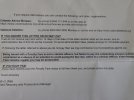
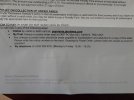
I have received the following letter from the rail operator. Nothing unexpected (mostly) as the letter is just saying that the full penalty fare (£100 plus normal ticket) is now due, and if I don't pay there will be further administration charges added (£20), and if I still don't pay, they may take me to court.
What is of note to me is the following language:
"Being issued with a Penalty Fare is not a criminal offence, but failure to pay the outstanding amount could be considered as evidence of an intention to avoid paying the fare due, which is a criminal offence. If the Penalty Fare remains unpaid, you may be prosecuted."
What is the basis for this? Is it an offence from which I am now immune from prosecution under the Penalty Fare Regulations because I have already received a First Appeal decision? Or is it some other offence from which I am not immune from prosecution? Or is this just legal bunk/fear-mongering?
I have received the following letter from the rail operator. Nothing unexpected (mostly) as the letter is just saying that the full penalty fare (£100 plus normal ticket) is now due, and if I don't pay there will be further administration charges added (£20), and if I still don't pay, they may take me to court.
What is of note to me is the following language:
"Being issued with a Penalty Fare is not a criminal offence, but failure to pay the outstanding amount could be considered as evidence of an intention to avoid paying the fare due, which is a criminal offence. If the Penalty Fare remains unpaid, you may be prosecuted."
What is the basis for this? Is it an offence from which I am now immune from prosecution under the Penalty Fare Regulations because I have already received a First Appeal decision? Or is it some other offence from which I am not immune from prosecution? Or is this just legal bunk/fear-mongering?
Attachments
The company is barred under the Penalty Fares regulations from prosecuting you for this, because you made a timely appeal, even if it was unsuccessful.Hi again all,
I have received the following letter from the rail operator. Nothing unexpected (mostly) as the letter is just saying that the full penalty fare (£100 plus normal ticket) is now due, and if I don't pay there will be further administration charges added (£20), and if I still don't pay, they may take me to court.
What is of note to me is the following language:
"Being issued with a Penalty Fare is not a criminal offence, but failure to pay the outstanding amount could be considered as evidence of an intention to avoid paying the fare due, which is a criminal offence. If the Penalty Fare remains unpaid, you may be prosecuted."
What is the basis for this? Is it an offence from which I am now immune from prosecution under the Penalty Fare Regulations because I have already received a First Appeal decision? Or is it some other offence from which I am not immune from prosecution? Or is this just legal bunk/fear-mongering?
(3) Where a person falling within paragraph (1)(a) has appealed against the penalty fare under regulation 16, proceedings for any of the offences specified in paragraph (4) may only be brought against that person for the same failure to produce a platform ticket or a valid travel ticket if the operator, on whose behalf the penalty fare was charged, notifies the relevant Appeal Panel that the penalty fare is cancelled before—
(a)the relevant Appeal Panel has decided the outcome of the appeal under regulation 16; or
(b)the time period mentioned in paragraph 6 of Schedule 2 expires,
whichever is sooner.
(4) The offences referred to in paragraphs (1) and (3) are the offences under—
(a)section 5(3)(a) or (b) of the Regulation of the Railways Act 1889(1);
(b)any byelaw made under—
(i)section 67 of the Transport Act 1962(2);
(ii)section 129 of the Railways Act 1993(3);
(iii)section 219 of the Transport Act 2000(4);
(iv)section 46 of the Railways Act 2005(5).
They are threatening prosecution under Section 5 RoRA, as bolded, which deals with intent to avoid paying a fare. As you can happily see they are barred from doing so.

It's complete nonsense. The second word of the phrase "Penalty Fare" may be "fare", but in no way does it constitute the fare due under the Byelaws or the Regulation of Railways Act 1889 (RoRA). It is merely a higher-than-usual amount - a civil penalty, if you like - that the law entitles the train company to recover. Accordingly, it's irrelevant what your intentions are as you would not be avoiding the fare, you would be avoiding a civil penalty so this would not be within the scope of RoRA.Hi again all,
I have received the following letter from the rail operator. Nothing unexpected (mostly) as the letter is just saying that the full penalty fare (£100 plus normal ticket) is now due, and if I don't pay there will be further administration charges added (£20), and if I still don't pay, they may take me to court.
What is of note to me is the following language:
"Being issued with a Penalty Fare is not a criminal offence, but failure to pay the outstanding amount could be considered as evidence of an intention to avoid paying the fare due, which is a criminal offence. If the Penalty Fare remains unpaid, you may be prosecuted."
What is the basis for this? Is it an offence from which I am now immune from prosecution under the Penalty Fare Regulations because I have already received a First Appeal decision? Or is it some other offence from which I am not immune from prosecution? Or is this just legal bunk/fear-mongering?
Furthermore, the letter falsely insinuates that a failure to pay a debt constitutes intent to avoid payment. But those two are not the same thing, much in the same way that the mere failure to buy a ticket before boarding does not constitute intent to avoid payment. It may be that you have every intention to pay but simply do not have the money; equally you might not have received or read their letter.
Finally, even if their claim were correct, the fact you appealed your Penalty Fare means they remain legally barred from prosecuting you under section 5(3)(a) of RoRA (which appears to be the section they are obliquely referencing).
This template letter is highly misleading and almost completely inaccurate. I note, also, the false claim that you will "incur" a made-up admin fee if you don't pay - there is no legal basis for charging or recovering any such fee.
Thank you for breaking it down so clearly.It's complete nonsense. The second word of the phrase "Penalty Fare" may be "fare", but in no way does it constitute the fare due under the Byelaws or the Regulation of Railways Act 1889 (RoRA). It is merely a higher-than-usual amount - a civil penalty, if you like - that the law entitles the train company to recover. Accordingly, it's irrelevant what your intentions are as you would not be avoiding the fare, you would be avoiding a civil penalty so this would not be within the scope of RoRA.
Furthermore, the letter falsely insinuates that a failure to pay a debt constitutes intent to avoid payment. But those two are not the same thing, much in the same way that the mere failure to buy a ticket before boarding does not constitute intent to avoid payment. It may be that you have every intention to pay but simply do not have the money; equally you might not have received or read their letter.
Finally, even if their claim were correct, the fact you appealed your Penalty Fare means they remain legally barred from prosecuting you under section 5(3)(a) of RoRA (which appears to be the section they are obliquely referencing).
This template letter is highly misleading and almost completely inaccurate. I note, also, the false claim that you will "incur" a made-up admin fee if you don't pay - there is no legal basis for charging or recovering any such fee.

failure to pay the outstanding amount could be considered as evidence of an intention to avoid paying the fare due, which is a criminal offence. If the Penalty Fare remains unpaid, you may be prosecuted.
Can anyone think of a way for a train company to argue successfully that that statement is not untrue but rather merely designed to be extremely misleading?
I think GTR and the courts must now reveal how many prosecutions there have been for such offences in violation of the Penalty Fares Regulations and there needs to be an external investigation into the contents of that letter to determine whether any form of action (regulatory/criminal/disciplinary) needs to be taken against any parties involved.
Are they FOI-able? Surely they are.Can anyone think of a way for a train company to argue successfully that that statement is not untrue but rather merely designed to be extremely misleading?
I think GTR and the courts must now reveal how many prosecutions there have been for such offences in violation of the Penalty Fares Regulations and there needs to be an external investigation into the contents of that letter to determine whether any form of action (regulatory/criminal/disciplinary) needs to be taken against any parties involved.
Unfortunately not, as they're not under the OLR.Are they FOI-able? Surely they are.
However, their management contract expires in April - so given the likely election results, it might not be too long before they do fall under the OLR...
KirkstallOne
Member
I am astounded that GTR are claiming they will prosecute for appealed penalty fares that have not been paid when Northern + others are currently having related matters examined in court.
One would assume GTR’s prosecution team are aware of this live case and the voluminous discussion in this forum on the matter. One would also assume in the small world of railway prosecution departments this would be a subject of intense scrutiny?!
DELETED EDIT AS WAS MIXING UP GWR AND GTR
One would assume GTR’s prosecution team are aware of this live case and the voluminous discussion in this forum on the matter. One would also assume in the small world of railway prosecution departments this would be a subject of intense scrutiny?!
DELETED EDIT AS WAS MIXING UP GWR AND GTR
Last edited:
Hi all,
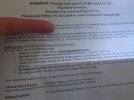
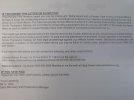
GTR have now referred the outstanding penalty fare to their prosecutions department and are saying I need to pay £150 to settle the matter out of court. They are saying they will 'criminalise' me if I do not pay. They then say 'Failure to pay... could result in the case continuing through the magistrate's court process where GTR may apply for additional costs'. What is criminal and what is civil in this letter?
This is very threatening. I work in financial services so any criminal record would end my career. Any advice?
I just think it's completely wrong as I presented a valid ticket and in any case the full fare amount was paid before inspection.
GTR have now referred the outstanding penalty fare to their prosecutions department and are saying I need to pay £150 to settle the matter out of court. They are saying they will 'criminalise' me if I do not pay. They then say 'Failure to pay... could result in the case continuing through the magistrate's court process where GTR may apply for additional costs'. What is criminal and what is civil in this letter?
This is very threatening. I work in financial services so any criminal record would end my career. Any advice?
I just think it's completely wrong as I presented a valid ticket and in any case the full fare amount was paid before inspection.
Attachments
KirkstallOne
Member
Whilst I think you would have a very good chance of defending yourself if they prosecuted you it is not a risk free approach and you may be required to tell your employer that you have been charged with an offence (check your contract).This is very threatening. I work in financial services so any criminal record would end my career. Any advice?
The prudent course of action may be to pay what is demanded and then pursue this as a complaint to the legal department of GTR about their baseless threats. They are on thin ice potentially given the current court case involving Northern and Greater Anglia which I would certainly point their lawyers towards.
Personally speaking I cannot see any basis on which they can lawfully bring a prosecution.Hi all,
GTR have now referred the outstanding penalty fare to their prosecutions department and are saying I need to pay £150 to settle the matter out of court. They are saying they will 'criminalise' me if I do not pay. They then say 'Failure to pay... could result in the case continuing through the magistrate's court process where GTR may apply for additional costs'. What is criminal and what is civil in this letter?
This is very threatening. I work in financial services so any criminal record would end my career. Any advice?
I just think it's completely wrong as I presented a valid ticket and in any case the full fare amount was paid before inspection.
Having appealed your Penalty Fare (without it being withdrawn before the first-stage appeal decision was made) the law bars them from prosecuting you under section 5(3) of the Regulation of Railways Act 1889, or the Railway Byelaws.
Of course, as we have seen in this thread, that legal bar doesn't physically stop them from nevertheless illegally issuing a summons or SJPN. It is a legal bar, not a practical one.
Whether or not you are willing to take the risk of GTR behaving unlawfully is obviously a decision you will have to make for yourself.
What I would say is that a conviction for a minor offence for a RoRA or Byelaws offence is not necessarily the end of your career, in the (IMHO extremely unlikely) event this were to occur. It would certainly be something you could appeal if it did happen, though I appreciate you may not want to go anywhere in this direction.
Of course, as we have seen in this thread, that legal bar doesn't physically stop them from nevertheless illegally issuing a summons or SJPN. It is a legal bar, not a practical one.
However the courts are supposed to be well aware of this now and looking out for it, plus if it did happen, it should fall within the scope of the Chief Magistrate's actions.
You might consider whether the reason GTR keeps on making you settlement offers is because it knows prosecution is an empty threat in your case but hopes you don't realise that.
GTR's behaviour seems entirely improper and IMHO demands an external investigation. At an expensive price, a solicitor could no doubt provide a response that tears apart what they are doing and raises questions of criminality.
Last edited:
It seems far more likely to me that these are formulaic letters sent as part of a (semi)automated process that is triggered when Penalty Fares are left unpaid, and which takes no account of the fact that appealed Penalty Fares generally can't result in prosecutions.You might consider whether the reason GTR keeps on making you settlement offers is because it knows prosecution is an empty threat in your case but hopes you don't realise that.
Time to escalate this one to the press and your MP.
What a horrendously mendacious company they are, and also let us mull on how completely ridiculous it is that someone can be threatened with prosecution by these feckless ninnies, and total lack of competence in the SJPN process will likely allow it.
What a horrendously mendacious company they are, and also let us mull on how completely ridiculous it is that someone can be threatened with prosecution by these feckless ninnies, and total lack of competence in the SJPN process will likely allow it.
Time to escalate this one to the press and your MP.
What a horrendously mendacious company they are, and also let us mull on how completely ridiculous it is that someone can be threatened with prosecution by these feckless ninnies, and total lack of competence in the SJPN process will likely allow it.
I have sent this to the Evening Standard:
"Dear Evening Standard news team,
I am writing in respect of the actions of the GTR rail operator as they have sent threatening and confusing letters that express their intentions to 'criminalise' me despite the fact that I am legally immune.
This matter is of broader public interest in view of the ongoing mess with Northern and Greater Anglia and their misuse of SJPNs. Please see the following link for reference (your own!):
https://www.standard.co.uk/news/cri...dure-rail-train-courts-unlawful-b1165659.html
The matter concerns a Penalty Fare that was erroneously issued months ago after I presented a valid ticket to a rail inspector when travelling from Stevenage to Alexandra Palace. I then appealed the Penalty Fare three times, in each case the assessors issued decisions that were unlawful and not within their remit. These decisions were shocking to expert members of the railforums community.
To add insult to injury, the operator itself is now threatening to prosecute me and is conflating a civil matter (of debt recovery of the penalty fare amount due) with a criminal matter of fare evasion (from which I have a statutory immunity from prosecution under The Railways (Penalty Fare) Regulations 2018). I do not know if they are doing this out of incompetence or to scare me into paying a fee to avoid a criminal prosecution that I am immune from in the first place. Either way, this is unacceptable and mendacious behaviour and threatens the trust between passengers and the rail operators.
Of course, rail operators should use all the legal mechanisms available to them to recover all fees they are owed by the users of their services, but GTR's behaviour in my case is unacceptable.
I have contacted Transport Focus, the statutory watchdog for transport passengers and road users, but they have sadly been unhelpful.
The difficulty for me personally is that if I am prosecuted, even if illegally, I am contractually bound to inform my employer because I work in the financial services industry. This means I am very worried by the threats from the rail operator because they have the potential to cause serious harm to me, even if by accident or incompetence.
At each stage of this process, there has been failure the penalty fare system:
- Firstly with the erroneous issue of the penalty fare on the train in first place
- Secondly with the failure of the penalty fare appeals process at each of its three stages
- Thirdly with GTR's prosecutions department
KirkstallOne
Member
It’s a good letter, I would certainly send something similar to your MP as well.
I note what you say about your job, unfortunately there is a real risk that GTR haven’t got the memo yet and will try and prosecute you as that is exactly what has happened many thousands of times in the last 4 years.
Rereading the thread I don’t believe you have had any direct contact with GTR yet? At minimum I would respond to GTR’s letter and read them the riot act (regulation 11 of the penalty fare regulations) and say unambiguously that you regard the penalty fare as a civil debt which you dispute is owed. Also refer them to the NTL/GA case where this exact point is being considered. I would stick to those points rather than the validity of the penalty fare.
I note what you say about your job, unfortunately there is a real risk that GTR haven’t got the memo yet and will try and prosecute you as that is exactly what has happened many thousands of times in the last 4 years.
Rereading the thread I don’t believe you have had any direct contact with GTR yet? At minimum I would respond to GTR’s letter and read them the riot act (regulation 11 of the penalty fare regulations) and say unambiguously that you regard the penalty fare as a civil debt which you dispute is owed. Also refer them to the NTL/GA case where this exact point is being considered. I would stick to those points rather than the validity of the penalty fare.
It’s a good letter, I would certainly send something similar to your MP as well.
I note what you say about your job, unfortunately there is a real risk that GTR haven’t got the memo yet and will try and prosecute you as that is exactly what has happened many thousands of times in the last 4 years.
Rereading the thread I don’t believe you have had any direct contact with GTR yet? At minimum I would respond to GTR’s letter and read them the riot act (regulation 11 of the penalty fare regulations) and say unambiguously that you regard the penalty fare as a civil debt which you dispute is owed. Also refer them to the NTL/GA case where this exact point is being considered. I would stick to those points rather than the validity of the penalty fare.
Thank you. I have now sent a version to my MP.
You are correct that I haven't been in direct contact with GTR. I will reach out to them and focus solely on the civil vs criminal aspect (rather than include discussion of the penalty fare validity) as you suggest. I will be sure to highlight my immunity under Regulation 11 and then also include the ongoing public matter regarding SJPs.
I want to be clear about the ongoing NTL/GA case, however. From what I have read, this concerns whether or not the rail operators are allowed to bring RoRA prosecutions via SJPNs. Not that people are being prosecuted for fare evasion when immune after a PF first appeal decision. Have I missed something here?
If anyone else has further suggestions of what I should say to reach out to GTR, please let me know.
Last edited:
- Status
- Not open for further replies.