
telstarbox
Established Member
That is a voluntary code not the law.



Whenever I buy a Red Bull or similar in Morrisons and use the self checkout, I get the age check, so there must be some current reluctance to sell these kinds of drinks to young people.
 www.grocerygazette.co.uk
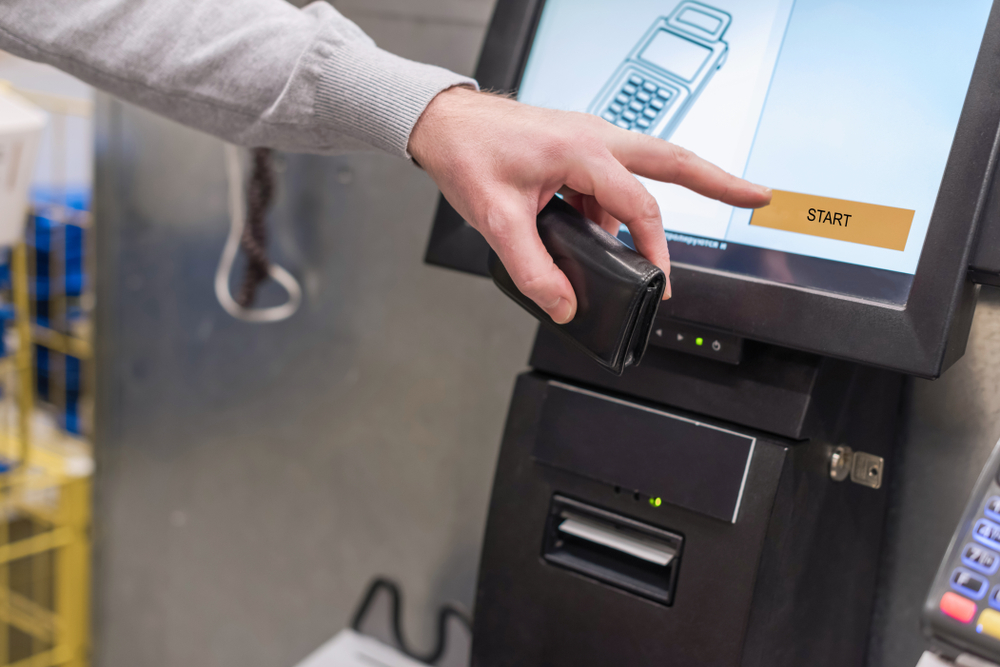
Interestingly though Morrisons has partnered with Yoti to allow people to age-check themselves through the use of AI. I've only seen it at the Morrisons in Guiseley in Leeds, but it should be rolled out amongst five of the big supermarket chains. They claim accuracy within 2.2 years, and within 1.5 years for those between 16 and 20. If it can't detect your age, it requires manual intervention:
Anecdotally, I've found a lot of people unaware that energy drinks need ID. Indeed I got told to 'f*** off' the other day when I said I can't accept a picture of someone's ID on their phone for a RedBull.
Supermarkets trial facial age estimation technology - Grocery Gazette - Latest Grocery Industry News
Five of the UK's biggest supermarkets are to trial facial age estimation technology for customers purchasing Challenge 25 products.
Morrisons tried to launch their own convenience stores (similar to Tesco Express) a few years ago, called 'M Local', but it didn't work out. So their new approach to the convenience market is to act as a wholesaler (they brought back the Safeway brand for this reason), and to franchise the Morrisons Daily brand ...
Premier is a franchised convenience store fascia operated by Booker, who are now owned by Tesco
It has been reported that those rebranded and operating as Morrisons Daily were generally doing well. However I suspect at other end of spectrum McColls have a number of stores not really covering costs.
....
I suspect some will close, others survive, but depends on local conditions and competition of each store

Co-op had actually sold a lot (298) of their smaller convenience stores to McColls in 2016 - possibly a contributory factor in McColls current predicament. There were 4 small Co-ops in my area until then, all of which which had been Alldays stores; 2 have since been sold to McColls, 1 was retained by the Co-op and the 4th was closed completely.Maybe wrong but I think by the time Morrisons were opening M Local overall Tesco Express, Sainsburys Local and Co-op had taken the majority of the most viable locations.

 www.bbc.co.uk
Co-op's sale of 298 of its food stores to convenience chain McColl's has been approved by the competition regulator.
McColl's said the final clearance from the Competition and Markets Authority would "substantially accelerate" its growth strategy.
"This is a transformational deal," said McColl's boss Jonathan Miller.
McColl's said it would begin to integrate the Co-op stores into its network by the end of January, with all conversions completed by August.
The purchase means McColl's will now have around 1,300 convenience stores across the UK.
In July, the Co-op said it had decided to sell the stores because they were too small to stock a full range of its own-label goods, an area it was trying to increase.
The stores being sold have an average size of 1,700 sq ft, well below the Co-op's ideal sized store of between 3,000 and 3,500 sq ft.

Co-op had actually sold a lot (298) of their smaller convenience stores to McColls in 2016 - possibly a contributory factor in McColls current predicament. There were 4 small Co-ops in my area until then, all of which which had been Alldays stores; 2 have since been sold to McColls, 1 was retained by the Co-op and the 4th was closed completely.
Co-op convenience store sell-off to McColl's approved
Co-op's sale of 298 of its food stores to convenience chain McColl's is cleared by the competition regulator.


That explains why one of the Co-Ops in Andover changed to a McColls, which closed down last year (taking a post office with it). Although the writing was on the wall for that particular shop when Tesco opened an Express store less than 5 minutes walk away.
Bad news for the staff who might be out of a job, especially in those branches of McColls which don't make a decent margin due to various reasons which might get closed.

In all honesty I cannot say when I was last in a McColls, but I do remember their prices being rather eye-watering. The former-Alldays Co-ops tended to be slightly dearer on certain products than "mainstream" Co-op stores anyway, so I'd imagine that any further price increases after that would have driven some people away if they had nearby alternatives. The more recent rise in inflation was probably the final straw.
Recent entries on this thread have made me look into the ownership of one of my village shops: it is a Premier, which is a symbol group owned by Tesco Plc. It is in competition with the other village shop, a Tesco Express.
That explains why one of the Co-Ops in Andover changed to a McColls, which closed down last year (taking a post office with it). Although the writing was on the wall for that particular shop when Tesco opened an Express store less than 5 minutes walk away.

Possibly the fact that they are not part of pretty profitable larger companies (Tesco Express, Sainsbury's Local) nor franchised (where the franchisees take most of the financial risk)?So what's gone wrong with McColls? Over-borrowed, poor turnover/margins, breach of lending obligations, or maybe they've been the poorest performing of the convenience outlets in a competitive market place?

The shop won’t be owned by Booker/Tesco, it’ll be a franchisee. The supply of product is via Booker, and the franchisee will pay a licensing fee for the use of the brand and access to stock at far better prices than they’d get if they were truly independent.
It’s a bit strange down there. Some of the Coops are the Cooperative Group, others are owned by Southern Coop. Southern (and about 15 other independent societies ranging from Southern with 200+ stores down to Allendale with one) are part of FRTS and through them get access to the Coop buying and distribution network. Incidentally as you’ll doubtless be aware one of Coop’s big warehouses is on the outskirts of Andover
They are a different regional co-operative. Withdrew from the national Co-op membership scheme a year or so ago.I don't understand the Southern Coop.
All of the products and stores are branded Coop, but they don't accept the Coop offers.
This is really confusing for the customer, if they're not gonna accept Coop offers then they shouldn't be a Coop.
I don't understand the Southern Coop.
All of the products and stores are branded Coop, but they don't accept the Coop offers.
This is really confusing for the customer, if they're not gonna accept Coop offers then they shouldn't be a Coop.
High time it did become law though! Shops happily selling high caffeine products to children should hang their heads in shame.
You would have to define what a high caffeine product is and what a child is. Could a 15yr old buy some Nespresso capsules or a jar of Nescafé?
Add to the confusion Nisa, which is a franchising brand owned by the Co Op group. So Nisa stores sell Co op branded products at often rather inflated prices.They’re a totally separate business, and they control pricing and promotions etc. it is confusing in areas where there are both tCG and independent stores though

Interesting point, not one I'd considered. Part of me says that all caffeine products should be age restricted, given how addictive it is, but then what age to limit it to? 16 seems a little draconian, 18 more reasonable, I'll have to have a think about my views on that!
Add to the confusion Nisa, which is a franchising brand owned by the Co Op group. So Nisa stores sell Co op branded products at often rather inflated prices
Regarding the Co-op - are their stores presently under going a corporate rebrand? A few have reverted back to the blue aqua colour of yesteryear, while others are still trading under the green colours.
